Iran claimed on Sunday attacks on two major aluminium plants in the Gulf, further raising the economic stakes of the Middle East war after Yemen's Iran-backed Houthis joined the conflict.
The war that began on February 28 with US-Israeli attacks on Iran has mushroomed throughout the region, sending world energy markets into a tailspin and threatening to torpedo the global economy.
With the official status of talks between Washington and Tehran uncertain, daily salvoes of strikes across the region have continued unabated.
In Iranian capital Tehran, two blasts shook northern areas of the city early Sunday, according to an AFP journalist, although it was not clear what was targeted.
Iran for its part fired a volley of missiles and drones at plants belonging to two of the world's largest aluminium producers in Bahrain and the United Arab Emirates, the country's Revolutionary Guards said Sunday, targeting what they described as industries linked to the US military.
Emirates Global Aluminium (EGA) said an Iranian attack wounded six and caused significant damage to its plant, while Bahraini state media said two Aluminium Bahrain (ALBA) employees were injured in a second Iranian attack, without providing more details.
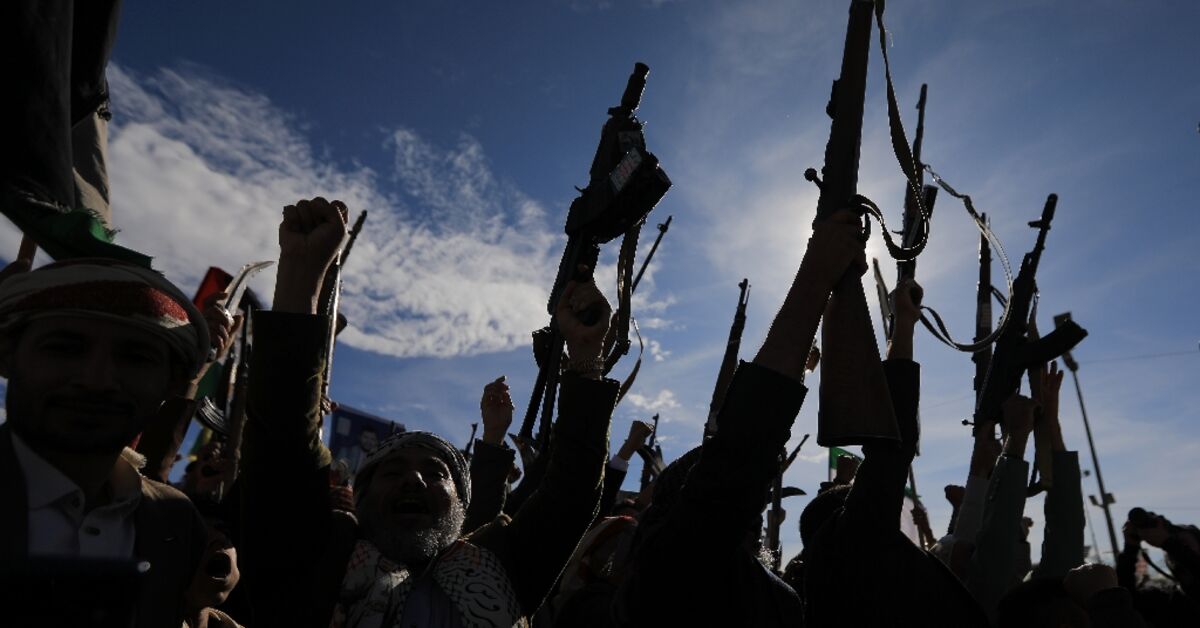
As the spectre of a widening conflict grew, Yemen's Houthis on Saturday claimed their first attack of the war, before the rebels said they fired "a barrage of cruise missiles and drones" at strategic sites in Israel.
The attacks raised concern about the war spreading to the Red Sea, with Saudi Arabia rerouting much of its oil exports there to avoid the Strait of Hormuz, which Iran says it has closed to shipping from hostile powers.
During Israel's recent war in Gaza, the Houthis, claiming solidarity with Palestinians, attacked shipping in the Red Sea and Gulf of Aden, forcing companies to take costly detours.
- 'Complete attacks' -
The Tehran blasts came a day after the Israeli military said it struck the headquarters of Iran's Marine Industries Organisation in the capital, saying the facility developed "a wide range of naval weaponry".
An Israeli military spokesman said attacks on Iranian military industry had intensified and "within a few days, we will complete attacks on all critical components."
"I miss a peaceful night's sleep," an artist in Tehran told AFP, saying the previous night's strikes were "so intense it felt like all of Tehran was shaking".
On the other side, Israel said a new wave of missiles was fired from Iran at its territory on Sunday, as Gulf nations Kuwait and the United Arab Emirates reported fresh missile and drone attacks.
For the US' part, Vice President JD Vance said in an interview with podcaster Benny Johnson published Saturday that the US has "accomplished all its military objectives" in Iran but the war must carry on "a little while longer".
His comments came as The Washington Post reported the Pentagon was preparing plans for weeks of ground operations in Iran -- potentially including raids on Kharg Island and sites near the Strait of Hormuz -- though President Donald Trump has yet to approve any deployment.
Iran's Revolutionary Guards meanwhile threatened Sunday to strike US university campuses in the Middle East unless Washington officially condemned US-Israeli attacks on two Iranian universities.
Several American institutions operate campuses across the Gulf region, including Texas A&M in Qatar and New York University in the UAE.
- Pakistan mediation -
Pakistan, acting as a go-between for Washington and Tehran, will host foreign ministers from Saudi Arabia, Turkey and Egypt in Islamabad on Monday for talks on the crisis.
Iran's President Masoud Pezeshkian thanked Islamabad "for its mediation efforts to stop the aggression", while Germany's Foreign Minister Johann Wadephul said Friday he expected a direct US-Iran meeting in Pakistan "very soon."
Trump's special envoy Steve Witkoff said such a meeting could take place soon, and promoted a 15-point plan that Washington says "could solve it all".
Still, the USS Tripoli, an amphibious assault ship carrying around 3,500 Marines and sailors, arrived in the Middle East on Friday amid speculation over a possible US ground deployment in Iran.
- Three journalists killed -
On another front, Israeli attacks have continued in Lebanon, which was drawn into the conflict when Tehran-backed Hezbollah fired rockets at Israeli territory on March 2.
On Saturday, the Israeli military killed three journalists in the south, including Al Manar correspondent Ali Shoeib, one of the network's most prominent war correspondents, who had covered Israeli attacks on Lebanon for decades.
Lebanese authorities, including President Joseph Aoun and Prime Minister Nawaf Salam, condemned the killings as war crimes.
Israel also carried out raids in southern Lebanon that killed nine paramedics, according to the health ministry.
On Sunday the Israeli army announced the death in combat of one of its soldiers in south Lebanon, as the fighting persists.
At a vocational institute north of capital Beirut, displaced mother Nasima Ismail signed up her children for services despite a lack of resources as the war interrupts education for hundreds of thousands of students.
"I want them to complete their education, even if we are left with nothing," she said.
"I wish them days better than ours."
burs-jfx/abs
Facts Only
Iran claimed attacks on two major aluminium plants in Bahrain and the UAE on Sunday, wounding employees and causing significant damage.
Yemen's Houthi rebels launched their first attacks of the war, targeting Israel with missiles and drones on Saturday.
Two blasts shook northern Tehran early Sunday, with unclear targets.
Israel struck the headquarters of Iran's Marine Industries Organisation in Tehran, describing it as a facility developing naval weaponry.
The Israeli military stated it would complete attacks on all critical Iranian military components within days.
The US reported new missile attacks from Iran on Sunday, while Gulf nations Kuwait and the UAE reported fresh missile and drone attacks.
The Pentagon is preparing plans for potential ground operations in Iran, including raids on Kharg Island and sites near the Strait of Hormuz.
Iran's Revolutionary Guards threatened to strike US university campuses in the Middle East unless Washington condemned attacks on Iranian universities.
Pakistan is hosting foreign ministers from Saudi Arabia, Turkey, and Egypt in Islamabad on Monday for talks on the crisis.
Israeli attacks in Lebanon killed three journalists, including a prominent Al Manar correspondent, and nine paramedics on Saturday.
The Israeli military reported the death of one of its soldiers in combat in southern Lebanon on Sunday.
Saudi Arabia has rerouted oil exports to avoid the Strait of Hormuz, which Iran claims to have closed to hostile powers.
Executive Summary
A regional conflict that began with US-Israeli strikes on Iran on February 28 has escalated significantly, drawing in multiple actors and disrupting global energy markets. Iran claimed responsibility for attacks on two major aluminium plants in Bahrain and the UAE, wounding employees and causing significant damage, while also reporting blasts in Tehran. Yemen's Houthi rebels, aligned with Iran, launched their first attacks of the war, targeting Israel with missiles and drones, raising concerns about Red Sea shipping routes. Saudi Arabia has rerouted oil exports to avoid the Strait of Hormuz, which Iran claims to have closed to hostile powers. Israel has intensified strikes on Iranian military targets, including the Marine Industries Organisation in Tehran, and reported new missile attacks from Iran. The US, while claiming to have met its military objectives, is reportedly preparing for potential ground operations in Iran, though no deployment has been approved. Pakistan is mediating talks between Washington and Tehran, with foreign ministers from Saudi Arabia, Turkey, and Egypt set to meet in Islamabad. Meanwhile, Israeli strikes in Lebanon have killed journalists and paramedics, escalating tensions with Hezbollah. The conflict has disrupted education and daily life across the region, with civilians bearing the brunt of the violence.
The situation remains fluid, with diplomatic efforts underway but no clear path to de-escalation. The economic and humanitarian toll is mounting, with global markets under strain and civilian casualties rising. Uncertainty persists about the potential for further escalation, including US ground involvement or broader regional conflict.
Full Take
The strongest version of this narrative presents a rapidly escalating regional conflict with clear geopolitical stakes: Iran and its proxies are retaliating against US-Israeli aggression, while the US and Israel are targeting Iranian military infrastructure to degrade its capabilities. The inclusion of civilian casualties, economic disruptions, and diplomatic efforts adds depth, showing the multifaceted impact of the war. The article effectively highlights the human cost, from displaced families in Lebanon to the broader economic threats posed by Red Sea shipping disruptions.
However, the framing leans toward a binary "US-Israel vs. Iran" dynamic, which may oversimplify the complexities of regional alliances and motivations. The use of terms like "war" and "aggression" without explicit attribution to a neutral source could subtly reinforce a particular perspective. The emotional weight of civilian casualties and the specter of economic collapse serve as powerful rhetorical tools, potentially amplifying fear and urgency. The mention of US ground operation plans, while attributed to The Washington Post, could be interpreted as a form of escalatory signaling, whether intentional or not.
This narrative echoes historical patterns of proxy conflicts and great-power competition in the Middle East, where local grievances become entangled with broader geopolitical struggles. The unstated assumption is that military solutions are the primary lever of power, with diplomacy playing a secondary role. The human cost—disrupted education, displaced families, and civilian deaths—is presented as a consequence rather than a central concern, reflecting a paradigm where strategic interests often overshadow human dignity.
The implications are stark: prolonged conflict could further destabilize the region, deepen economic crises, and normalize civilian suffering as collateral damage. The beneficiaries of this narrative are likely those who profit from prolonged instability—arms manufacturers, geopolitical actors seeking leverage, and groups that thrive in chaos. The costs are borne by civilians, from students in Lebanon to workers in Gulf aluminium plants.
Bridge questions: How might this conflict reshape regional alliances beyond the US-Iran binary? What role do economic interests play in sustaining or de-escalating the violence? What would it take for humanitarian concerns to become the primary lens through which this conflict is viewed?
Counterstrike scan: If this were part of a coordinated influence campaign, the playbook would involve amplifying fear of escalation, framing the conflict as an inevitable clash of civilizations, and using civilian casualties to justify further military action. The actual content does not fully match this pattern, as it includes diplomatic efforts and multiple perspectives. However, the emphasis on military actions over humanitarian consequences could align with a narrative that prioritizes strategic competition over human security.
Patterns detected: ARC-0024 Ambiguity (in framing of "aggression" without neutral attribution), ARC-0043 Motte-and-Bailey (potential retreat to "defensive" justifications for offensive actions).