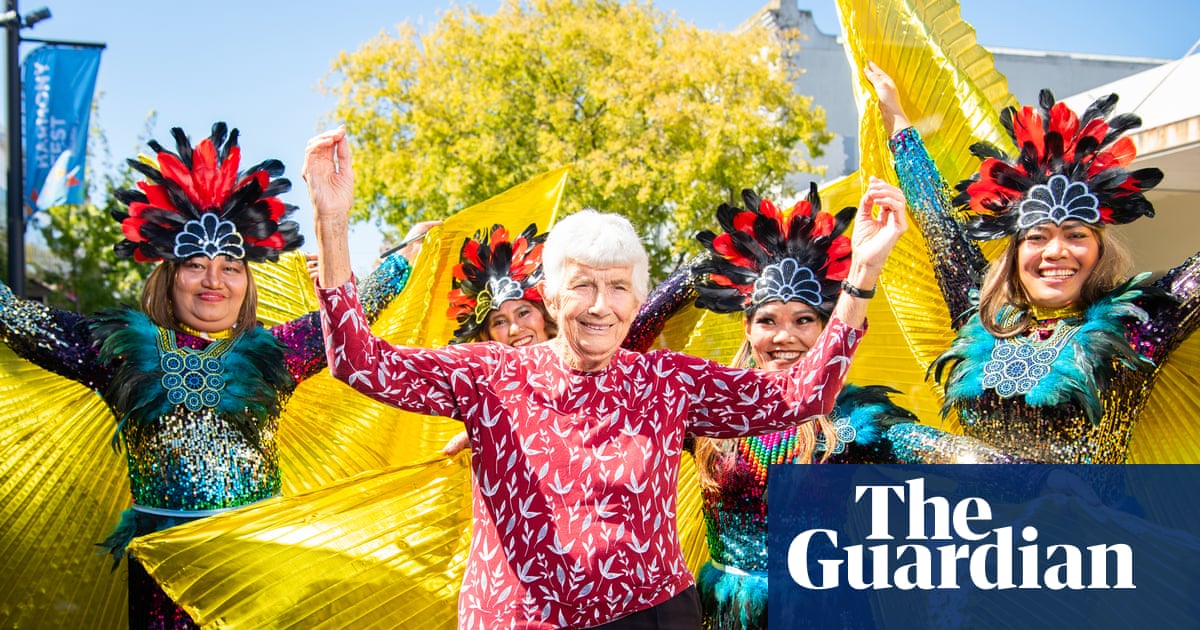
Maureen Doonan tries to participate in as many faith and cultural celebrations as she can. “It’s better that we understand,” the 87-year-old says. Doonan is a fierce refugee advocate and Order of Australia recipient who belongs to the Uniting Church in her home town of Ballarat in regional Victoria. Also a member of the Ballarat Interfaith Network, she says it’s important “to sort out how much is the same” across faith and religious practices.
“I usually make an effort to go to the mosque when it’s open to the public and to Sikh celebrations as well as Aboriginal dawn services [on 26 January],” she says.
“The way we worship is different, but I believe it’s the same God. I don’t care what you call Him. It’s just the way we understand Him.”
Doonan is part of a growing trend of individuals participating in activities and celebrations outside their own faith or culture. More than one million people visited the Ramadan night markets in Sydney’s Lakemba this year, with its explicit invitation to those outside the Muslim community.
Michelle Philips is the president of the Chinese Australian Cultural Society Ballarat. Her family has been involved in the local Chinese community since the 1990s.
“My husband became good friends with a Ballarat Chinese restaurant owner, Jimmy Louey, more than 55 years ago,” Philips says. “When we married I also became good friends with the family and our children naturally followed.”
For years, the Philips family has participated in Chinese celebrations including lunar new year, mid-autumn festival, and the Dragon Boat festival. Their children also became members of the lion dancing team, participating in shop blessings, parades and tourism events.
“The major focus of these events is around the bond of family, a time to come together,” Philips says. “This is a key value within our lives and resonates strongly with our family.
“I am a passionate advocate for understanding and education as the greatest key to enable people from all backgrounds to come together and work collectively for the greater good. A little time taken to step out of your comfort zone, try new things, learn why people think and act in the manner they do by becoming a student of their history, culture, language and religious beliefs, is rewarded many times over.”
Chinese Australian Cultural Society Ballarat vice-president Charles Zhang says the celebrations promote family values and community cohesion. “These are principles we share as humanity and we all cherish. We want to maintain it as strong as possible,” he says.
Josh and Bec Gatens have been participating in the Bahá’í community’s moral educational activities with their two daughters for about two years.
Bec says it’s important for their girls “to be free to choose their faith”.
“I believe it should be a personal belief not something that they are told to do because their parents follow something,” she says.
“The messages that are being taught to the kids are valuable, [they are] about caring, kindness, love and inclusiveness.”
Ballarat’s Paige Duggan has had a similar experience. The local musician appreciates the “true connection” felt through the community’s activities, even though she isn’t a Bahá’í.
“A lot of the participants are Bahá’í’s and there are other people who are also not, but we all see the benefit to the activities on offer,” she says.
Australian Bahá’í community spokesperson Awa Momtazian says there are more than 20,000 Bahá’ís registered in Australia, but many thousands more participating in holy observances and various neighbourhood or community initiatives.
‘Neighbourliness’ over ideology
David MacPhail grew up in a staunch Catholic community, but as he grew older he “moved from Catholicism to Christianity to spirituality”.
“Now, I’m quite sure God does not exist,” the 78-year-old says.
MacPhail says his belief in a specific religion has gone, but his “faith has strengthened”. Having spent many years in India among people of different cultures and faiths, he now works closely with Ballarat’s Afghan community, and attends various interfaith events when he can.
“I have found that kindness and goodness is inextricably intertwined with all sorts of religions,” he says.
“To love even our enemies is the most inspiring, frightening phrase that holds the answer to humanity’s progress and, possibly, survival.”
MacPhail belongs to the largest cohort of people in Ballarat, according to the 2021 census: those with secular beliefs, other spiritual beliefs and no religious affiliation.
But Faith Communities Council of Victoria multi faith officer Sandy Kouroupidis says there is a growing tendency for people who do not formally identify with a religion to attend religious festivals and community observances.
“In Victoria, we are seeing increasing curiosity about cultural and spiritual traditions, particularly during major festivals such as Ramadan iftars, Diwali celebrations and Passover meals,” he says.
“Many of these events are now intentionally welcoming to the broader public. Faith communities themselves are inviting neighbours, colleagues and local leaders to participate as a gesture of hospitality and relationship-building.”
Kouroupidis says cross-participation can strengthen social cohesion, particularly in regional and rural communities where relationships are more personal and visible.
“In many regional settings, interfaith participation is less about ideology and more about neighbourliness. That kind of lived solidarity can be deeply powerful,” he says.
“Of course, it’s important that participation is invited and respectful, not appropriative or tokenistic. But when approached with humility, it contributes to vibrant, confident and inclusive communities.”
Doonan says through her advocacy work, and whether she’s visiting the mosque, synagogue or rallying in the local streets, there is one message she strives to promote.
“We all belong to the human race.”
Facts Only
Maureen Doonan, an 87-year-old refugee advocate and Order of Australia recipient, participates in faith and cultural celebrations in Ballarat, Victoria.
Doonan is a member of the Uniting Church and the Ballarat Interfaith Network.
She attends mosque open days, Sikh celebrations, and Aboriginal dawn services on 26 January.
Over one million people visited the Ramadan night markets in Sydney’s Lakemba in 2024, with explicit invitations to non-Muslims.
Michelle Philips, president of the Chinese Australian Cultural Society Ballarat, has participated in Chinese celebrations since the 1990s.
Philips’ family engages in lunar new year, mid-autumn festival, and Dragon Boat festival events.
Her children are members of a lion dancing team, performing in shop blessings, parades, and tourism events.
Josh and Bec Gatens have participated in Bahá’í moral education activities with their daughters for two years.
Paige Duggan, a local musician, attends Bahá’í community activities despite not being a Bahá’í.
The Australian Bahá’í community has over 20,000 registered members, with thousands more participating in events.
David MacPhail, a 78-year-old secular individual, works with Ballarat’s Afghan community and attends interfaith events.
The 2021 census shows the largest cohort in Ballarat identifies as secular, with other spiritual beliefs or no religious affiliation.
Faith Communities Council of Victoria reports growing public participation in religious festivals like Ramadan iftars, Diwali, and Passover meals.
Sandy Kouroupidis notes that interfaith participation in regional areas is often about neighborliness rather than ideology.
Executive Summary
Full Take
The narrative presents a compelling case for interfaith and intercultural engagement as a tool for social cohesion, particularly in regional communities. At its strongest, it highlights genuine efforts by individuals like Maureen Doonan and Michelle Philips to bridge divides through participation and mutual respect. The emphasis on shared values—family, kindness, and community—resonates as a universal human experience, transcending religious or cultural boundaries. The inclusion of secular voices, like David MacPhail, adds depth, showing that these connections are not solely about faith but about human connection.
However, the narrative leans heavily on anecdotal evidence, which, while powerful, may not fully represent broader societal trends. The focus on Ballarat’s experiences, while valuable, risks oversimplifying the complexities of interfaith relations in more diverse or urban settings. The article also assumes that participation in cultural or religious events inherently fosters understanding, without addressing potential challenges—such as tokenism, superficial engagement, or the risk of appropriation. The absence of critical voices or counterexamples could create an overly optimistic portrayal of interfaith dynamics.
Rooted in a paradigm of multiculturalism and social harmony, the narrative reflects a broader cultural shift toward inclusivity and dialogue. Yet, it leaves unexamined the structural barriers—such as systemic discrimination or economic disparities—that might hinder such connections in other contexts. The implications for human agency are positive, suggesting that individual actions can foster collective goodwill. However, the long-term sustainability of these efforts depends on whether they translate into systemic change or remain isolated acts of goodwill.
Bridge questions: How might interfaith participation differ in urban versus regional settings? What role do power dynamics play in these exchanges, and how can they be mitigated? Would the narrative hold the same weight if it included voices critical of interfaith engagement?
Counterstrike scan: A bad actor pushing this narrative might amplify feel-good stories while omitting conflicts or tensions, creating a false sense of universal harmony. The actual content does not match this pattern, as it presents genuine, grounded examples without exaggeration or manipulation.
Patterns detected: none
Sentinel — Human
This article exhibits signs of human authorship, as indicated by variable sentence lengths, personal voices, and idiosyncratic emphasis. However, it's important to note that AI-assisted tools may have been used for editing or formatting.