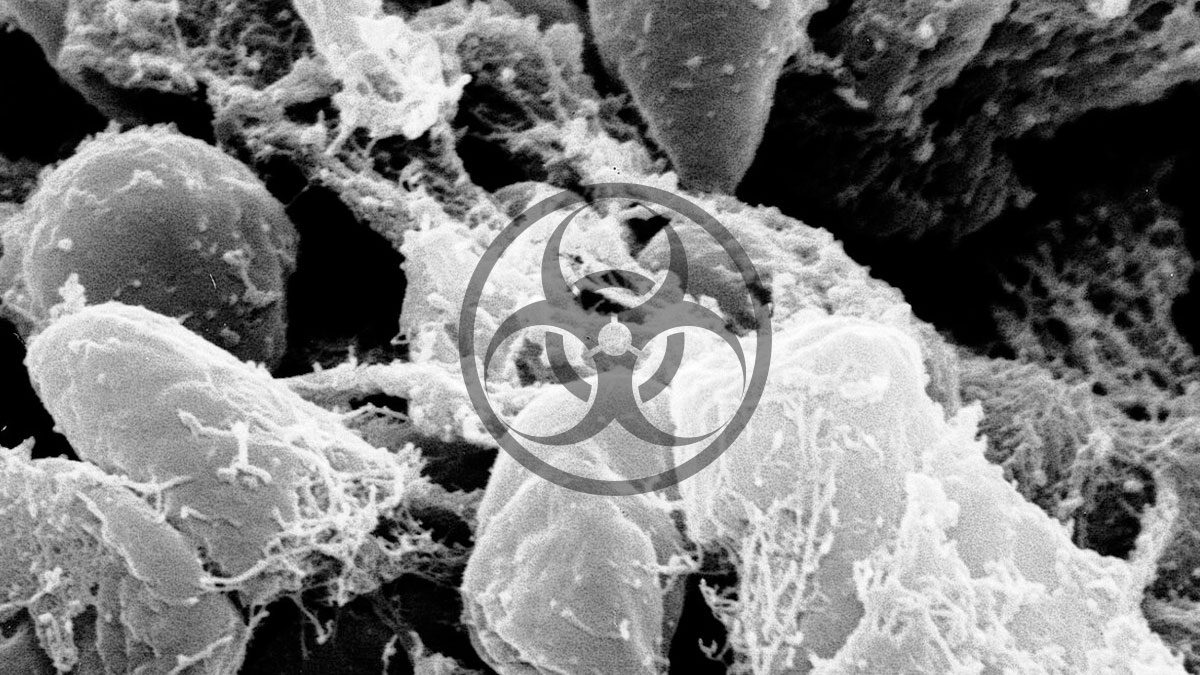
In mid-September 2025, the Friedrich-Loeffler-Institut (FLI)—Germany’s Federal Research Institute for Animal Health—hosted the NATO-supported Advanced Research Workshop (ARW) titled “Update on Bacterial Biological Agents in the Euro-MENA Region and their Implications for Bioterrorism” in Jena, Germany.
The event, part of NATO’s Science for Peace and Security Programme, brought together officials and experts from 19 countries, including NATO members and partner nations spanning Europe, the Middle East, and North Africa.
Led by Dr. Gamal Wareth, head of Germany’s National Reference Laboratory for Anthrax, the workshop provided a platform to exchange cutting-edge knowledge about bacterial zoonoses—infectious diseases transmissible between animals and humans—that have implications for both public health and biosecurity.
Mapping Bacterial Zoonoses and Bioterrorism Risks
The workshop addressed bacterial agents such as anthrax, brucellosis, plague, tularemia, Q fever, glanders, and listeriosis, many of which are endemic in parts of Europe and the MENA region. These pathogens are recognized not only as major zoonotic threats but also as potential agents of bioterrorism due to their ease of transmission and the severity of disease outcomes.
Participants discussed the uneven availability of epidemiological data between the Euro and MENA regions and called for enhanced surveillance and data-sharing frameworks. Such efforts are essential to understanding the molecular epidemiology of these agents, identifying transmission chains, and designing prevention strategies.
The discussions also highlighted the dual-use nature of certain bacterial agents, reinforcing the importance of scientific transparency and responsible research oversight.
Building Collaborative Solutions Across Regions
With over 28 speakers from diverse backgrounds in microbiology, veterinary science, and security policy, the workshop served as a bridge between regions that face overlapping challenges in disease control and biosafety management.
Experts from countries currently experiencing conflict or disease outbreaks contributed firsthand perspectives, emphasizing how instability can accelerate the spread of infectious agents and complicate containment.
A recurring theme throughout the workshop was the One Health approach, which integrates human, animal, and environmental health considerations. This framework was especially relevant in addressing behaviors linked to disease transmission, such as unsafe slaughtering or consumption of infected animals, and poor carcass disposal practices. Participants developed multi-sectoral strategies to mitigate these risk factors and improve regional preparedness.
The Role of the Friedrich-Loeffler-Institut
The Friedrich-Loeffler-Institut, established in 1910 and headquartered on the Isle of Riems near Greifswald, is Germany’s premier center for animal disease research. The institute operates high-containment laboratories—including biosafety level 4 (BSL-4) facilities—and serves as an international reference lab for multiple viral and bacterial diseases. Its mission aligns closely with NATO’s security and scientific cooperation objectives: strengthening early detection, diagnostics, and response capacity for transboundary animal diseases that threaten global health security.
By hosting this workshop, FLI reaffirmed its leadership in advancing international cooperation on biosecurity and zoonotic disease control. Its researchers, including Dr. Wareth and Professor Heinrich Neubauer, have long been at the forefront of understanding zoonotic bacterial pathogens and their potential misuse.
Toward a Resilient Future
The event concluded with a commitment to pursue new joint research projects and establish a sustainable expert network connecting scientists across Europe, Asia, and Africa. Participants emphasized that regional collaboration is key to accelerating treatment development, harmonizing laboratory diagnostics, and enhancing biosurveillance in areas vulnerable to both natural outbreaks and intentional biological threats.
The workshop’s outcomes underline a fundamental message: in an era where biological risks transcend borders, scientific cooperation is the most powerful defense. Strengthening shared knowledge and capacity building within the Euro-MENA framework not only safeguards human and animal health but also fortifies global resilience against bioterrorism.
Wareth, G., Neubauer, H. 2025. Update on Bacterial Biological Agents in the Euro-MENA Region and their Implications for Bioterrorism. GMPC TOP, Oct 2025.
Facts Only
Event: NATO-supported Advanced Research Workshop titled "Update on Bacterial Biological Agents in the Euro-MENA Region and their Implications for Bioterrorism"
Host: Friedrich-Loeffler-Institut (FLI)
Location: Jena, Germany
Participants: Officials and experts from 19 countries
Topics: Bacterial zoonoses such as anthrax, brucellosis, plague, tularemia, Q fever, glanders, listeriosis, enhancing surveillance and data-sharing frameworks, promoting a One Health approach
Executive Summary
Full Take
This workshop highlighted the importance of international collaboration to combat zoonotic diseases with potential bioterrorism implications. By addressing bacterial agents endemic in parts of Europe and the MENA region, participants aimed to understand molecular epidemiology, identify transmission chains, and design prevention strategies. The event underscored the need for transparency and responsible research oversight due to the dual-use nature of certain bacterial agents.
Patterns detected: none
Root cause: Global interconnectedness necessitates collaborative efforts in addressing transboundary threats such as zoonotic diseases with potential bioterrorism implications.
Implications: Strengthening shared knowledge and capacity building within the Euro-MENA framework safeguards human and animal health while fortifying global resilience against bioterrorism.
Bridge questions: What role can regional collaborative networks play in preventing the misuse of dual-use bacterial agents? How might we further promote scientific transparency and responsible research oversight?