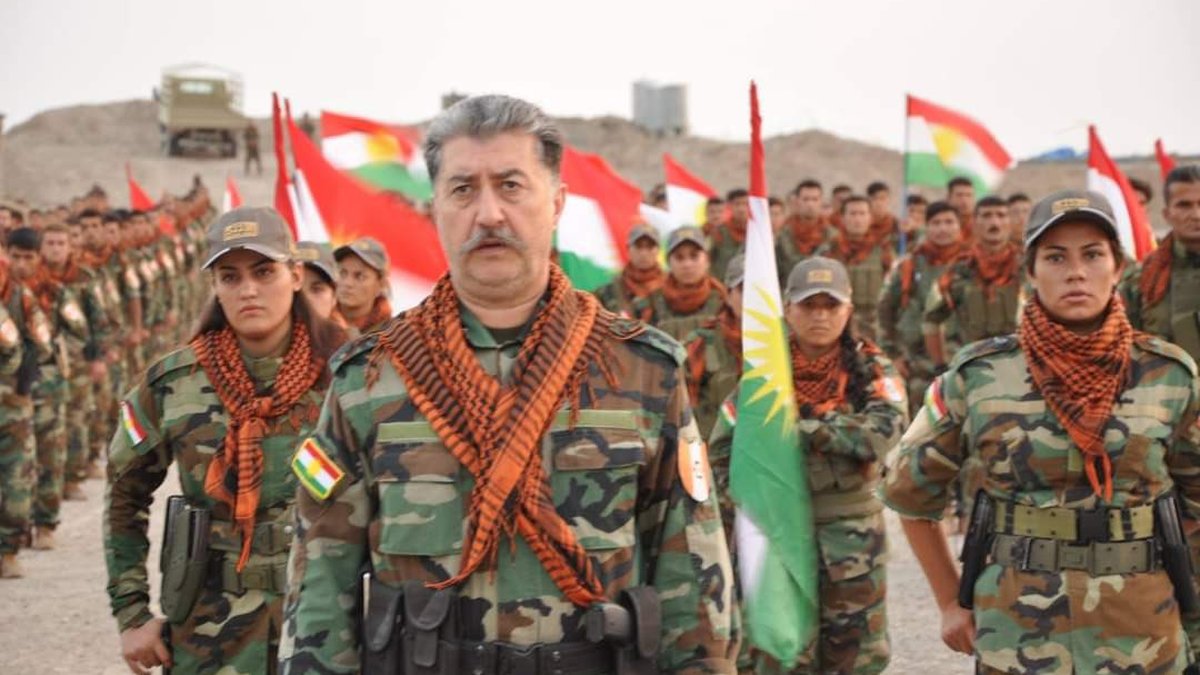
Iranian Kurds to Face More Pressure If U.S.–Iran Deal Reached
Iranian Kurds to Face More Pressure If U.S.–Iran Deal Reached
Executive Summary:
- Iran has continued to launch drone and missile attacks against exiled Iranian Kurdish militants based in Iraqi Kurdistan following the U.S.–Iranian ceasefire signed on April 8.
- Tehran is heavily pressuring Iraqi Kurdish authorities to either expel these militant groups or hand over their leaders.
- A permanent U.S.–Iranian agreement lacking specific protections for Kurds would likely leave these militants highly vulnerable to severe Iranian retaliation and forced removal.
The U.S.–Iranian ceasefire was first announced on April 8 (UN, April 9). Since April 8, attacks on the U.S. Consulate General building and the coalition base at the airport in Iraqi Kurdistan have halted. Attacks on Iranian Kurdish militant groups have, however, continued.
Nine members of Iranian Kurdish militant groups have been killed since February 28, including four after the ceasefire (Substack/Wladimir van Wilgenburg, April 17). On May 25, nine members of the Kurdistan Freedom Party (PAK) were also injured in attacks (PAK, May 25). According to Community Peacemaker Teams in Iraqi Kurdistan, 77 percent of attacks since April 8 in Iraqi Kurdistan were carried out by Iran and its proxies against Iranian Kurdish militants (CPT, May 26).
Iran is likely to further threaten the presence of Iranian Kurdish militant groups based in Iraqi Kurdistan. Tehran aims to increase pressure on Iraqi Kurdish authorities to repress or exile these Kurdish militant groups. This is especially the case since international media have suggested that they have been receiving foreign arms and intelligence support (Fox News, May 23; CNN, March 4).
Iranian Military Operations
Iran has additional reasons to target Iranian Kurdish opposition parties. Several media reports since March suggested that Israel and the United States considered supporting Iraqi Kurdistan-based Iranian Kurdish militants against the Iranian regime during the conflict (CNN, March 4; New York Times, May 19). In response, Iran has stepped up executions, including against Kurds (The New Region, May 21; Asharq al-Awsat, May 25).
U.S. President Donald Trump has also accused Kurds of stealing weapons, an allegation both Iranian and Iraqi Kurds have denied (Middle East Eye, April 6; The New Region, May 24). Trump initially backed the idea of using Iranian Kurds to pressure the Iranian regime, and after the April 8 ceasefire, Iran claimed that Kurdish groups in Iraqi Kurdistan were trying to smuggle U.S. weapons into Iran (Reuters, April 8; AFP, May 19). Nevertheless, the Iranian Kurdish militants do not appear to have carried out any recent attacks against Iran.
Former Kurdistan Free Life Party (PJAK) member Shamal Bishir stated that,
“I think these kinds of attacks [by Iran] will probably keep increasing even if the [United States] and Iran reach a deal. Trump’s comments about changing the map of Iran, supporting Kurdish groups, and similar ideas have put the Iranian Kurdish parties in a really complicated position, stuck between a rock and a hard place. The whole idea of potentially involving Iranian Kurdish groups in a war against Iran seems to have pushed Tehran toward wanting to settle the issue once and for all.” [1]
Diplomatic Recourse
Iran is also applying greater diplomatic pressure to curtail the activities of Iranian Kurdish militants. On April 8, the Iranian Consulate in Erbil called on the Kurdistan Regional Government (KRG) to expel Iranian Kurdish opposition groups, accusing them of ties to Israel and the United States (The New Region, May 25). Later, on May 24, Iraq’s National Security Advisor Qasim al-Araji announced that a joint security delegation from Baghdad and Erbil would travel to Tehran to discuss the 2023 Iran–Iraq border security agreement (Shafaq, April 24).
That agreement was intended to move Iranian Kurdish militants away from the border. Quds Force commander Esmail Qaani, however, reportedly issued new demands for the KRG to expel Iraqi Kurdistan-based Iranian Kurdish militant groups. He also demanded the KRG hand over their leaders to Iran on his May visit to Iraqi Kurdistan (Kurdistan Watch, May 26).
Conclusion
The stateless Kurds are clearly weaker than the Iranian regime in the current environment. While Iran has pushed for any deal with the United States to include a ceasefire in Lebanon to protect its ally Hezbollah, the United States has not pushed for a ceasefire in Iraqi Kurdistan. International silence over Iranian attacks on Kurdish militants in Iraqi Kurdistan contrasts with the response to continued Iranian attacks on the United Arab Emirates and other Gulf countries (Al Jazeera, May 5).
According to Hana Yazdanpana, a member of PAK’s foreign relations department,
“If an agreement is reached without guarantees for the protection of the Kurds or a ban on any aggression against neighboring regions, then undoubtedly the people, the authorities of the Kurdistan Region, and the parties of East Kurdistan [Western Iran] will become victims.” [2]
Should the United States reach a permanent agreement with Iran, U.S. air-defense systems and fighter jets could stop intercepting Iranian attacks on the territory of Iraqi Kurdistan. The U.S.-led coalition is also expected to withdraw from Iraqi Kurdistan by September 2026 (The New Region, December 31, 2025). Thus far, interceptions have helped limit Kurdish casualties compared with previous Iranian attacks in Iraqi Kurdistan. For example, a single Iranian missile strike on the Democratic Party of Iranian Kurdistan (PDKI) in 2018 killed at least 11 people (Al Jazeera, September 8, 2018). By contrast, despite hundreds of Iranian attacks during the current conflict, only nine Iranian Kurdish party members have been killed since the end of February.
A U.S.–Iran agreement that avoids mention of Iranian Kurds is likely to have immediate repercussions for the group. A lack of sustained international attention could not only place Iranian Kurdish militants at serious risk of Iranian retaliation but also increase pressure on Erbil and Baghdad to remove them from Iraqi Kurdistan to avoid Iranian airstrikes (Arab Weekly, May 20).
Notes:
[1] Author’s interview with former PJAK member Shamal Bishir, April 1, 2026.
[2] Author’s interview with Hana Yazdanpana, a member of PAK’s foreign relations department.
Sentinel — Human
The text exhibits strong signs of human journalistic production, characterized by specific sourcing, varied attribution, and the complex weaving of conflicting geopolitical narratives rather than homogenized AI output.