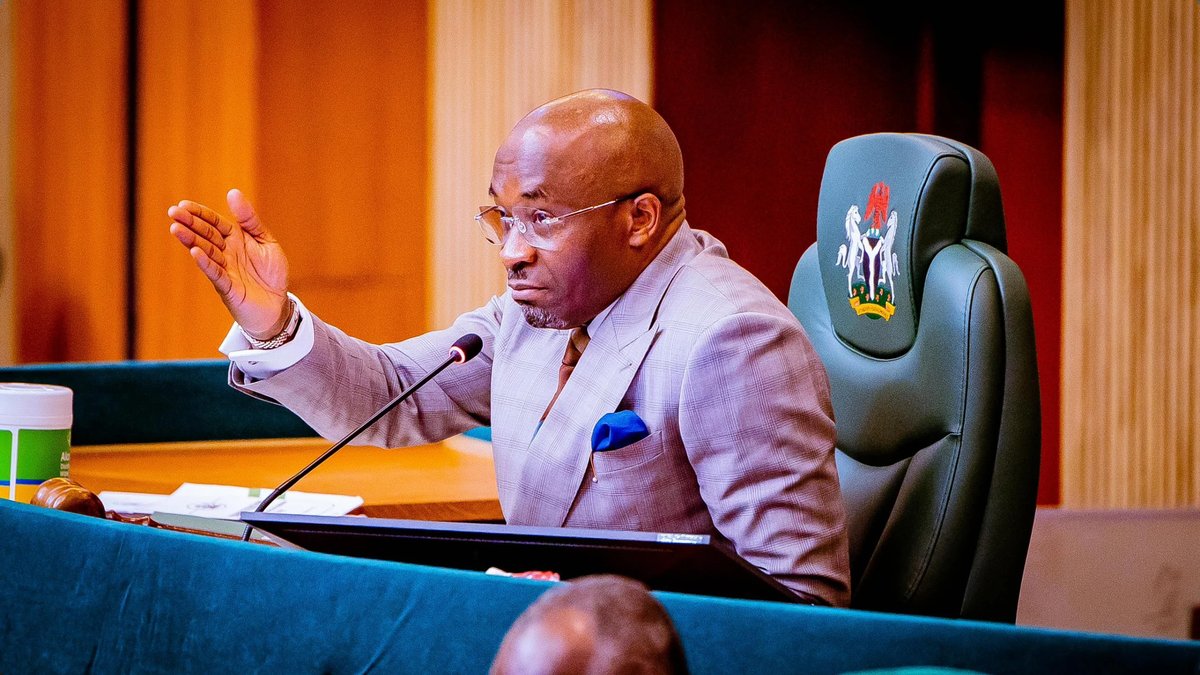
The Deputy Speaker of the House of Representatives, Benjamin Kalu, has called on Nigerian journalists to embrace balanced reporting by highlighting the country’s progress and opportunities while continuing to hold government accountable.
Speaking on Thursday during the inauguration of the newly elected executive of the House of Representatives Press Corps in Abuja, Mr Kalu said journalism should not be limited to exposing government shortcomings but should also showcase achievements capable of improving Nigeria’s image locally and internationally.
He said conversations with foreign partners had reinforced concerns that Nigeria’s strengths and investment opportunities were often overshadowed by negative narratives.
“I recently held discussions outside Nigeria, including with ambassadors of the European Union, and one of the issues they raised was why reports about Nigeria tend to emphasise our weaknesses rather than the many opportunities the country offers,” he said.
|
|
|
|---|
The deputy speaker said journalists should tell stories that reflect both the country’s challenges and the efforts being made to address them.
“Can we write about what makes Nigeria good? Can we project the opportunities in Nigeria? Can we tell the good stories of what this administration is doing? Journalism should not be only about where government is failing. It should also inform people about what is working and the steps being taken to correct what is not,” he said.
Mr Kalu described such an approach as the essence of balanced journalism, saying it would provide citizens with a fuller understanding of national development while maintaining the media’s watchdog role.
He also reaffirmed his support for the parliamentary press, noting that he had maintained a close working relationship with journalists covering the National Assembly and would continue to do so.
Parliament’s role in democracy
The deputy speaker described the legislature as the cornerstone of Nigeria’s democratic system and urged members of the press corps to strengthen public understanding of the institution by reporting its constitutional responsibilities comprehensively.
He said journalists should continue to spotlight legislative oversight, lawmaking, constituency representation, public hearings and debates to enable Nigerians to appreciate the work of parliament.
“The parliament may not always be able to tell its own story, but you remain our voices. Your reports shape public understanding of what we do and have the power either to unite or divide the nation,” he said.
Mr Kalu urged journalists to use their platforms to promote national cohesion, patriotism and unity while maintaining professionalism.
He also praised members of the House Press Corps for their sacrifices in ensuring that parliamentary proceedings reach Nigerians across the country and in the diaspora.
According to him, credible parliamentary reporting has contributed significantly to strengthening public confidence in Nigeria’s democratic process.
“If you undermine the institution, people may lose confidence in democracy. But by reporting our work fairly, many Nigerians have continued to believe in the democratic system,” he said, adding that the House remained committed to protecting press freedom.
House spokesperson commends open-door policy
Chairman of the House Committee on Media and Public Affairs, Akin Rotimi, commended Speaker Abbas Tajudeen for sustaining what he described as an open-door leadership style that has enabled journalists to report parliamentary activities without undue restrictions.
Mr Rotimi said the parliamentary press performs a critical democratic function by connecting legislative activities with citizens.
READ ALSO: Ex-aide to Reps deputy speaker deletes Facebook posts accusing media team of running fake accounts
He urged members of the press corps to continue upholding the principles of accuracy, fairness, professionalism and responsibility.
“A strong legislature and a vibrant, credible press are mutually reinforcing pillars of every healthy democracy,” he said.
In his acceptance speech, the re-elected Chairman of the House of Representatives Press Corps, Gboyega Onadiran, pledged to strengthen collaboration with the leadership of the House of Representatives while upholding the ethics, independence and integrity of the journalism profession. Mr Onadiran, who was returned unopposed during the election held on Friday, 5 June, said the corps would continue to provide accurate, balanced and responsible coverage of legislative activities without compromising professional standards. He commended the leadership of the House for its continued support of the parliamentary press and singled out the Chairman of the House Committee on Media and Public Affairs, Mr Rotimi, for introducing a health insurance scheme for all accredited members of the House Press Corps. He described the initiative as the first of its kind in the history of the corps and a major milestone for journalists covering the National Assembly. The newly inaugurated executive comprises Mr Onadiran as chairman, Christiana Ekpa (Vice Chairman), Nicholas Kalu (Secretary), Saheed Badmus (Financial Secretary), Adah Onah (Treasurer), Gift Chapi-Odekina (Assistant Secretary), Nsikak Evans (Welfare Secretary) and Tope Balogun (Welfare Officer).
Facts Only
* Benjamin Kalu called on Nigerian journalists to embrace balanced reporting by highlighting country's progress and opportunities while holding government accountable.
* Kalu stated journalism should showcase achievements capable of improving Nigeria’s image locally and internationally.
* Conversations with foreign partners raised concerns that reports often emphasize Nigeria’s weaknesses over its strengths and investment opportunities.
* Journalists should tell stories reflecting both the country’s challenges and the efforts to address them.
* Journalists should report on what makes Nigeria good and project the opportunities within Nigeria.
* Reporting should inform people about what is working and the steps taken to correct what is not.
* The legislature is described as the cornerstone of Nigeria’s democratic system.
* Members of the press corps should report on the legislature's constitutional responsibilities, including oversight, lawmaking, and constituency representation.
* Credible parliamentary reporting has contributed to strengthening public confidence in Nigeria’s democratic process.
* Chairman Akin Rotimi commended Speaker Abbas Tajudeen for an open-door leadership style enabling unrestricted reporting of parliamentary activities.
* The newly elected Chairman of the House of Representatives Press Corps pledged accurate, balanced coverage without compromising professional standards.
Executive Summary
The Deputy Speaker of the House of Representatives, Benjamin Kalu, urged Nigerian journalists to adopt balanced reporting that highlights national progress and opportunities alongside holding the government accountable. Kalu stated that journalism should feature stories about what Nigeria is doing well and the potential opportunities it offers, not solely focus on shortcomings. This perspective was reinforced by discussions with foreign partners who noted that reports often emphasize Nigeria's weaknesses over its strengths and investment prospects. Kalu stressed that responsible reporting involves telling stories about both challenges and the efforts being made to address them, aiming to give citizens a complete view of national development while maintaining the media's watchdog function.
The Deputy Speaker emphasized that the legislature is the foundation of Nigeria’s democracy, calling on the press corps to comprehensively report on its constitutional responsibilities, including oversight and representation. He asserted that journalists serve as crucial voices in shaping public understanding, capable of either uniting or dividing the nation through their reporting. This call for balanced journalism was contextualized by a commitment to maintaining press freedom and ensuring credible reporting contributes to public confidence in the democratic process. Furthermore, other members, such as the Chairman of the House Committee on Media and Public Affairs, commended open-door leadership that allows journalists to report without undue restriction.
Full Take
The discourse presented by the Deputy Speaker frames journalism not merely as a mechanism for exposing failure but as an active agent in shaping national perception and democratic health. A core pattern emerges: the tension between the watchdog role (exposing failures) and the constructive role (showcasing progress) is central to achieving perceived legitimacy for any institution, particularly democracy. The emphasis on storytelling—asking "what makes Nigeria good"—suggests an underlying recognition that narrative control is a form of power, where framing determines public belief about national trajectory.
The assertion that journalists are the "voices" shaping whether Nigerians believe in the democratic system points to a systemic concern regarding institutional trust. This highlights a pattern where internal accountability (legislative oversight) must be translated into external communication strategies for it to yield political results. The context provided by foreign partners suggests an external validation of this tension, implying that the negative narrative cycle is not unique to Nigeria but represents a challenge in how developing nations project themselves internationally.
The support shown by the leadership for the press corps, evidenced by initiatives like health insurance and open-door policies, attempts to reinforce the ideal that "a strong legislature and a vibrant, credible press are mutually reinforcing pillars of every healthy democracy." This attempt to create a symbiotic relationship between legislative function and media visibility suggests an acknowledgement that institutional integrity is inseparable from public communication. The underlying assumption is that if the process is transparently reported, public faith in governance will follow, suggesting that mistrust often stems less from corruption itself and more from perceived information asymmetry.
Bridge Questions: What are the specific mechanisms journalists can employ to shift the focus from deficit reporting to opportunity framing without compromising the necessary critical examination of accountability? How can institutions ensure that the pursuit of positive narratives does not inadvertently sanitize or sideline genuine, immediate challenges being faced by citizens? What is the long-term effect on civic engagement when the media’s primary success metric shifts from accuracy and exposure to fostering cohesion and optimism?
Sentinel — Human
The text appears to be a compilation or reporting of official statements made during a public ceremony, characterized by direct quotes and established institutional context.