Inscriu-te a la newsletter Internacional
El que sembla lluny importa més que mai
Inscriu-t’hi
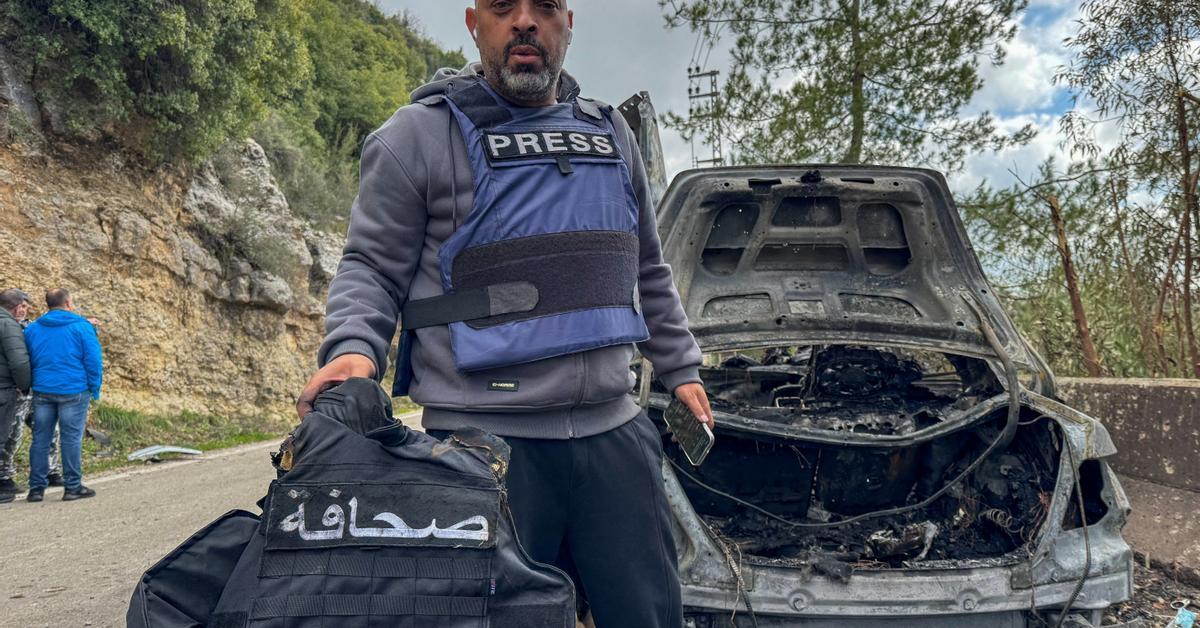
Shuaib era un corresponsal veterà a la frontera sud, conegut per cobrir de prop els bombardejos i els desplaçaments de població. Fatima Ftouni treballava des de feia anys en zones de conflicte, acompanyant el seu germà Mohammad a cobrir atacs i evacuacions. Els seus companys en recorden la constància i la determinació, fins i tot davant els riscos creixents d’una guerra oberta que va començar el 2 de març, marcada per enfrontaments directes amb Hezbollah, incursions israelianes i més de mil morts.
L’exèrcit israelià afirma que Ali Shuaib formava part de les forces d'elit Radwan, de Hezbollah, i operava sota cobertura periodística, un argument que Israel ha utilitzat en operacions anteriors per justificar atacs. No feia cap menció als altres dos ocupants del vehicle. Israel ha atacat de manera sostinguda objectius vinculats a Hezbollah, incloent-hi vehicles de premsa, posicions estratègiques i mitjans com Al-Manar i Al-Nour, així com les rutes d’evacuació de la població civil, mentre Hezbollah manté posicions defensives i combats intermitents en punts clau del sud.
L’atac de Jezzine s’afegeix a altres episodis que afecten mitjans libanesos. El 18 de març, un dron va atacar un apartament a Beirut, i va matar Mohammad Sherri, responsable de programes polítics d’Al-Manar, juntament amb la seva esposa Amaal Khalil. Durant el 2023 i el 2024, ja s'havien colpejat equips d'Al-Manar i d'Al-Mayadeen mentre cobrien bombardejos a la frontera sud, amb impactes directes a vehicles de premsa i atacs en rutes d’accés a pobles. Autònoms i corresponsals han resultat ferits o morts en múltiples ocasions, fet que reflecteix el risc constant de la cobertura periodística a la regió.
51 paramèdics morts
La violència ha arribat també als treballadors sanitaris. Segons el ministeri de Salut, almenys 51 paramèdics i personal sanitari han mort des de l’inici del conflicte, molts d’ells mentre intervenien després d’atacs en zones ja bombardejades. Nou d’ells van morir ahir, quatre dels quals pertanyien a l'Organització Islàmica de la Salut i cinc dels quals, a l’Associació Islàmica de Scouts al-Rissala.
Ambulàncies i equips de rescat han rebut impactes en les mateixes rutes que recorren els periodistes, cosa que evidencia l’alt risc que afronten aquells que intenten documentar o assistir les víctimes.
L’atac ha provocat protestes immediates a Beirut. Al migdia, periodistes del sud s'han concentrat davant del ministeri d’Informació, i a mitja tarda s'ha fet un segon acte a la plaça dels Màrtirs. Entre els manifestants, companys de Ftouni i Shuaib recordaven la dedicació que posaven al treball de camp. Un fotògraf local que va treballar amb Shuaib deia que Israel havia intentat assassinar-lo abans. “No era membre de la unitat Radwan, sinó que era un periodista experimentat amb més de 35 anys de cobertura al sud”, ha assegurat.
Les condemnes oficials no s'han fet esperar. El president Joseph Aoun ha recordat que els periodistes són civils protegits pel dret internacional i ha advertit sobre la vulnerabilitat d’aquells que documenten la guerra, fent un paral·lelisme amb Gaza, on moltes veus han estat silenciades durant els enfrontaments. El ministre d’Informació ha qualificat el fet de greu i ha emfatitzat la necessitat de protegir els equips de premsa. El Sindicat d’Editors de Premsa del Líban ha declarat que “l’assassinat de companys periodistes és un crim clarament definit per tots els estàndards, que reflecteix un enfocament hostil i d’eliminació cap al Líban i els libanesos”.
Des de l’inici de la guerra, vehicles, habitatges i ambulàncies han estat colpejats, fet que ha deixat múltiples ferits i morts. Això reforça la idea que cobrir el conflicte al sud del Líban continua sent extremadament perillós i que els atacs contra periodistes i treballadors civils s’estan acumulant en un patró preocupant. Com a Gaza, aquells que cobreixen la guerra o assisteixen les víctimes es converteixen en objectius perquè la seva presència documenta allò que altres actors prefereixen silenciar.
Facts Only
Shuaib, a veteran correspondent, and Fatima Ftouni, a journalist, were killed in an attack in southern Lebanon.
Fatima Ftouni’s brother, Mohammad, also a journalist, was killed alongside her.
The conflict began on March 2, marked by direct clashes with Hezbollah and Israeli incursions.
Israel claims Shuaib was part of Hezbollah’s Radwan forces, operating under journalistic cover.
Over 1,000 deaths have been reported since the conflict’s start.
Israel has targeted Hezbollah-linked media outlets, including Al-Manar and Al-Nour, and civilian evacuation routes.
51 paramedics and medical workers have been killed, many while responding to attacks.
Protests occurred in Beirut, with journalists gathering at the Ministry of Information and Martyrs’ Square.
Lebanese President Joseph Aoun condemned the killings, stating journalists are protected under international law.
The Lebanese Press Editors Syndicate called the killings a "clear crime" reflecting hostility toward Lebanon.
Ambulances and press vehicles have been repeatedly hit, increasing risks for those documenting or assisting in the conflict.
Executive Summary
The conflict in southern Lebanon has escalated, with journalists and medical workers increasingly targeted. Shuaib, a veteran correspondent, and Fatima Ftouni, a journalist covering conflict zones, were killed in an attack, alongside her brother Mohammad. Israel claims Shuaib was part of Hezbollah’s Radwan forces, operating under journalistic cover, though colleagues deny this, describing him as a seasoned reporter. Since the war began on March 2, over 1,000 deaths have been reported, with sustained Israeli strikes on Hezbollah-linked targets, including media outlets like Al-Manar and Al-Nour, as well as civilian evacuation routes. Medical personnel have also been hit, with 51 paramedics killed, many while responding to attacks. Protests erupted in Beirut, with journalists demanding protection under international law. Lebanese officials, including President Joseph Aoun, condemned the killings, emphasizing the vulnerability of those documenting the war. The pattern of attacks on press and medical teams suggests a broader strategy to suppress coverage and aid, mirroring dynamics seen in Gaza.
The situation reflects a dangerous environment for civilians and journalists alike, with both sides engaged in sustained hostilities. While Israel justifies strikes as targeting Hezbollah, critics argue the attacks disproportionately harm non-combatants and undermine press freedom. The Lebanese government and media unions have framed the killings as deliberate violations of international norms, warning of a broader campaign to silence dissent. The conflict’s toll on infrastructure and human life continues to rise, with no clear path to de-escalation.
Full Take
The strongest version of this narrative highlights the systematic targeting of journalists and medical workers in southern Lebanon, framing it as part of a broader Israeli strategy to suppress coverage and aid in conflict zones. The source provides credible accounts of attacks on press vehicles, medical teams, and media outlets, with testimonials from colleagues and officials reinforcing the claim that these are deliberate violations of international law. The emotional weight of the protests and official condemnations lends urgency to the argument that civilians and non-combatants are being disproportionately harmed.
However, the narrative leans heavily on the perspective of Lebanese journalists and officials, with limited direct evidence countering Israel’s claim that Shuaib was a Hezbollah operative. The pattern of attacks on media and medical infrastructure is undeniable, but the framing risks conflating all strikes as intentional targeting rather than collateral damage in a complex war zone. The absence of Israeli perspectives or independent verification of the victims’ affiliations leaves room for skepticism about the full context.
Root cause: This narrative echoes historical patterns of asymmetric warfare, where controlling information becomes as critical as military dominance. The assumption that journalists and medics are neutral actors is challenged by the reality of embedded reporting and the blurred lines between combatants and civilians in modern conflicts. The paradigm here is one of "information as a battleground," where silencing witnesses is a tactical objective.
Implications: The erosion of press freedom and medical neutrality undermines human dignity by depriving victims of documentation and aid. The second-order consequence is a chilling effect on reporting, leaving conflicts shrouded in propaganda. Those who benefit are actors who prefer opacity; those who bear the cost are civilians and truth-seekers.
Bridge questions: What independent mechanisms could verify the affiliations of targeted journalists? How does the framing of these attacks compare to similar incidents in other conflicts, such as Gaza or Ukraine? What would it take to shift the narrative from blame to accountability?
Counterstrike scan: A coordinated influence campaign would amplify emotional outrage, omit Israeli justifications, and frame all attacks as deliberate war crimes. The actual content includes some balance (e.g., mentioning Israel’s claims) but leans toward a one-sided portrayal. While not a full match, the selective emphasis on civilian harm without deeper interrogation of Hezbollah’s role in the conflict aligns with a pattern of narrative framing that could be exploited for political mobilization.
Patterns detected: ARC-0024 Ambiguity (lack of clarity on victims' affiliations), ARC-0043 Motte-and-Bailey (broad claims of deliberate targeting without nuance).