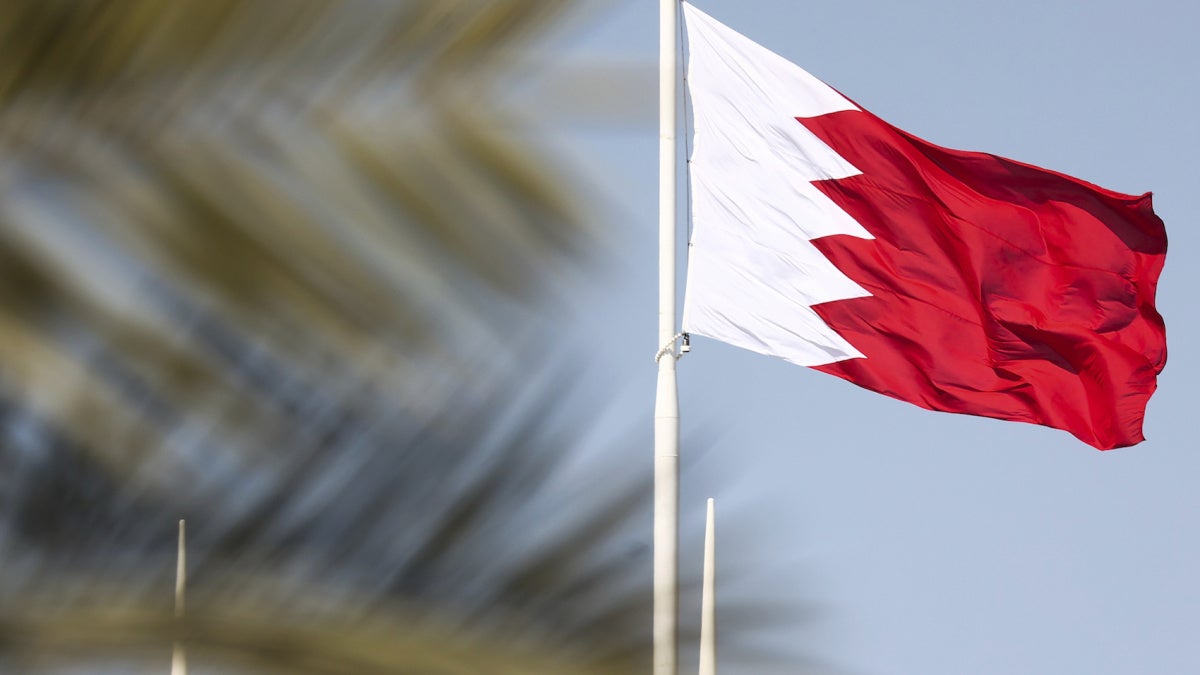
(Beirut) – Bahraini authorities have arrested dozens of people for exercising their right to peaceful expression, seeking the death penalty in some cases, amid the conflict between the US, Israel, and Iran, Human Rights Watch said today.
“At this critical moment, Bahrain authorities should be expanding their efforts to protect people, not arresting them for peacefully demonstrating or posting on social media,” said Niku Jafarnia, Yemen and Bahrain researcher at Human Rights Watch. “Bahraini authorities should stop detaining people, unconditionally release all those arbitrarily detained, and temporarily release others on humanitarian grounds.”
Human Rights Watch spoke to nine people, including detainees’ family members and members of Bahraini civil society and reviewed and verified information shared online, including statements, social media posts, and videos.
Since February 28, 2026, Israel and the United States have carried out thousands of attacks across Iran. Iranian forces responded with waves of drone and missile attacks, including on Bahrain, many unlawfully targeting civilian objects. In Bahrain, the attacks have killed at least two people and injured 46 according to Bahrain News Agency, the official news source.
Amid the attacks, several countries have cracked down on their own populations for exercising their right to free speech. In Bahrain, authorities have arrested dozens of people for participating in peaceful demonstrations mourning the death of Ayatollah Khamenei, Iran’s former Supreme Leader, for protesting US and Israeli attacks in Iran, or for posting footage of the attacks on social media, said the Bahrain Center for Human Rights and an activist compiling the cases.
On March 6, the Interior Ministry’s Civil Defense Council said it was banning protests “to uphold public safety responsibilities in light of the blatant Iranian aggression against the Kingdom of Bahrain."
Over a series of posts, the Interior Ministry has said that it had detained at least 40 people for publishing content online for reasons ranging from “abused the use of social media” to “expressing sympathy for Iranian aggression, which constitutes treason.”
On March 1, authorities detained two men, Hussein Naji and Ali Mahdi, who were marching toward the US embassy in a peaceful protest. Four people interviewed, including a family member, said the march to protest US attacks on Iran was entirely non-violent. The family member said that authorities had said they were bringing charges against the men for “inciting hatred against the [Bahraini] government; causing public disorder during war; and supporting and endorsing a state hostile to Bahrain.”
In another case, Bahraini authorities, some in civilian clothes, detained Muneer Mirza Ahmed Mushaima at his home on March 4. Fatima Mansor, his wife, said that about 30 men arrived at about 3:30 a.m. in several cars, some with “Ministry of Interior” written on their sides, stormed the house and detained her husband. Human Rights Watch reviewed a video she provided showing five patrol vehicles pulled up to their house, with at least seven people emerging from the cars, some in black uniforms and white helmets, and others in civilian clothes.
She said the people introduced themselves as members of the “Order Preservation Force” of the Interior Ministry but did not show any proof, or present search or arrest warrants, even when she asked.
She said they accused her husband of “running a social media account [with unlawful content],” but he told her that the phone they used as evidence was not his. She said her husband has been detained several times since 2017.
In another case, Youssef Ahmed said that at 3:30 am on March 8, several men, apparently plain clothes police officers, came to his house and questioned him and his 16-year-old son. “There were two unmarked cars with no police insignia,” he said. “Even when they asked for my ID, I asked them who they were, and they said they were the police, but they didn’t give me any papers.”
After checking his son’s phone, the men left, he said, but arrested him the next afternoon. “My son didn’t participate in any demonstrations,” he said. “I don’t know why they arrested him, and they haven’t given us any information. There was no arrest warrant.”
An activist interview said that others who have been detained were unable to make phone calls to their families or to lawyers for several days. One was Badoor Abdulhameed, who was detained for her posts on social media. The activist said that she was not allowed to make a phone call until five days after her arrest, and authorities did not inform her family where she was, possibly amounting to the crime of enforced disappearance.
Enforced disappearances, in which the authorities detain a person and then refuse to acknowledge their whereabouts or situation when asked, are serious crimes under international law and are prohibited at all times under both international human rights law and international humanitarian law.
Several of those arrested have been migrant workers, who comprise over 53 percent of the population, and are governed by an abusive visa sponsorship system.
“We have already been told that if police arrest us for posting on social media, the company will not be responsible,” said one migrant worker who has been in Bahrain for seven years. “We must look after ourselves. Messages have already come telling us not to do anything risky. I have seen some people post on TikTok. I do not know what happened to them… Even when life is at risk, if they do not allow videos to be posted, it feels a bit suffocating.”
On March 9, Bahrain’s Public Prosecution said in a public statement that they had “requested the court to issue death sentences for some of the defendants due to their involvement in espionage.”
On the same day, the Interior Ministry’s Police Media Center announced the arrest of five Pakistani men and one Bangladeshi man because they allegedly “filmed, published, and reposted videos related to the effects of the treacherous Iranian aggression, expressing sympathy with and glorifying those hostile acts in a manner that harms security and public order.”
The International Covenant on Civil and Political Rights (ICCPR), to which Bahrain is a party, protects the rights to freedom of expression and peaceful assembly. The Human Rights Committee has clarified that these rights apply to online expression and assembly.
International human rights standards, including the Arab Charter on Human Rights, ratified by Bahrain, obligate countries that use the death penalty to restrict its enforcement to exceptional circumstances for the “most serious crimes.”
Bahrain’s government has increasingly turned to repressive laws, including the penal code, the counterterrorism law, the press and publication law, and cybercrime legislation to further restrict civic space.
This is in addition to the Bahraini government’s broader history of repressing freedom of speech, and continued arbitrary detention of political leaders and human rights defenders including Abdulhadi al-Khawaja, Hassan Mushaima, Dr. Abduljalil al-Singace, Sheikh Mohammed Habib Al-Muqdad, and Sheikh Ali Salman. Many have been consistently denied adequate medical care despite their urgent medical needs, some as a result of torture and long-term imprisonment.
Human Rights Watch opposes the death penalty in all countries and under all circumstances. Capital punishment is unique in its cruelty and finality, and its determination is often plagued with arbitrariness, prejudice, and error, Human Rights Watch said.
“Bahraini authorities are using the cover of war to justify further violations against the population of Bahrain, including migrant workers,” Jafarnia said.
Facts Only
* Bahraini authorities have arrested dozens of individuals.
* Arrests are linked to peaceful demonstrations and social media posts.
* Some detainees face potential death penalties.
* The conflict between the US, Israel, and Iran is a contextual factor.
* Iran responded to attacks with drone and missile attacks, some unlawfully targeting civilian objects.
* Bahrain News Agency reports at least two deaths and 46 injuries from the attacks.
* The Interior Ministry banned protests citing “blatant Iranian aggression.”
* Authorities detained 40 people for publishing content related to the attacks.
* Hussein Naji and Ali Mahdi were detained for protesting US attacks on Iran.
* Muneer Mirza Ahmed Mushaima was detained at his home.
* Youssef Ahmed and his son were questioned and his son arrested.
* Badoor Abdulhameed was detained for social media posts, unable to make calls for five days.
* The Public Prosecution requested death sentences for some defendants due to espionage.
* Five Pakistani and one Bangladeshi men were arrested for filming and posting about the attacks.
* The ICCPR applies to Bahrain, protecting freedom of expression and peaceful assembly.
* Bahrain’s government has increased repressive laws to restrict civic space.
Executive Summary
Full Take
Patterns detected: ARC-0043 Motte-and-Bailey, ARC-0024 Ambiguity.
The article employs a Motte-and-Bailey strategy, framing the situation as a direct consequence of Iranian aggression while simultaneously highlighting the government’s response as a necessary measure to uphold public safety. The assertion that the arrests are solely based on “abused use of social media” and “expressing sympathy for Iranian aggression” presents a deliberately narrow definition of acceptable expression, a classic example of a Motte-and-Bailey tactic. Furthermore, the article relies on ambiguity surrounding the "unlawful" nature of the attacks, neither fully endorsing nor denying the claims made by the Bahraini government without corroborating evidence. The reliance on NGO reports and activist accounts creates a degree of ambiguity, potentially allowing the government to deflect criticism while maintaining a facade of concern for human rights.
The underlying paradigm driving this narrative is a state-sponsored securitization— a process whereby the threat from Iran is leveraged to justify increasingly restrictive measures against the population. The assumption that the government’s actions are purely defensive and driven by a genuine concern for public safety is highly suspect, given Bahrain's close relationship with Saudi Arabia and the United States. The historical context of Bahrain’s authoritarian regime and its suppression of dissent suggests a deeper pattern of using external threats as a pretext for consolidating power and silencing opposition. The root cause is a system of perpetual state insecurity, exacerbated by geopolitical pressures.
The implications are profound for the exercise of fundamental rights in Bahrain. The arrests represent a significant erosion of civil liberties and a chilling effect on freedom of expression. The vulnerability of migrant workers, who constitute a significant portion of the population, raises serious concerns about exploitation and impunity. The targeting of individuals based on their online activity is a hallmark of surveillance states, and raises serious questions about the scope of government power.
Questions: Are the actions of the Bahraini government proportionate to the perceived threat, or are they serving a more strategic purpose? What are the long-term consequences for Bahrain’s human rights record, and what role will international pressure play in shaping its future? If the Public Prosecution's request for death sentences is granted, what legal arguments would be used, and what standards of evidence would be required? The attack pattern a bad actor WOULD use to amplify this narrative is through targeted disinformation campaigns exploiting existing sectarian divisions and amplifying accusations of Iranian-backed terrorism to further erode public trust and justify increased repression.
Sentinel — Uncertain
The text presents a detailed account of arrests in Bahrain linked to protests and social media activity, attributed to various sources. While informative, the structure and emphasis on 'both sides' framing, combined with extensive hedging and reliance on reporting, raises a moderate concern for potential AI assistance in constructing a balanced narrative.