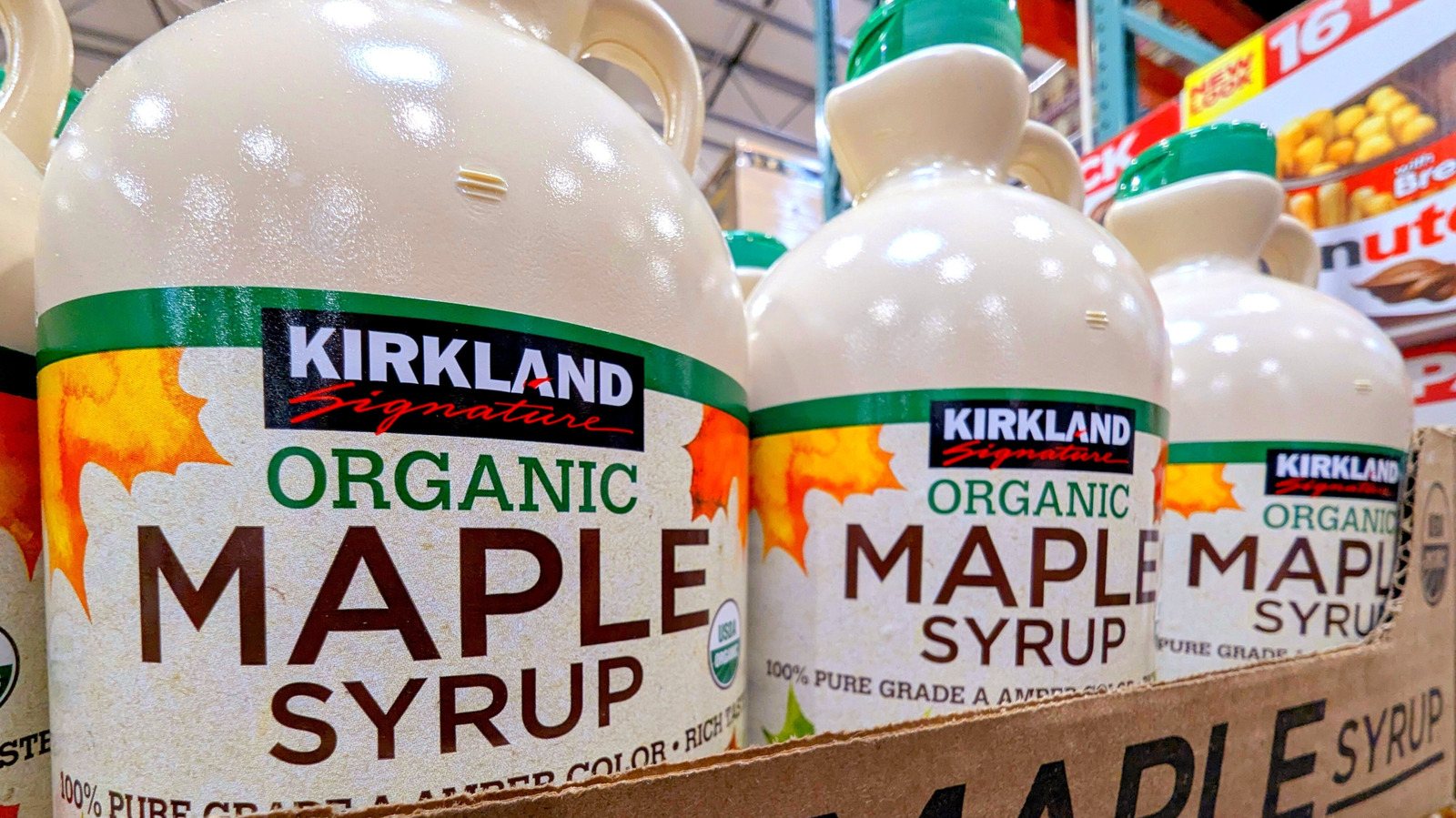
In today's world, when food often comes to us looking vastly different from how the plant or animal started out (e.g., grains turned into brown rice cheese crackers or cereal), consumers want to know more than ever where the things they eat come from. Huge corporations like Costco can be a specific target of this type of curiosity, in part because, as informed consumers, we know that various third-party manufacturers are the true force behind beloved Kirkland Signature products. While the warehouse chain isn't exactly forthright about who all of those manufacturers are, we at least know who makes the Kirkland Signature organic maple syrup. It's actually two companies, both located in Canada, naturally: Citadelle Maple Syrup and Lantic Maple.
Citadelle Maple Syrup's headquarters is in Plessisville, Quebec, but it sources its product from over 7 million trees in Canada's forests. It's got quite a setup, too, with a whole research and development department solely dedicated to the science of maple syrup. Lantic operates The Maple Treat Corporation, and its maple-specific headquarters is located in Quebec. Lantic runs a huge operation, with three plants in Canada and one in the U.S., and it partners with more than 1,500 different farmers to source the sap needed for the maple product.
Costco's maple syrup earns high marks for taste and value
Now that we know the provenance of Costco's Kirkland Signature maple syrup, it begs the question: Is it actually any good? The answer is a resounding yes. In part because the two producers bottle 100% pure Canadian maple syrup (you can read the labels; it's the only ingredient listed), the general consensus is that this syrup is very tasty. Redditors praise it not only for its flavor — with one user claiming they worked in a syrup factory and witnessed the same amber liquid going into Costco bottles as the more expensive brands — but also for its price.
"Definitely one of the best values in the warehouse," a commenter stated, while another user mentioned that they pay less for Costco's syrup than when they lived in Vermont, which is abundant in locally produced product. Indeed, the organic, Canada-sourced syrup that comes in a plastic 1-liter jug costs a mere $12.59 (price dependent on location), or 37 cents per ounce. A similar container at mid-Atlantic chain Wegmans costs 47 cents per ounce. So if you're a big fan of good maple syrup, you can trust that Costco's Kirkland Signature variety is of superior quality, and a great value, to boot.
Facts Only
Actors: Citadelle Maple Syrup, Lantic Maple, Costco
Actions/Events: Production of maple syrup, distribution by Costco
Locations: Plessisville, Quebec (Citadelle headquarters), Canada and the US (maple sap sourcing)
Timeline: Unspecified
Executive Summary
Full Take
In analyzing this article, it's essential to consider both the strengths and potential weaknesses of Costco's maple syrup narrative.
Strengths:
The article provides clear information about the sourcing and production process of Kirkland Signature maple syrup, enhancing consumer trust.
Redditors' testimonies add credibility to the claims about the syrup's taste and value compared to other brands.
Potential Weaknesses:
While Costco mentions the two manufacturers, it does not disclose specific information about their relationship with the warehouse chain or any quality control measures in place. This ambiguity could leave room for concerns about product consistency and oversight.
The article's focus on cost comparisons may inadvertently encourage consumers to prioritize affordability over sustainability, as the environmental impact of industrial maple syrup production is not discussed.
Bridge Questions:
What are the long-term consequences of Costco's sourcing practices for maple syrup farmers and the environment?
How can consumers make informed decisions about ethical and sustainable maple syrup options beyond cost considerations?
Sentinel — Human
This analysis suggests that the article is likely human-written, with evidence of a personal voice and idiosyncratic emphasis. However, it's important to note that AI-assisted writing tools could have been used in the creation process.