Archbishop, witnesses testify to religious freedom risks health care providers face March 17, 2026By Kate Scanlon OSV News Filed Under: Health Care, News, Religious Freedom, World News WASHINGTON (OSV News) — Conscience protections for faith-based health providers remain a key religious freedom concern, witnesses at a March 16 meeting of the Department of Justice’s Religious Liberty Commission said. Archbishop Salvatore J. Cordileone of San Francisco, one of the witnesses at the hearing, said in his testimony that “without the freedom to publicly witness to our faith through charitable works, everyone suffers.” “In California, where I am from, there is a Catholic hospital being sued by the state because it refuses to offer abortions,” Archbishop Cordileone said in reference to a lawsuit filed by California Attorney General Rob Bonta against Providence St. Joseph Hospital in Eureka. Bonta sued the hospital in 2024, arguing its policy against performing an abortion when a fetal heartbeat is present constituted unlawful discrimination. “Should the courts rule the wrong way, in this case, all Catholic hospitals in California will be threatened,” Archbishop Cordileone argued. The commission, established by President Donald Trump in May, includes Cardinal Timothy M. Dolan, retired archbishop of New York, and Bishop Robert E. Barron of Winona-Rochester, Minn., among its members. The commissioners gathered at the Museum of the Bible in Washington to examine what recommendations they should make to the president about promoting and protecting religious freedom in a report when it concludes its hearings, expected later in spring. One area witnesses identified as rife with potential religious liberty concerns is medically assisted suicide, which involves doctors prescribing lethal drugs for a patient to take their own lives under certain criteria. Assisted suicide and euthanasia, which involves a health practitioner lethally injecting a patient that meets certain criteria, are sometimes referred to as medical aid in dying, or MAiD. They are opposed by the Catholic Church as being grave violations of human life and therefore morally unacceptable responses to treating human suffering. Dr. Kenneth Prager, a pulmonologist and director of clinical ethics and chairman of the Medical Ethics Committee at Columbia University Medical Center, said that as an observant Jew, he believes that while it “may be permitted to remove an impediment to a peaceful death,” one is “never allowed to intentionally hasten death or to intentionally cause death.” Pointing to a growing number of states that have legalized the practice, Prager said that while all states “allow physicians to recuse themselves from participating in MAiD on the basis of conscientious objections,” current laws “vary as to institutional opt-out provisions.” “States also vary,” he said about what is required of “physicians who recuse themselves to enable their patients to obtain MAiD.” “For example, must physicians inform a patient of the possibility of MAiD? Must they refer a patient to a physician who will enable physician-assisted suicide?” he asked. Elsewhere in the hearing, other health care providers or those in related fields argued that matters of abortion and gender remain among other areas of potential violations of conscience rights. Abby Sinnett, co-founder and CEO of Bella Health and Wellness, testified about her Catholic-based health care clinic in Colorado that filed a lawsuit in response to a state law barring them from offering progesterone in an attempt to counteract the effects of a medication-based abortion. The practice is sometimes called abortion pill reversal. A federal judge later blocked the state from enforcing the ban against the clinic, citing burden on their religious exercise and a lack of evidence about harm associated with the practice of administering progesterone in that context. Referring to Sinnett’s case, Bishop Barron said it “just strikes me as a species of insanity” the state argued “you wouldn’t be able, according to someone’s own desire, to reverse that process.” In another Colorado case, Kaley Chiles, a Christian counselor at the center of Chiles v. Salazar, which the Supreme Court heard in October, said in comments at the hearing, “Young people wrestling with identity deserve counselors who are free to speak, ask questions, listen with compassion and walk alongside them in their search for hope and restoration.” Chiles challenged a Colorado law banning professional counseling services that practice “conversion therapy” for minors, efforts intended to change a minor’s gender identity, when it is at variance with the young person’s biological sex, or to change their sexual orientation. Opponents of the law argue it restricts their ability to provide counseling to minors experiencing same-sex attraction or gender dysphoria, the feeling of distress that one’s biological sex and gender identity are not aligned. But supporters of the law argue such treatments are discredited and so the ban shields children from treatments they might otherwise be forced to undergo by their parents or guardians. A ruling in that case is still pending from the high court. Chiles said she is “hopeful they will reaffirm that the government can never censor conversations simply because it disagrees with the client’s personal goals or viewpoint expressed.” Read More Religious Freedom Pope Leo to receive Liberty Medal for promoting religious liberty, human dignity Christians ‘most persecuted religious community in the world,’ Vatican tells UN Experts: Debates about Zionism, even by Catholics, often at odds with Catholic understanding Sudanese bishops express distress at the massacre of 178 people in northern South Sudan Iran’s exiled Christians watch events unfolding across Middle East with hope, fear Religious freedom watchdog annual report spotlights ‘terrifying crisis of religious violence’ in Nigeria Copyright © 2026 OSV News Print
Religious freedom watchdog annual report spotlights ‘terrifying crisis of religious violence’ in Nigeria
Facts Only
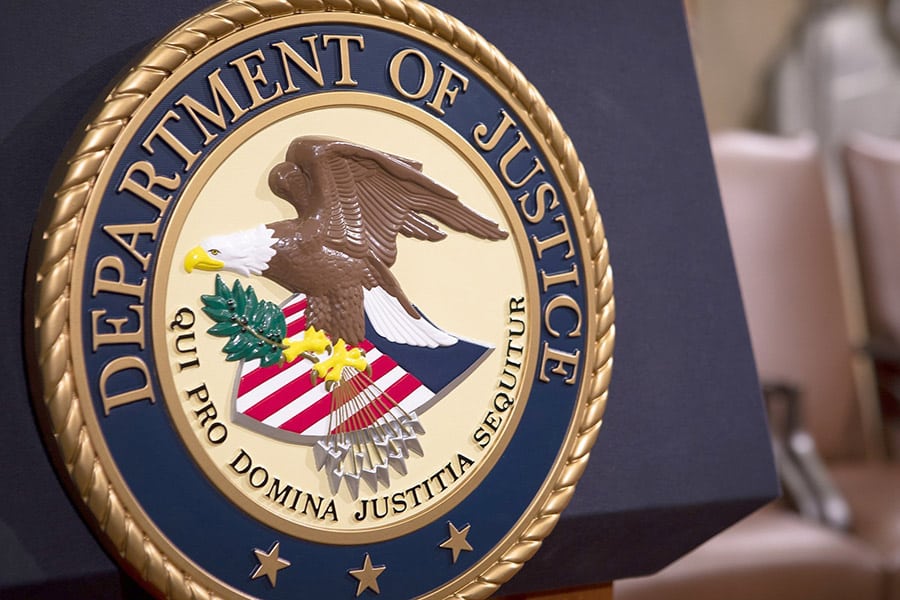
The Department of Justice’s Religious Liberty Commission held a hearing on March 16, 2026, at the Museum of the Bible in Washington.
Archbishop Salvatore J. Cordileone of San Francisco testified about a lawsuit filed by California Attorney General Rob Bonta against Providence St. Joseph Hospital in Eureka.
The lawsuit alleges the hospital’s policy against performing abortions when a fetal heartbeat is present constitutes unlawful discrimination.
The commission was established by President Donald Trump in May and includes Cardinal Timothy M. Dolan and Bishop Robert E. Barron.
Dr. Kenneth Prager, a pulmonologist and director of clinical ethics at Columbia University Medical Center, discussed medically assisted suicide (MAiD) and conscience protections for physicians.
Prager noted that states vary in laws regarding institutional opt-outs and physician referral requirements for MAiD.
Abby Sinnett, CEO of Bella Health and Wellness, testified about her Colorado clinic’s lawsuit against a state ban on abortion pill reversal.
A federal judge blocked enforcement of the ban against the clinic, citing religious exercise burdens and lack of evidence of harm.
Kaley Chiles, a Christian counselor, spoke about her Supreme Court case, *Chiles v. Salazar*, challenging Colorado’s ban on "conversion therapy" for minors.
The Supreme Court heard arguments in the case in October 2025, with a ruling still pending.
The commission aims to submit recommendations to the president on protecting religious freedom, with a report expected in spring 2026.
The Catholic Church opposes medically assisted suicide and euthanasia as violations of human life.
Executive Summary
The Department of Justice’s Religious Liberty Commission held a hearing on March 16, 2026, to examine threats to religious freedom in health care, particularly for faith-based providers. Archbishop Salvatore J. Cordileone of San Francisco testified about a lawsuit against Providence St. Joseph Hospital in California, where the state alleges the hospital’s refusal to perform abortions when a fetal heartbeat is present constitutes discrimination. Witnesses also highlighted concerns over medically assisted suicide (MAiD), with Dr. Kenneth Prager noting that while physicians can recuse themselves on conscience grounds, state laws vary on institutional opt-outs and referral requirements. Other cases discussed included a Colorado clinic’s legal challenge to a state ban on abortion pill reversal and a Supreme Court case involving a Christian counselor opposing a ban on "conversion therapy" for minors. The commission, which includes Cardinal Timothy Dolan and Bishop Robert Barron, aims to recommend policies to protect religious liberty, with a report expected later in spring.
The hearing underscored tensions between religious conscience protections and state regulations, particularly in areas like abortion, gender identity, and end-of-life care. While some argue these laws protect vulnerable populations, others contend they infringe on religious and professional freedoms. The outcomes of ongoing legal battles, including the Supreme Court’s pending decision in *Chiles v. Salazar*, could set significant precedents for how religious liberty and state authority intersect in health care.
Full Take
The strongest version of this narrative highlights legitimate concerns about religious freedom in health care, particularly for faith-based providers navigating state laws on abortion, assisted suicide, and gender identity. The testimony from Archbishop Cordileone and others underscores real legal and ethical dilemmas where conscience protections clash with regulatory mandates. The inclusion of diverse perspectives—from a Jewish physician to a Christian counselor—adds credibility to the argument that these issues transcend a single religious tradition. The commission’s focus on concrete cases, such as the California hospital lawsuit and the Colorado counseling ban, grounds the discussion in tangible legal battles rather than abstract debates.
However, the framing risks oversimplifying complex ethical and legal questions. For instance, the article presents the California lawsuit as a clear-cut religious freedom issue without delving into the state’s argument about discrimination or the broader context of abortion access. Similarly, the discussion of "conversion therapy" bans omits the well-documented harms associated with such practices, which many medical and psychological associations condemn. The narrative leans heavily on the perspective of religious providers, with less emphasis on the rights and protections of patients, particularly vulnerable populations like minors or terminally ill individuals. This could reflect a pattern of selective framing (ARC-0024 Ambiguity), where the focus on religious liberty obscures competing ethical considerations.
At its core, this debate reflects a deeper tension between individual conscience and collective rights—a paradigm that has played out repeatedly in U.S. history, from civil rights to LGBTQ+ protections. The assumption that religious freedom should automatically supersede other legal or ethical obligations goes unchallenged here, yet this is far from settled in law or public opinion. The implications are significant: if courts rule against faith-based providers, it could reshape access to religiously affiliated health care, while rulings in their favor might limit patient rights in ways that disproportionately affect marginalized groups.
Bridge questions: How should the law balance the rights of providers with those of patients, particularly in cases where religious beliefs conflict with medical standards of care? What evidence would change your view on whether conscience protections should extend to institutional policies, not just individual practitioners? And how might these legal battles influence the broader cultural perception of religious freedom—is it seen as a shield for marginalized beliefs or a tool for imposing them on others?
Counterstrike scan: A coordinated influence campaign pushing this narrative would likely amplify emotional appeals about religious persecution while downplaying the harms of policies like "conversion therapy" or abortion restrictions. It might also frame the issue as a binary choice between religious freedom and state tyranny, ignoring nuanced legal precedents. The actual content aligns with some of these tactics—particularly in its selective emphasis on provider rights over patient outcomes—but stops short of outright manipulation. The inclusion of multiple perspectives and legal context suggests a more balanced approach than a pure advocacy piece.
Sentinel — Human
The article exhibits strong indicators of human authorship, including stylistic idiosyncrasies, emotional emphasis, and specific, verifiable attributions. No significant signs of synthetic generation were detected.