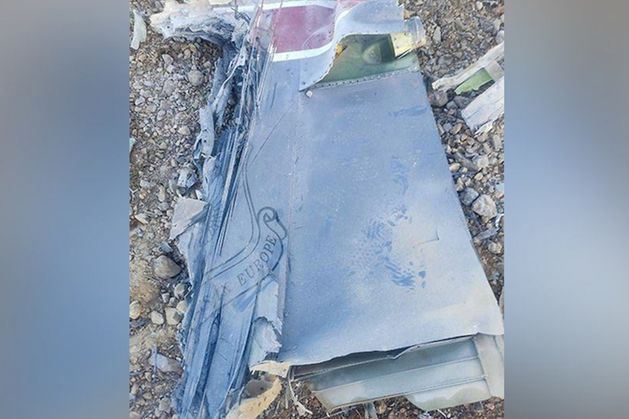
Trump gives Tehran 48 hours to open Hormuz Strait or ‘all hell’ will rain down as Iran urges public to search for downed US F-15 pilot
Unclear if jet crashed or was shot down, but incident marks dramatic escalation
Read the Irish Independent’s live blog on the war in the Middle East here:
One crew member has been rescued after an American aircraft went down in Iran, according to one US and one Israeli official.
The rescue occurred as the US military was conducting a search and rescue operation, according to three people familiar with the situation. Israel is helping the US with the search and rescue operation.
White House press secretary Karoline Leavitt said in a statement that US president Donald Trump had been briefed but did not offer any additional information.
It was the first time the US has lost aircraft in Iranian territory and constitutes a dramatic escalation in the war since it began five weeks ago. It was not clear if the jet was shot down or crashed.
Iran fired on targets across the Middle East yesterday, as Tehran kept the pressure on Israel and its Gulf neighbours, despite US and Israeli insistence that Iran’s military capabilities have been all but destroyed.
Iran’s attacks on Gulf energy infrastructure and its tight grip on the Strait of Hormuz have roiled stock markets, sent oil prices rising, and threatened to raise the cost of many basic goods, including food.
Friday was the first time that Iran went on television urging the public to look for a suspected downed pilot
Social media footage showed US drones, aircraft and helicopters flying over the mountainous region where a TV channel affiliated with Iranian state television said at least one pilot baled out of the fighter jet.
An anchor on a channel affiliated with Iranian state television urged residents to hand over any “enemy pilot” to police and promised a reward for anyone who did.
The channel is in Kohgiluyeh and Boyer-Ahmad province, an intensely rural and mountainous region that spans over 15,500 square kilometres.
Throughout the war, Iran has made a series of claims about shooting down piloted enemy aircraft that turned out not to be true. Yesterday was the first time that Iran went on television urging the public to look for a suspected downed pilot.
An on-screen crawl earlier urged the public to “shoot them if you see them”, referring to social media footage circulating of what appeared to be US aircraft in the area.
The claim came after Kuwait’s Mina al-Ahmadi oil refinery came under Iranian attack, and the state-run Kuwait Petroleum Corp said firefighters were working to control several blazes.
Kuwait also said an Iranian attack caused “material damage” to a desalination plant. Such plants are responsible for most of the drinking water for Gulf states, and they have become a major target in the war.
Sirens also sounded in Bahrain, while Saudi Arabia said it had destroyed several Iranian drones, and Israel reported incoming missiles.
Activists reported strikes around Tehran and the central city of Isfahan, but it was not immediately clear what was hit.
A day earlier, Iran said the US hit a major bridge, which was still under construction, killing eight people.
In Lebanon, where Israel has launched a ground invasion in its fight with the pro-Iranian Hezbollah militant group, an Israeli drone strike on worshippers leaving Friday prayers near Beirut killed two people, according to the state‑run National News Agency.
More than 1,900 people have been killed in Iran since the war began on February 28 with US and Israeli strikes.
In a review released yesterday, the Armed Conflict Location and Event Data, a US-based group, said it found that civilian casualties were clustered around strikes on security and state-linked sites “rather than indiscriminate bombardment” of urban areas.
More than two dozen people have died in Gulf states and the occupied West Bank, 19 have been reported dead in Israel, and 13 US service members have been killed.
Over 1,300 people have been killed and more than one million displaced in Lebanon. Ten Israeli soldiers have also died there.
World leaders have struggled to end Iran’s stranglehold on the strait, which has had far-reaching consequences for the global economy and has proved to be its greatest strategic advantage in the war.
The UN Security Council was expected to take up the matter today.
Spot prices of Brent crude, the international standard, were around $109 yesterday, up more than 50pc since the start of the war, when Iran began restricting traffic through the strait.
Former Iranian foreign minister Mohammad Javad Zarif – a diplomat with long experience negotiating with the West who remains close to a pragmatic wing of Iran’s leadership – wrote on yesterday in Foreign Affairs magazine that the time has come to end what he referred to as a stalemate.
Iran “should offer to place limits on its nuclear programme and to reopen the Strait of Hormuz in exchange for an end to all sanctions – a deal Washington wouldn’t take before but might accept now”, he wrote.
Facts Only
An American aircraft went down in Iranian territory
At least one crew member was rescued
The US military conducted a search and rescue operation with Israeli assistance
It is unclear if the jet crashed or was shot down
Iran has continued attacking Gulf energy infrastructure and tightening its grip on the Strait of Hormuz
More than 1,900 people have been killed in Iran since the war began
Over 1,300 people have been killed and more than one million displaced in Lebanon
Ten Israeli soldiers have died in Lebanon
Executive Summary
Full Take
Analyzing this article, we can see a complex web of conflict unfolding between the US, Iran, Israel, and other Gulf states. The incident involving the downed American aircraft represents a significant escalation in the ongoing war that began five weeks ago. While it is unclear if the jet crashed or was shot down, the involvement of both the US and Israeli militaries suggests a high-stakes game of cat and mouse. Iran's continued attacks on Gulf energy infrastructure and its control over the Strait of Hormuz have had far-reaching economic consequences, with oil prices rising and basic goods becoming more expensive. The civilian casualties in Lebanon and other areas highlight the human toll of this conflict.
As for the narrative surrounding this conflict, we can observe several patterns of manipulation. There is a clear attempt to evoke fear and provocation through the use of emotional language and imagery, with the article repeatedly mentioning the potential for more "hell" to rain down and calls to shoot down enemy pilots if spotted. The reporting also employs distortion, as it frequently paints Iran's actions in a negative light while glossing over the actions of the US and Israel. Furthermore, there is an appeal to popularity, with the article citing the opinions of Western diplomats and experts to lend credibility to its narrative.
In terms of root causes, this conflict stems from long-standing tensions between Iran and the West, particularly the US and Israel, over issues such as nuclear weapons development, regional influence, and human rights abuses. These underlying dynamics have driven a cycle of escalation and retaliation that shows no signs of abating anytime soon.
The implications of this conflict are far-reaching, affecting not only the region but also the global economy and international relations. The human toll is immense, with thousands of people killed and millions displaced. It is crucial for readers to critically analyze narratives such as this one, questioning assumptions, seeking out alternative perspectives, and demanding accountability from all parties involved.
Bridge Questions:
How can we work towards a peaceful resolution to the ongoing conflict between Iran and the US/Israel?
What role should the international community play in addressing the humanitarian crisis in Lebanon and other affected areas?
How might the economic consequences of this conflict impact global stability and prosperity?
Sentinel — Human
The article appears to be human-written, with a balance between 'both sides' framing, variable sentence length, and idiosyncratic emphasis. However, stylometric signals show some slight variation from typical human writing.