Development chief Bernadette Linn also says authorities preparing to increase residential component of some sites
Dedicated laws to streamline statutory procedures for Hong Kong’s Northern Metropolis may speed up some projects by about one year, the development chief has said.
Secretary for Development Bernadette Linn Hon-ho also revealed on Sunday that the government was preparing to increase the residential component of some sites to make the investment more appealing for developers.
The government unveiled a plan for proposed legislation earlier this month, comprising six main subsidiary laws designed to remove bottlenecks in the massive development scheme near the border with mainland China.
They include establishing statutory firms and measures to speed up land resumption payments and adopt new building technologies.
“Some individual projects [within the Northern Metropolis] could be fast-tracked by one year,” Linn told a television programme.
“If the statutory processes remain unchanged, how can the megaproject be sped up?”
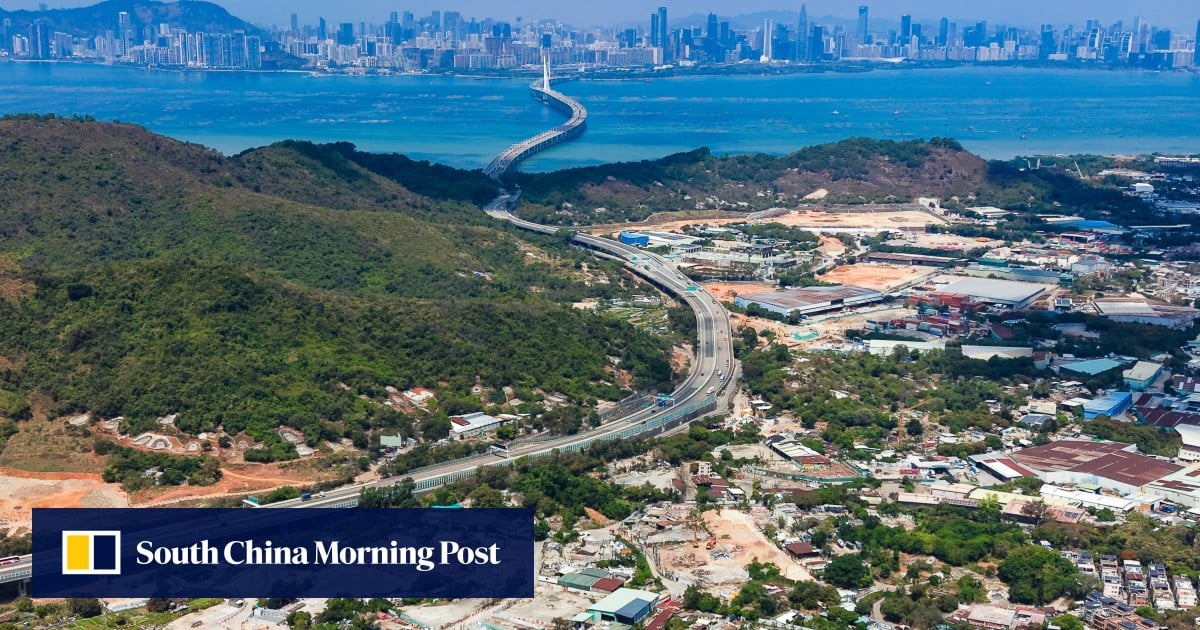
The megaproject, announced in 2021, aims to turn 30,000 hectares (74,132 acres) of land into an engine for economic growth and a housing hub. Chief Executive John Lee Ka-chiu has vowed to expedite its development, aligning with the nation’s recently unveiled 15th five-year plan.
Facts Only
Secretary for Development Bernadette Linn Hon-ho announced that dedicated laws could speed up some Northern Metropolis projects by about one year.
The Northern Metropolis is a 30,000-hectare development near the Hong Kong-mainland China border.
The government proposed six subsidiary laws to streamline statutory procedures for the project.
Measures include establishing statutory firms, expediting land resumption payments, and adopting new building technologies.
Linn revealed plans to increase the residential component of some sites to attract developers.
The Northern Metropolis was announced in 2021 as an economic growth and housing initiative.
Chief Executive John Lee Ka-chiu has prioritized expediting the project.
The development aligns with China’s 15th five-year plan.
The legislation aims to remove bottlenecks in the megaproject.
Linn made these remarks during a television programme.
Executive Summary
Full Take
The strongest version of this narrative presents the Northern Metropolis as a forward-thinking solution to Hong Kong’s housing and economic challenges, with the government proactively addressing bureaucratic inefficiencies. The proposed laws and incentives for developers suggest a commitment to tangible progress, aligning with broader national priorities. However, the pattern of framing large-scale projects as panaceas—without deeper scrutiny of feasibility or unintended consequences—warrants attention. The emphasis on speed and developer appeal may overshadow concerns about community displacement, environmental impact, or long-term sustainability. The narrative assumes that procedural streamlining alone will resolve delays, yet megaprojects often face deeper structural issues, such as funding gaps or political resistance.
Root cause: This reflects a paradigm of growth-driven urban planning, where efficiency and economic output are prioritized over equitable outcomes. The unstated assumption is that accelerating development inherently benefits society, without interrogating who bears the costs—residents facing relocation, taxpayers funding incentives, or future generations inheriting environmental burdens.
Implications: If successful, the project could ease housing shortages and stimulate the economy, but the focus on speed risks sidelining public consultation or alternative models of development. The second-order consequences may include gentrification, strained infrastructure, or heightened dependence on mainland integration.
Bridge questions: How might the government balance speed with inclusive planning? What safeguards exist to prevent developer interests from overriding public needs? Would a slower, more participatory approach yield better long-term outcomes?
Counterstrike scan: A coordinated influence campaign might amplify urgency to suppress dissent, frame critics as obstructionists, or conflate economic growth with societal well-being. The actual content does not match this pattern; it presents the government’s rationale without overt manipulation. However, the lack of critical voices in the narrative could reflect systemic media alignment with official priorities.
Patterns detected: none