Constricting oil exports cuts both ways.
Much of the commentary on the confrontation in the Strait of Hormuz assumes the United States has stumbled into an unprecedented crisis. CNN started the meme, claiming unidentified “sources” leaked a classified briefing saying that what is unfolding is conditioned by confusion and disbelief. The Atlantic followed with a scolding think piece, the New York Times with its own version, and then the New Yorker, calling the unpreparedness “inexcusable.” In reality, Washington and Tehran have fought variations of this maritime contest before. What is unfolding today is not Armageddon, just Round Three.
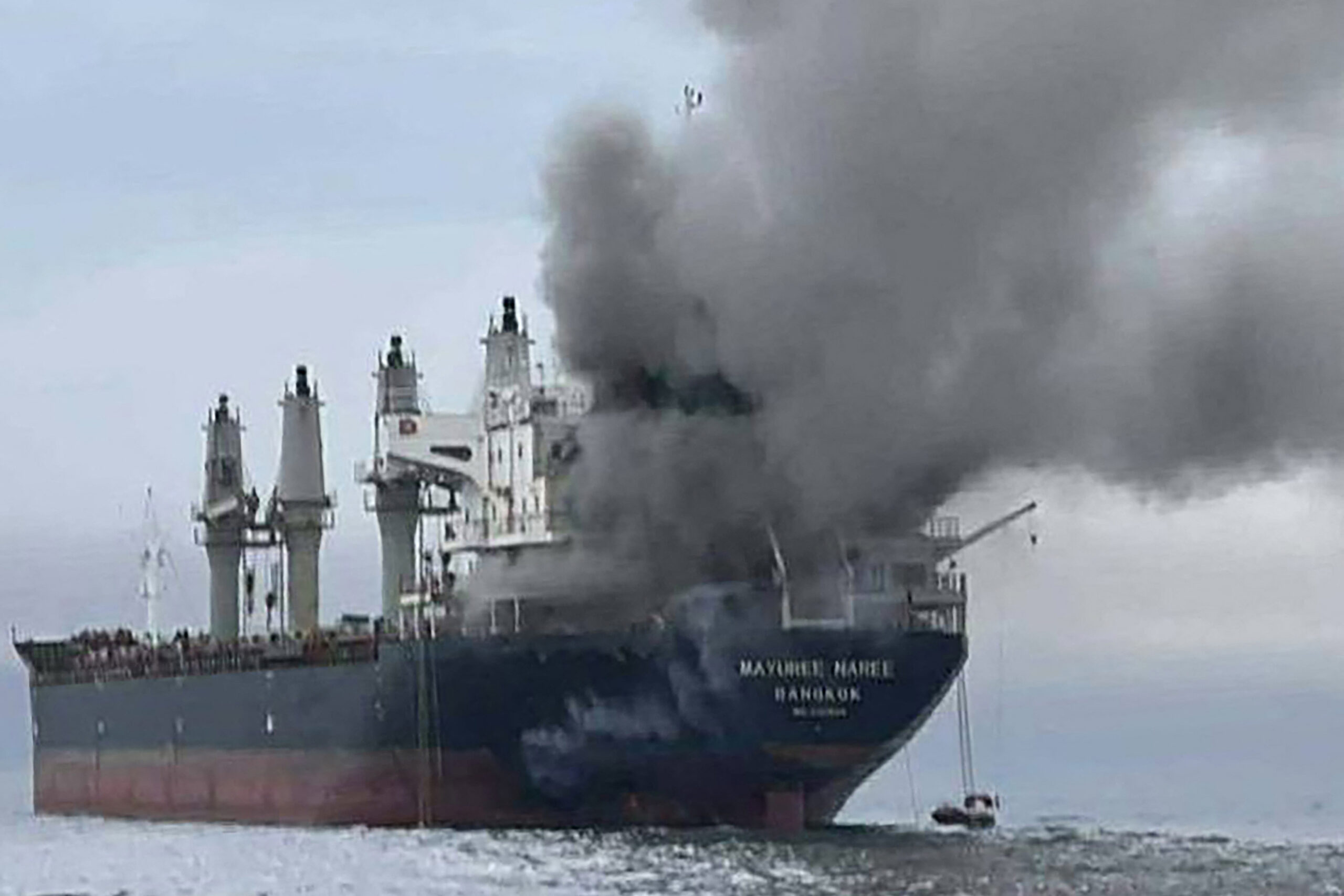
During Trump’s first term, Tehran used the same tactics of threatening to block the Strait and attacking oil infrastructure in the Gulf states. In 2018, after pulling out of the Obama nuclear deal, Trump launched a “maximum pressure campaign” against the Islamic Republic, which included extensive sanctions designed to shut down Iran's oil industry. In February 2019, the Islamic Revolutionary Guard Corps threatened it would close the Strait. It backed off from full closure, understanding Iran’s need to export oil would likely cripple its society long before global reserves were used up. In early summer 2019, Iran turned up the pressure, sabotaging four oil tankers in the United Arab Emirates. Iranian mines in the Gulf of Oman were likely responsible for damaging two tankers, Japanese and Norwegian. A barrel of oil was projected to spike from $65 to as much as $170.
But it didn’t, as Iran backed away from the fight. It could not afford a full blockade of its oil exports to China, which the U.S. could have effected at very low cost, in the Indian Ocean, away from Iranian interference and any closed Strait. Iran also knew that, while it could harass shipping, it could not seal the Strait to all traffic in the face of the massive U.S. Navy deployment. This was asymmetrical warfare, not peer-to-peer fighting. Iran in 2019 instead chose the long-game: survive sanctions while applying calibrated pressure rather than risking an all-out regime-threatening war. The strategy worked because oil markets react to risk—fear—not necessarily reality. When tensions rise between Iran and the United States, oil prices spike because investors fear shipping could be interrupted. Insurance rates rise over worry about the future, not the present. Threats to the strait get Iran most of what it needs (survival) at low cost. Temporary chaos can achieve political goals, and makes a helluva diplomatic bargaining chip.
Many of the lessons Iran applied in 2019 were learned in the Iran–Iraq “Tanker War.” Between 1984 and 1988, oil tankers, merchant vessels, and neutral shipping became targets in a campaign designed not to defeat an enemy navy but to strangle an enemy economy. After years of brutal stalemate on land, both Iran and Iraq looked for ways to inflict economic damage on each other. Oil exports were the lifeblood of both states, and nearly all of that oil moved by ship through the narrow waters of the Persian Gulf (back then, the Strait carried a larger share of globally traded oil than today’s 20 percent). Beginning in 1984, Iraq began attacking tankers carrying Iranian oil. Iran targeted vessels linked to the Arab states, which were mostly supporting Baghdad and selling to the U.S. Hundreds of ships were attacked, but few were destroyed outright. In total, only 55 of the 239 petroleum tankers (23 percent) struck were completely sunk.
Iran learned its strategy was less about sinking ships than about creating fear of sinking ships. Oil tankers are massive vessels designed to withstand damage. Many ships struck by missiles or mines did not sink but burned before being towed to safety.
But it was the threat that soon drew the United States into the conflict. Kuwait sought protection, and in 1987 Washington agreed to the controversial arrangement of reflagging Kuwaiti tankers as American and having the U.S. Navy escort them. But even the world’s most powerful navy could not fully guarantee safety in such a narrow waterway. The first escorted convoy immediately encountered trouble when the tanker Bridgeton struck an Iranian mine in July 1987. The explosion did not sink the vessel, but it was a public embarrassment. Iran’s tactics exposed the vulnerability of modern shipping. Mines, cheap and difficult to detect and remove, proved effective as tools of harassment. A handful of mines could shut down vast areas of sea.
But a change in American tactics ultimately neutralized the Iranians. The United States shifted from escorting tankers to directly confronting Iranian forces. The turning point came in April 1988, after a U.S. guided-missile frigate struck a mine in the Gulf. Although the ship survived, the incident triggered a massive American retaliation. American ships and aircraft destroyed Iranian oil platforms used for military surveillance and sank or damaged Iranian naval vessels. That the 31st Marine Expeditionary Unit (MEU) is today steaming toward the Gulf with 2,500 special operations–capable Marines and suggests the U.S. may be planning to follow a similar strategy.
The operation demonstrated the overwhelming conventional superiority of the U.S. Navy. By the time the Iran–Iraq War ended later in 1988, the Tanker War had produced no victor. Both Iran and Iraq continued exporting oil throughout the conflict. Despite hundreds of attacks, the flow of petroleum through the Gulf never stopped entirely. The maritime campaign could not achieve its strategic objective for Iran, the same lesson learned anew in 2019.
The central lesson is a cautionary one. Military power can keep sea lanes open, but it cannot eliminate fear and risk. The Gulf remains a narrow, congested waterway where accidents, miscalculations, and asymmetric tactics can rapidly escalate if the U.S. allows them to do so. The war reinforced another lesson important today, that protecting commerce at sea may be necessary, but it is never simple, and it is rarely without consequences. America has kicked off a lot here, and it will cost her lives and money to finish it.
Subscribe Today
Get daily emails in your inbox
So what happens next?
Despite decades of threats, Iran has never fully closed the Strait. It is vital to remember that Iran, even in 2026, has not actually closed the Strait. Ships are just afraid to go through. Yes, a small number of mines may have been sown, but Iran is offering safe passage under a number of scenarios. It promises safe travel to any country that expels its American and Israeli ambassador. It doubled down by saying at one point that any ship not connected to America or Israel may pass safely, thus precluding the widespread use of mines, which target indiscriminately. It has effectively lost its navy and air force, leaving only small boats to carry out its plans. Drones are a new threat since the last time, but they can be countered and are unlikely to sink a large ship.
A closure would disrupt Chinese energy supplies and damage the last relationship that keeps Iran’s economy afloat. It may need to once again pull back. Iran holds a useful card in threatening the Strait of Hormuz. But history suggests it is a six, not an ace. Tehran can create fear and temporary disruption, but it has never shown the ability to permanently close the waterway against determined naval opposition and the right strategic response.
Facts Only
The U.S. and Iran have engaged in multiple maritime confrontations in the Strait of Hormuz.
In 2018, the U.S. withdrew from the Obama nuclear deal and imposed sanctions on Iran’s oil industry.
In February 2019, Iran’s Islamic Revolutionary Guard Corps threatened to close the Strait of Hormuz.
In early summer 2019, Iran sabotaged four oil tankers in the UAE and damaged two tankers in the Gulf of Oman.
The U.S. could have blocked Iran’s oil exports to China in the Indian Ocean.
During the Iran-Iraq War (1984-1988), both sides targeted oil tankers to disrupt each other’s economies.
In 1987, the U.S. reflagged Kuwaiti tankers as American and provided naval escorts.
In July 1987, the U.S.-escorted tanker Bridgeton struck an Iranian mine.
In April 1988, the U.S. retaliated against Iran after a U.S. frigate struck a mine, destroying Iranian oil platforms and naval vessels.
The 31st Marine Expeditionary Unit is currently deploying to the Gulf with 2,500 Marines.
Iran has not fully closed the Strait of Hormuz in 2026, despite threats.
Iran has offered safe passage to ships from countries that expel U.S. and Israeli ambassadors.
Iran’s navy and air force are effectively neutralized, leaving only small boats and drones for operations.
Executive Summary
Full Take
The strongest version of this narrative is that Iran’s threats to the Strait of Hormuz are a calculated bluff—historically effective at creating fear but incapable of achieving a sustained blockade. The analysis correctly highlights Iran’s economic vulnerabilities and the U.S.’s naval superiority, grounding its claims in historical precedent. However, the framing risks oversimplifying Iran’s strategic calculus. While it’s true Iran has never fully closed the Strait, the article downplays the cumulative impact of persistent low-level disruptions on global oil markets and insurance costs. The emphasis on U.S. dominance may also understate the asymmetrical risks of escalation in a congested waterway where accidents or miscalculations could spiral.
Patterns detected: ARC-0024 Ambiguity (selective framing of Iran’s capabilities without fully addressing the economic ripple effects of its actions), ARC-0043 Motte-and-Bailey (presenting Iran’s threats as ineffectual while acknowledging their disruptive potential).
The root cause of this narrative is a realist paradigm: state actors pursue rational self-interest, and military power determines outcomes. This assumes Iran’s primary goal is economic survival rather than regional influence or domestic legitimacy. The historical pattern echoes Cold War-era proxy conflicts, where weaker states use asymmetric tactics to offset conventional inferiority.
Implications: The U.S. bears the cost of maintaining naval dominance, while Iran leverages fear to extract concessions. Second-order consequences include higher insurance premiums, market volatility, and potential overreach if the U.S. misjudges Iran’s red lines. Human agency is constrained by structural realities—neither side can afford all-out war, but both are trapped in a cycle of brinkmanship.
Bridge questions: How might Iran’s domestic politics (e.g., regime stability) alter its risk tolerance? What role do third parties like China play in de-escalation? Would evidence of Iran’s ability to sustain a longer blockade change your assessment?
Counterstrike scan: A coordinated influence campaign would amplify fears of a full blockade to justify military buildup or sanctions. The actual content does not match this pattern—it downplays the threat while acknowledging Iran’s disruptive capacity. No structural alignment detected.
Sentinel — Human
The article shows strong signs of human authorship, with a distinct voice, historical accuracy, and stylistic variability inconsistent with AI generation.