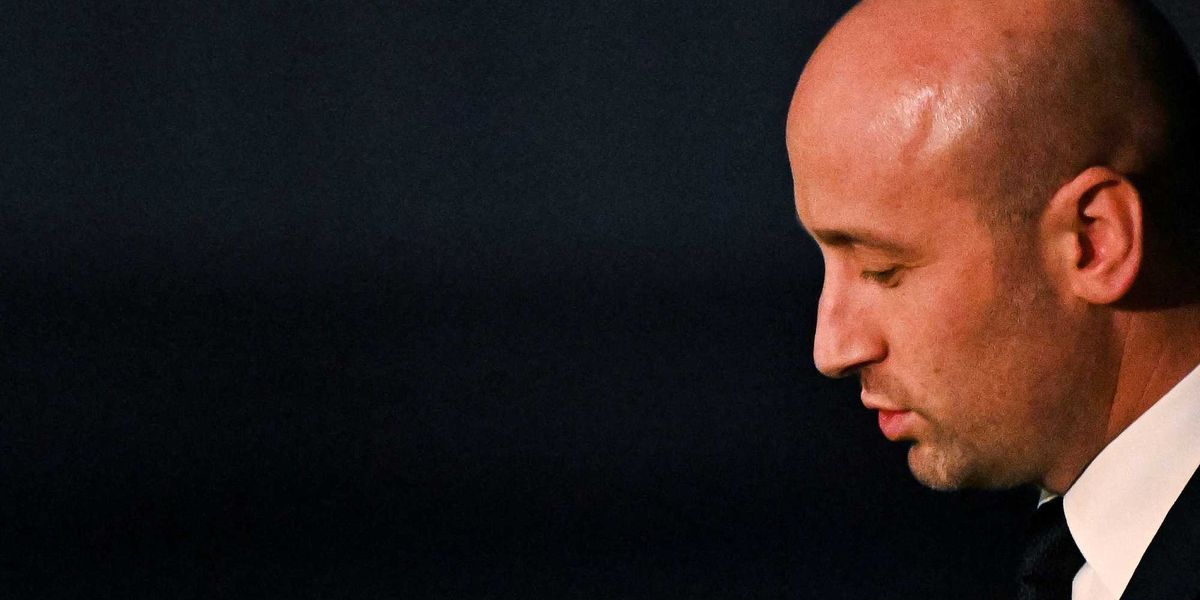
White House advisor Stephen Miller is a liar, but he did tell the truth one time. Well, he said something with truth hidden inside it, but you had to squint. Of course, he was projecting.
During a recent Oval Office meeting, Miller accused immigrants of theft. Once Donald Trump’s deportation measures were fully in place, “all of this theft” would stop and “it would be enough to balance the budget.” He said: “The extraction of wealth from American taxpayers to people who don't belong here is the primary cause of the national debt."
See what I mean? Projection.
In reality, the people who are extracting wealth from the American taxpayer are not the poor bastards who clean toilets, butcher chickens and cut grass (and pay income taxes). They are the moneyed elites who are running the country for the moneyed elites. Blaming immigrants is just part of their scam.
The primary cause of the national debt is a president who has created conditions in which the burden for paying for a civilized country is pushed downward toward the bottom of the class hierarchy. His tax cuts for “the people that I love,” as he put it during the State of the Union, are going to add nearly $5 trillion to the national debt over the next decade.
To offset that historic loss of revenue, Donald Trump is cutting government services, like health care, nursing home subsidies, food stamps and so on. He’s also raising taxes on the rest of us in the form of tariffs (import taxes). Before the Supreme Court stepped in, he was aiming to extract from workaday Americans two-thirds of the tax money that moneyed elites used to pay.
Trump can’t tax us like that anymore, thanks to the Supreme Court, but neither can he ask the money elites to pay what they used to. So he’s going to use a different tariff authority but with the same goal – extracting wealth from the American people.
The extraction of wealth is now so normal as to be invisible among those who created the conditions for it. When asked about the economic effects of Trump’s war, Kevin Hassett, the National Economic Council director, said he wasn’t worried.
“If the war were to be extended,” Hassett said, “it wouldn't really disrupt the US economy very much at all. It would hurt consumers, and we'd have to think about what we'd have to do about that, but that's really the last of our concerns right now." Translation: “the economy” isn’t consumers. It’s the moneyed elites. As long as the president is around, they’ll be fine.
Consumer spending accounts for about 70 percent of the US economy, which brings me to another aspect of extraction. In addition to paying illegal taxes, consumers pay higher prices on everything because of those illegal taxes. Yesterday, Federal Reserve Chairman Jerome Powell said inflation is still 1 percent higher than the central bank’s target rate, because a “big chunk of that, between a half and three-quarters, is actually tariffs.”
Due to inflation being as high as it is, Powell said he’s concerned about the “very, very low level of job creation." He then added: “There's zero net job creation in the private sector. But actually, that looks like that's about what the economy needs, in terms of dealing with very, very low — nonexistent, really — growth in the labor force, which of course we've never had in our history."
There’s been zero job growth for the last six months, Powell said. (While manufacturing jobs exploded during the Biden era, tariffs have decimated the sector. Indeed, the facts are so clear and uncontested that the AP ran this headline: “Trump’s tariffs are hurting American manufacturers instead of helping them.” Their effect on farming is arguably worse. A survey found that 75 percent of farmers believe the crop sector is in a recession.)
In addition to wealth extraction is labor extraction, namely the president’s criminal deportation program. (By “criminal,” I mean snatching people whose only crime is working and paying their taxes in America without the proper paperwork.) This morning, Paul Krugman said the unemployment rate would probably be much higher if not for the loss of immigrants. But, he said, “the loss of foreign-born workers is probably contributing to higher inflation, over and above the effects of tariffs and now oil prices.”
Of course, the newest means of extraction is Trump’s illegal war. Iran has retaliated by taking control of the Strait of Hormuz in the Persian Gulf. It now has a stranglehold on the global supply of oil. Gas prices in the US are now at their highest in two and a half years. (Meanwhile, the Pentagon asked for an additional $200 billion.) If oil prices remain high for as little as two more weeks, one analyst said, a recession is sure to come. Another analyst used the D word. “If the strait remains closed, we’re not talking about a global recession – we’re talking about a depression.”
Presidents usually have little control over the economy. Trump, however, is the exception. His tax, labor and foreign policies – illegal tariffs, illegal deportations and illegal war – are the three-legged stool of extraction. He's looting America but we’re all paying for his crime.
Facts Only
* Stephen Miller accused immigrants of theft.
* Trump claimed immigrant theft would balance the budget.
* The primary cause of the national debt is Trump’s policies.
* Wealth is being extracted from American taxpayers.
* Moneyed elites are benefiting from the policies.
* Tariffs are increasing prices and hindering manufacturing.
* Kevin Hassett downplayed economic concerns.
* Jerome Powell expressed concern about job creation.
* A survey indicates 75% of farmers believe the crop sector is in recession.
* Iran’s control of the Strait of Hormuz is driving up oil prices.
* Trump’s policies are described as a “three-legged stool of extraction.”
Executive Summary
Full Take
Sentinel — Likely Synthetic
The text exhibits numerous features indicative of AI-generated content, including a uniform writing style, excessive hedging, and a reliance on vague claims and framing. The argumentative structure and language patterns strongly suggest synthetic production rather than human authorship.