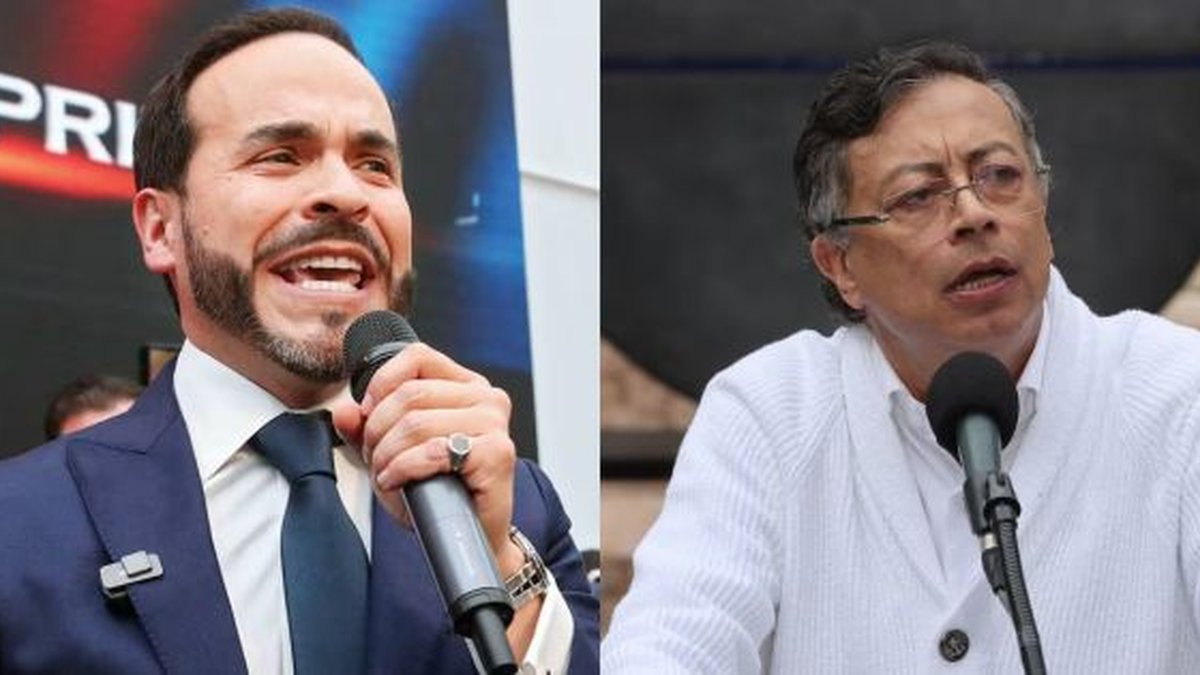
Colombia's president-elect, Abelardo de la Espriella, froze the transition process with the outgoing government of Gustavo Petro on Tuesday and accused the president of attempting a coup, in a sharp escalation exactly one month before the handover of power, set for August 7.
De la Espriella, a right-wing lawyer who won the June 21 runoff, ordered his vice president-elect, José Manuel Restrepo, to suspend transition meetings “immediately” on Tuesday morning. Hours later, in an address broadcast on social media from Barranquilla, he expanded on his reasons. “We cannot sit at the table with a gang of coup-plotters and corrupt officials who do not recognize the sovereign will expressed at the ballot box,” he said, arguing that the outgoing government seeks to cling to power.
In the most sensitive part of his remarks, the president-elect asked the Armed Forces to “fulfill their oath to protect the Constitution and not obey any order from Petro to the contrary.” He also called on citizens to “resist” until the inauguration, and said he would respect peaceful protest but not “acts of force.”
The decision follows a hardening of Petro's stance. The previous day, the president had reiterated that he does not recognize the incoming government's legitimacy and claimed the true winner was his candidate, left-wing senator Iván Cepeda, insisting on alleged fraud through algorithm manipulation. He has presented no public evidence for those claims, which contradict international observers and the official count. De la Espriella won with about 12.9 million votes against Cepeda's 12.7 million, a margin of roughly 250,000 votes certified by the National Electoral Council and the National Registry, as MercoPress reported.
On Tuesday, however, Petro softened his position. “I recognize the real people who voted for Abelardo, and I respect them,” he wrote, and confirmed that he will hand over power at the end of his term, on August 6. He denied that his team was undermining the transition: “Those pulling out of the handover are the ones who can't stand being seen as unprepared,” he said, adding that the transfer would continue “before the people.”
Cepeda, who will take a Senate seat as runner-up, announced that he will lead “peaceful civil disobedience” against the incoming government. He conditioned recognition of the inauguration on De la Espriella renouncing his US citizenship and clarifying any ties to US security agencies, which the president-elect has not accepted.
Restrepo said the suspension does not halt the gathering of information on the state in which the executive will be received. For the outgoing government, Finance Minister Germán Ávila called for the sector-level transition tables to be suspended but left the door open to resuming talks if “conditions of respect” are restored. During the campaign, De la Espriella signaled willingness to extradite Petro, a threat one of his advisers has repeated during the transition.
Top Comments
Disclaimer & comment rulesNo comments for this story
Please log in or register (it’s free!) to comment. Login with Facebook
Facts Only
* President-elect Abelardo de la Espriella froze the transition process with the outgoing government on Tuesday and accused Gustavo Petro of attempting a coup.
* De la Espriella ordered his vice president-elect, José Manuel Restrepo, to suspend transition meetings immediately.
* De la Espriella stated they could not sit at the table with officials who do not recognize the ballot box results.
* He asked the Armed Forces to protect the Constitution and not obey any order from Petro contrary to it.
* He called on citizens to resist until inauguration, stating he would respect peaceful protest but not "acts of force."
* Petro recognized those who voted for De la Espriella and confirmed handing over power on August 6.
* Petro denied his team was undermining the transition, stating those pulling out were unprepared.
* Senator Iván Cepeda announced he would lead "peaceful civil disobedience" against the incoming government.
* Cepeda conditioned recognition of the inauguration on De la Espriella renouncing US citizenship and clarifying security ties.
* Restrepo stated the suspension did not halt information gathering on the state.
* Finance Minister Germán Ávila called for sector-level transition tables to be suspended but left room for resumption if "conditions of respect" were restored.
Executive Summary
The transition process in Colombia was halted when the president-elect, Abelardo de la Espriella, ordered the suspension of transition meetings and accused the outgoing government of attempting a coup one month before the scheduled handover on August 7. De la Espriella, a right-wing lawyer, instructed his vice president-elect to suspend meetings immediately. He argued that sitting at the table with officials who do not recognize the ballot box results was untenable. In his remarks, he called for the Armed Forces to protect the Constitution and resist any order from Petro contrary to it, while also calling on citizens to resist until inauguration, reserving respect for peaceful protest but rejecting "acts of force."
The situation evolved when Gustavo Petro softened his stance on Tuesday, acknowledging respect for those who voted for De la Espriella and confirming the handover date of August 6. Petro denied undermining the transition, suggesting that those withdrawing were unprepared, and insisted the transfer would occur before the people. Senator Iván Cepeda, the runner-up, announced plans for "peaceful civil disobedience" against the incoming government, conditioning recognition of the inauguration on De la Espriella renouncing his US citizenship and clarifying security ties. While meetings were suspended, discussions regarding the state's future continued, with some officials maintaining that talks could resume if conditions of respect were restored.
Full Take
The unfolding situation illustrates a sharp contest over the legitimacy and procedural integrity of a political transfer, moving rapidly from accusations of illegitimacy to strategic maneuvering over transitional mechanisms. The conflict is framed not merely as a dispute between two individuals but as a clash between competing narratives of sovereign will—one expressed through electoral results and the other through institutional adherence. De la Espriella’s immediate demand for military deference and public resistance establishes an explicit zero-sum framing, positioning any compliance with Petro's authority as illegitimate coercion, while simultaneously seeking to manage the optics of the handover.
The subsequent softening by Petro signals a strategic pivot from outright confrontation to controlled negotiation, suggesting that institutional pathways remain open even amidst public friction. The insistence by Cepeda on civil disobedience and conditions regarding De la Espriella’s status introduces an external dimension, linking domestic political transition to international legal and security considerations, which shifts the stakes beyond mere electoral victory into a question of sovereignty. The underlying pattern suggests that in high-stakes transitions where legitimacy is contested, actors attempt to leverage institutional paralysis (freezing meetings) as a tool to exert pressure, allowing them to redefine the terms of engagement by focusing on resistance rather than compliance.
What constitutes legitimate political action when competing claims over foundational reality—like electoral outcomes and constitutional authority—are made? If the process itself is defined by perceived coercion rather than agreed-upon protocol, how does the concept of transition function in a system where one party relies on procedural acceptance and another relies on popular mandate? What happens to the stability of the formal process when resistance is explicitly mandated as a prerequisite for recognition?
Sentinel — Human
The text appears to be a standard journalistic report detailing an ongoing, volatile political standoff, characterized by quoted demands and conflicting official statements.