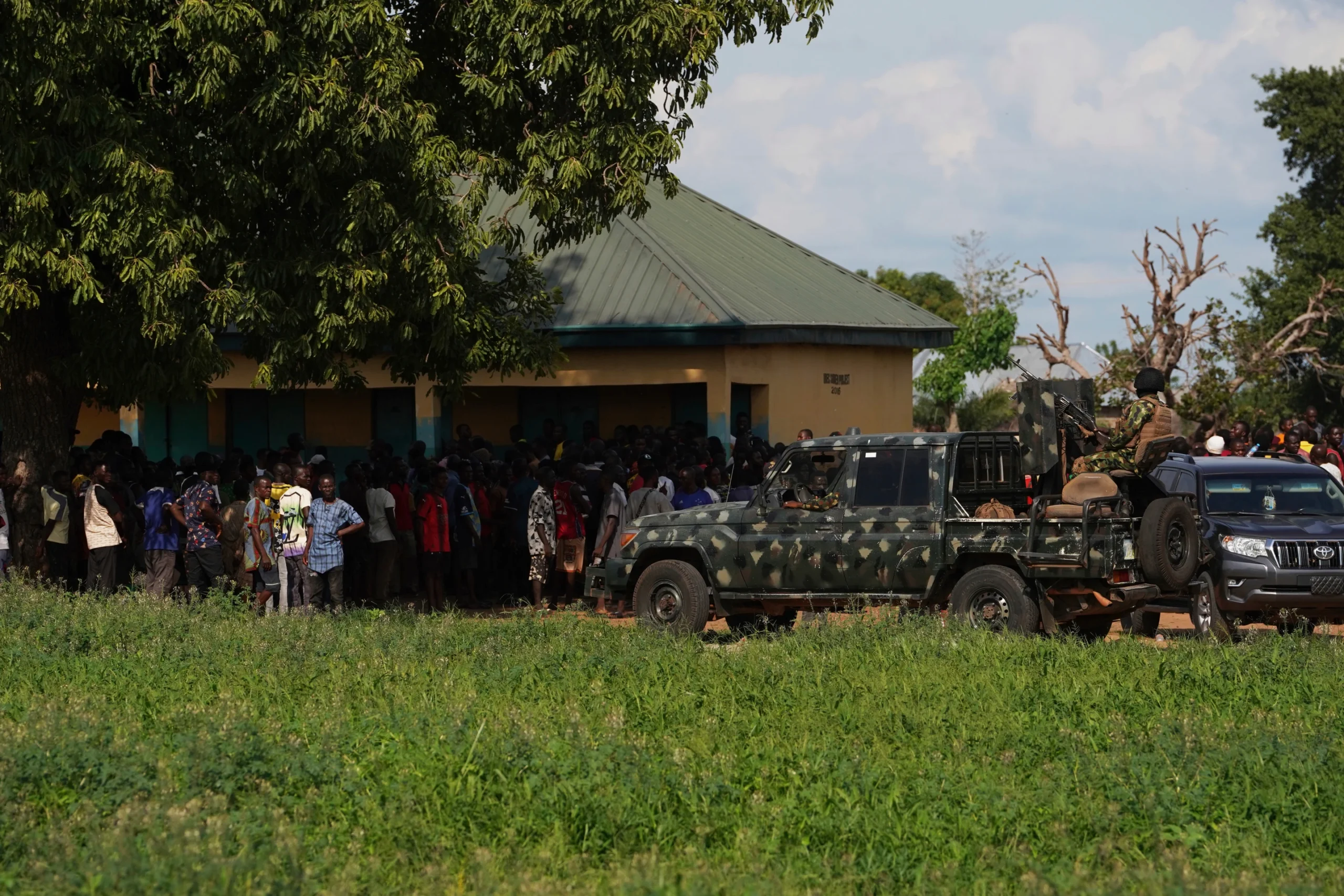
What began decades ago as disputes between farmers and herders in Nigeria’s Benue State has evolved into a complex security crisis characterized by banditry and terrorism, according to a new analysis by the Justice, Development and Peace Commission (FJDP) of Nigeria’s Makurdi state.
The findings, part of a “remapping” initiative supported by Misereor, the German Catholic Bishops’ development organization, challenge the long-held narrative that the violence remains primarily a resource-based conflict between agricultural and pastoral communities.
What started as farmer-herder conflicts in 1986 has evolved into a new form of conflict characterized by banditry and acts of terrorism, according to Valentine Kwaghchimin, project manager for FJDP Makurdi.
He told Crux Now that the nature of the violence, its targets, and the actors involved have all transformed significantly.
“By 2018, the crisis had evolved beyond traditional farmer-herder conflict. Mass killings became more common, and women and children caught in the violence were killed in brutal and degrading ways often associated with terrorist organizations,” he said.
“The 2025 Yelwata incident where over 200 people were burned in their homes exemplifies this shift,” he noted.
Following are excerpts of that interview.
Crux Now: For years, the world understood the crisis in Benue as a conflict between farmers and herders. Can you explain, from your perspective, when and why that narrative became insufficient?
Valentine Kwaghchimin : The crisis in Benue began as herder-farmer conflicts but has evolved into a new form characterized by banditry and terrorism. Initially manifesting in 1986, the conflict largely involved interpersonal clashes between farmers and herders over crop destruction and cattle issues. Weapons were basic – machetes and dane guns [a type of flintlock musket] – and women and children were generally spared. Community-based dispute resolution mechanisms involving Ardos [herder leaders] and local chiefs were effective.
A major turning point occurred in 2001 when violence escalated significantly. Weapons shifted to more lethal arms including AK-47s, targets expanded to include women and children, and violence moved from farms to residential areas. The first IDP camp was established in April 2001.
By 2018, the crisis had evolved beyond traditional farmer-herder conflict. Mass killings became more common, and women and children caught in the violence were killed in brutal and degrading ways often associated with terrorist organizations.
The 2025 Yelwata incident where over 200 people were reportedly burned in their homes exemplifies this shift. Religious persecution elements emerged, with attackers reportedly shouting “Allahu Akbar” while burning communities. By 2025, 17 parishes had been closed and six burnt down. Kidnapping for ransom along major roads became prevalent, with over 100 million naira paid in ransoms between 2023-2025.
What concrete evidence or patterns have you observed that signal this shift?
The conflict has evolved from intergroup clashes between herders and farmers to violent attacks on communities by gunmen who have no direct interest in either herding or farming. The targets of these attackers have also expanded to include anyone, unlike a decade ago when children, women, and persons with disabilities were generally spared. The motivations of the actors have shifted from farming or herding disputes to financial gain through ransom payments, which explains the surge in kidnapping.
The firearms used in these attacks have also increased both in number and sophistication, while the volume of ammunition deployed suggests that the attackers benefit from a robust network of support for violence from individuals or groups who are neither farmers nor herders. Heritage sites that were previously spared are now increasingly being targeted particularly churches and markets. This development suggests the possible involvement of actors pursuing religious persecution or seeking to undermine freedom of religion.
Given this new understanding, how has your organization’s peacebuilding strategy had to evolve?
Our SCORE-II Program (Strengthening Community Resilience to Conflicts between Pastoralists and Farmers in the Benue Valley in cooperation and with financial support of Misereor) will adjust its intervention strategy under the Early Warning–Early Response output. In order to strengthen early warning and response systems in Benue and Nasarawa States, the focus will shift toward establishing forums that build community-based early warning information exchange systems between community members and responders.
Currently, the response time to distress calls is approximately four hours. Efforts will therefore focus on reducing the response time to below two hours in order to improve the chances of saving lives.
In addition, the program will prioritize the prevention of recruitment and radicalization into violent extremism through Preventing Violent Extremism (PVE) education, training, and rehabilitation support for ex-combatants. This approach is intended to weaken the networks that support violence in the region.
The psycho-resilience building component of the project, as well as the livelihood and economic resilience components, will be sustained, as they remain critical to stabilization.
How do you empower local communities to address threats without imposing an external agenda?
We’re restoring community-based early warning and response systems by creating trusted platforms for information exchange between community members and responders. We’re investing in Preventing Violent Extremism (PVE) through capacity building and behavior change communication tools. We’re also strengthening mediation and non-adversarial dispute resolution mechanisms to provide alternatives to violence.
How does this new violence affect IDPs’ trauma and ability to imagine a future?
Trauma levels remain high, with suicidal ideation identified in each of the eight camps between 2023-2025. Anxiety, depression, flashbacks, nightmares, hypervigilance, sleep disorders, and social isolation are common.
There is also an increasing risk of transgenerational conflict, as children born in IDP camps in 2014 are now becoming adults and will likely have children who know only life in the camps. This epigenetic and social transmission of trauma may further strain relationships with Fulani pastoralists, about whom they have inherited counter-peace narratives, making long-term reintegration particularly challenging.
How does trauma from “deliberate attacks” differ from trauma from spontaneous resource disputes?
“Stress appetite” explains how communities process repeated violence. Coping is somewhat easier when attacks are anticipated, as communities can mentally prepare. Unprovoked, deliberate attacks are more devastating because they create helplessness and often target critical community assets like clinics, places of worship, markets, and water sources—destroying the very mechanisms that would normally assist victims.
What are the risks to your staff when remapping conflicts, and how do you mitigate them?
Remapping efforts raise suspicion among pro-conflict actors who don’t want the true nature exposed. We’ve adopted a co-creation approach, bringing together duty bearers, security agencies, community leaders, government institutions, interfaith leaders, and pastoralist/farming community leaders to jointly conduct remapping and re-track response mechanisms.
This multi-stakeholder approach ensures the strategy isn’t perceived as belonging to our organization alone but as a collaborative plan, reducing risks to staff and partners.
Do authorities understand this new conflict dynamic?
The government has acknowledged the existential threat but has misclassified the actors as “armed men,” “unknown gunmen,” “bandits,” and more recently “terrorists.” The conflict has been presented variously to the international community—as communal conflict, isolated skirmishes, and religious persecution—contributing to inadequate responses.
If your strategy succeeds, what will Benue look like in say five years?
Our vision is a Benue where community security architecture is sufficiently strengthened to address contemporary threats, and where communities are stable enough to achieve post-conflict resilience.
Success indicators include: Threats averted through effective early warning systems; youths who reject or disengage from radicalization; and farmers and herders who recover from psychological and economic shocks to rebuild their lives.
What single thing needs to happen to create an opening for peace?
Deliberate efforts and investments in durable solutions are needed. Currently, humanitarian, peace, and development efforts are unbalanced, with most interventions focused on humanitarian assistance and minimal attention to peacebuilding and development.
The government should support rehabilitation, rebuilding, and resettlement of IDPs, ensure community security, and rebuild social infrastructure. They should work with pastoralists and farmers to find suitable solutions, create a State Police for more localized responses, and rebuild schools and healthcare facilities. Above all, efforts should prioritize safe, dignified, voluntary return and reintegration of IDPs.
What is your message to the people of Benue who have lost homes and loved ones?
There is hope, as the number of actors interested in improving the situation is increasing. Benue is now included among national and international intervention priorities, providing an opportunity for stronger partnerships and greater support to transform the situation.
Facts Only
* The conflict began in 1986 between farmers and herders in Benue State.
* By 2018, mass killings involving violence against women and children became more frequent.
* The 2025 Yelwata incident involved the burning of over 200 homes.
* Kidnapping for ransom has become prevalent.
* Armed groups with shifting motivations are involved.
* The conflict has expanded beyond agricultural disputes to include attacks on communities and infrastructure.
* The response time to distress calls averages four hours.
* The conflict is associated with extremist groups using religiously charged rhetoric.
* Interventions are focused on early warning, rapid response, and prevention of radicalization.
* The government’s classification of the actors has impacted international responses.
* Approximately 100 million naira has been paid in ransoms between 2023-2025.
* Community-based dispute resolution mechanisms were effective initially.
* The conflict has evolved into a situation with significant humanitarian consequences for the population.
* Armed groups are using increasingly sophisticated weaponry.
Executive Summary
Full Take
Sentinel — Uncertain
This analysis presents a largely structured account of the Benue conflict, demonstrating characteristics commonly found in AI-generated text through uniform rhythm, excessive hedging, and a reliance on vague attribution. While the information presented is relevant, the presentation suggests a carefully constructed narrative rather than a spontaneous human account.