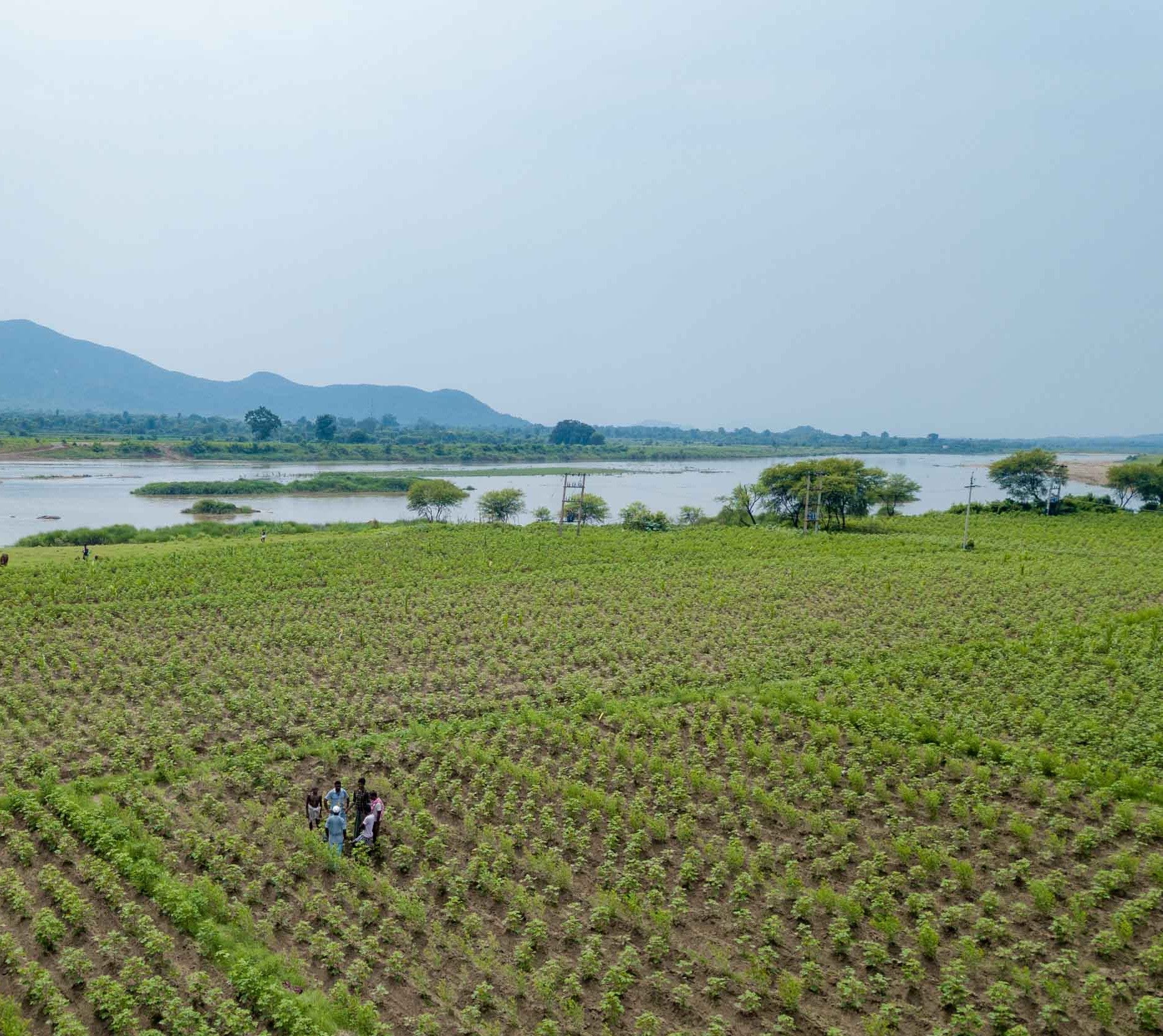
Announced last week (5 March) in Amsterdam, Organic Cotton Accelerator (OCA)’s updated 2030 strategy builds on ten years of results. It aims to expand its impact areas, simplify participation for brands and retailers and increase supply through new partnerships.
OCA said the move comes as the fashion sector faces rising regulatory expectations and sourcing risks, while farmers confront growing climate and market volatility.
Discover B2B Marketing That Performs
Combine business intelligence and editorial excellence to reach engaged professionals across 36 leading media platforms.
“The industry is at a turning point,” said Bart Vollaard, executive director of OCA. “Sustainability expectations are changing fast, and brands now face rising demands on traceability, climate action and human rights, while managing real sourcing risks. Farmers, meanwhile, face growing climate and market volatility and need stable markets and fairer returns to stay resilient. By scaling proven solutions with our partners, we can deliver meaningful impact for farmers and strengthen the long-term resilience of the global textile sector.”
OCA currently works with more than 100,000 farmers, supporting them through training, access to quality inputs and sourcing commitments designed to provide better prices and long-term market incentives.
OCA’s three strategic shifts to scale impact
- Expand impact areas and stronger data: OCA will broaden its impact focus beyond farmer income to include climate and nature outcomes such as soil health, greenhouse gas emissions, biodiversity and water stewardship. The organisation will also address social priorities including better working conditions and women’s empowerment. Data systems will be used to measure and report these outcomes to support textile companies facing growing due diligence and disclosure requirements.
- Simpler participation through the OCA Farm Fund: OCA is introducing the OCA Farm Fund, which evolves the existing Farm Programme into a more streamlined funding model. Currently in pilot phase, the fund is designed to make participation easier for brands and retailers by providing clearer cost visibility and reducing administrative complexity. The fund will pool contributions for farmer premiums and technical support and decouple these investments from cotton prices, creating more predictable and stable support for farmers and producer organisations.
- Scaling supply through strategic partnerships: Alongside expanding work in India, Pakistan and Türkiye, the organisation will collaborate with existing organic initiatives and organisations to support farmers in additional sourcing regions in Africa and Latin America. These partnerships will help strengthen global organic cotton supply while improving coordination, traceability and long-term market access for farming communities.
According to verified data from recent years, farmers participating in OCA’s Farm Programme have earned higher net income per hectare from organic cotton than their conventional peers. Between 2021 and 2024, farmers in the programme earned on average more than 9% higher net income per hectare than non-organic farmers.
US Tariffs are shifting - will you react or anticipate?
Don’t let policy changes catch you off guard. Stay proactive with real-time data and expert analysis.
By GlobalDataOver the same period, close to €15m was paid out to farmers as a premium through the OCA Farm Programme.
For brands and retailers, OCA said it provides a transparent, data-backed system designed to support credible impact and reduce sourcing risk. The organisation currently works with more than 60 partners across the value chain.
The organisation will also continue to expand its Contributor community, bringing together brands, retailers, suppliers, farm groups and civil society organisations to strengthen collaboration and support long-term market access for farmers.
At the same time, OCA said it is increasing its public affairs and engagement efforts to advocate for organic cotton and ensure farmers’ perspectives are reflected in policy discussions.
By aligning action across the value chain, the organisation said it aims to create the conditions for organic cotton to grow sustainably and deliver benefits for farmers, businesses and the environment.
Facts Only
The Organic Cotton Accelerator (OCA) announced an updated 2030 strategy on 5 March in Amsterdam.
OCA has worked with over 100,000 farmers, providing training, access to quality inputs, and sourcing commitments.
The strategy includes three shifts: expanding impact areas, simplifying participation through the OCA Farm Fund, and scaling supply via partnerships.
OCA will broaden its focus to include climate and nature outcomes, such as soil health, greenhouse gas emissions, biodiversity, and water stewardship.
Social priorities will address working conditions and women’s empowerment.
The OCA Farm Fund, currently in pilot phase, aims to streamline funding for brands and retailers by providing cost visibility and reducing administrative complexity.
OCA plans to expand work in India, Pakistan, and Türkiye while collaborating with initiatives in Africa and Latin America.
Between 2021 and 2024, farmers in OCA’s Farm Programme earned over 9% higher net income per hectare than non-organic farmers.
Close to €15 million was paid out to farmers as a premium through the OCA Farm Programme during the same period.
OCA works with over 60 partners across the value chain.
The organization will increase public affairs efforts to advocate for organic cotton and farmers’ perspectives in policy discussions.
Executive Summary
The Organic Cotton Accelerator (OCA) has unveiled an updated 2030 strategy aimed at expanding its impact in the fashion sector, which is grappling with increasing regulatory pressures and sourcing risks. The strategy focuses on three key shifts: broadening impact areas to include climate and social outcomes, simplifying participation for brands and retailers through the OCA Farm Fund, and scaling supply through partnerships in new regions like Africa and Latin America. OCA currently supports over 100,000 farmers, providing training, access to quality inputs, and sourcing commitments that have resulted in higher net incomes for organic cotton farmers compared to conventional peers. Between 2021 and 2024, participating farmers earned over 9% more per hectare, with nearly €15 million paid out in premiums. The organization works with over 60 partners across the value chain and aims to strengthen collaboration to ensure long-term market access for farmers while advocating for organic cotton in policy discussions.
The strategy responds to growing demands for traceability, climate action, and human rights in the textile industry, as well as the need for stable markets and fair returns for farmers facing climate and market volatility. By leveraging data systems and strategic partnerships, OCA seeks to deliver measurable benefits for farmers, businesses, and the environment, positioning organic cotton as a sustainable solution for the global textile sector.
Full Take
The strongest version of this narrative presents OCA’s strategy as a pragmatic response to systemic challenges in the textile industry, where regulatory pressures, climate volatility, and market instability demand scalable solutions. By expanding impact areas to include climate and social outcomes, OCA aligns with broader sustainability trends while addressing the immediate needs of farmers. The introduction of the OCA Farm Fund simplifies participation for brands, reducing administrative burdens and creating more predictable support for farmers. Strategic partnerships in new regions aim to strengthen global organic cotton supply, improving traceability and market access. The data-backed claim of higher net incomes for organic farmers lends credibility to the model, reinforcing the argument that sustainable practices can deliver economic benefits.
However, the narrative leans heavily on the assumption that organic cotton is inherently superior to conventional methods, without addressing potential trade-offs or limitations. The focus on data systems and partnerships may overlook structural barriers, such as the scalability of organic farming in regions with limited infrastructure or the risk of greenwashing if brands prioritize optics over genuine impact. The emphasis on "proven solutions" could also downplay the complexity of implementing these changes across diverse geographies and supply chains.
Root cause: The paradigm driving this narrative is the belief that market-based solutions, supported by data and collaboration, can reconcile environmental sustainability with economic viability. This echoes historical patterns of corporate sustainability initiatives, where voluntary commitments and partnerships are positioned as alternatives to stricter regulation. The unstated assumption is that brands and retailers will prioritize long-term resilience over short-term profits, a tension that often undermines such efforts.
Implications: For farmers, the strategy could mean greater stability and fairer returns, but success depends on consistent brand participation and market demand. For businesses, it offers a way to meet regulatory and consumer expectations while mitigating sourcing risks. However, if adoption is uneven or superficial, the benefits may accrue disproportionately to large players, leaving smaller farmers and brands behind. The environmental gains, while promising, hinge on the scalability of organic practices and the willingness of stakeholders to invest in systemic change.
Bridge questions: What evidence exists that organic cotton can scale sufficiently to meet global demand without compromising quality or farmer livelihoods? How might this strategy interact with existing power imbalances in the textile supply chain? What safeguards are in place to prevent greenwashing or the dilution of standards as more brands participate?
Counterstrike scan: A coordinated influence campaign pushing this narrative might emphasize the urgency of climate action and regulatory compliance to pressure brands into participation, while downplaying the challenges of scaling organic cotton. The actual content aligns with this pattern to some extent, as it frames the strategy as an inevitable and necessary response to industry pressures. However, it stops short of exaggeration or manipulation, focusing instead on measurable outcomes and partnerships. The tone remains constructive, avoiding fear appeals or forced binaries. Patterns detected: none.
Sentinel — Human
The article shows strong signs of human authorship, with natural variability, specific attributions, and contextual depth, though minor structural patterns suggest possible editorial templating common in organizational communications.