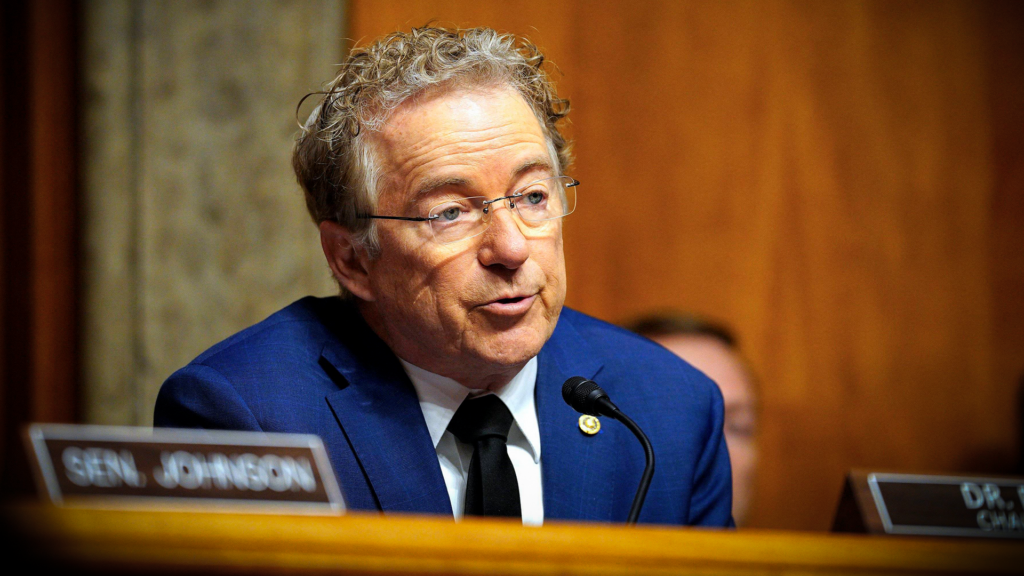
CIA officer James Erdman told the Senate's Homeland Security Committee that his employer suppressed its own assessments that COVID likely came from a lab.
The former head of the Trump administration's investigation into COVID-19's origins told Congress today that the CIA actively frustrated his work by withholding records, retaliating against agency personnel who cooperated with the investigation, and surveilling investigators' computer and phone usage and contact with whistleblowers.
"These were Americans being spied upon illegally while executing duties directed by the president and under the director of National Intelligence," James Erdman III, a current CIA officer who led the Office of the Director of National Intelligence (ODNI) investigation into COVID's origins, told the Senate's Homeland Security Committee today.
Additionally, Erdman claimed that the CIA had suppressed its own analysts' assessment that COVID came from a lab leak and retaliated against them when they stuck to this conclusion.
In January 2025, the CIA, now helmed by new Trump-appointed director John Ratcliffe, said publicly that it now assessed a lab leak as the most likely origin point for COVID. Previously, the agency had been noncommittal.
Under the Biden administration, ODNI released two unclassified summaries of the intelligence community's assessment of the pandemic's origins. Both stated that four agencies assessed a natural origin of COVID as most likely, while another one assessed that a lab leak was a more likely cause of the pandemic. Three agencies couldn't say whether a lab leak or natural origin was more likely.
In his testimony today, Erdman said that the wider intelligence community's initial reluctance to land on a lab leak conclusion was the product of the influence of former COVID-19 adviser Anthony Fauci, who curated lists of scientists for agencies to consult.
These scientists, said Erdman, specialized in the kind of gain-of-function research that plausibly led to the creation of COVID at the Wuhan Institute of Virology and were therefore not neutral observers.
In 2023, Congress unanimously passed legislation requiring ODNI to release the intelligence community's findings on the origins of COVID. In response to that law, the Biden administration released a 9-page, partially redacted summary of already released intelligence.
Erdman said in his testimony today that under its new director, Tulsi Gabbard, ODNI is in the process of declassifying some 2,000 documents related to COVID's origins, but that this work has been slowed by the CIA and State Department refusing to turn over requested documents.
He also said that the CIA fired a contractor one day after he spoke with ODNI investigators.
"The deep state still resists this congressional mandate" to release documents on COVID's origins, said Sen. Rand Paul (R–Ky.), who chairs the Homeland Security committee, at today's hearing.
Paul has long argued that a lab leak origin of COVID is probable. He's introduced legislation that would subject gain-of-function research proposals to more rigorous risk-benefit vetting by an independent panel.
The Trump administration also issued an executive order last year that called for a policy effectively banning gain-of-function research to be released by September 2025. No such policy has been published yet.
At the hearing today, Erdman said that resistance to oversight by both intelligence agencies and the public health officials was preventing the administration from implementing new restrictions on gain-of-function research.
Facts Only
* CIA officer James Erdman told the Senate's Homeland Security Committee that his employer suppressed assessments regarding the origins of COVID.
* Erdman claimed the CIA frustrated the investigation by withholding records and retaliating against personnel who cooperated.
* Erdman alleged the CIA surveilled investigators' computer and phone usage and contact with whistleblowers.
* Erdman stated that Americans were illegally spied upon while executing duties directed by the president and the Director of National Intelligence.
* The CIA allegedly suppressed its own analysts' assessment that COVID came from a lab leak and retaliated against them.
* In January 2025, the CIA assessed a lab leak as the most likely origin point for COVID.
* The intelligence community initially assessed a natural origin of COVID as most likely, while another assessment considered a lab leak more likely.
* Erdman claimed the intelligence community's reluctance to conclude a lab leak origin was due to the influence of former COVID-19 adviser Anthony Fauci.
* The Biden administration released unclassified summaries stating four agencies assessed a natural origin, while another assessed a lab leak was more likely.
* The Biden administration released a 9-page, partially redacted summary of intelligence in response to a 2023 Congressional law.
* The declassification work by the ODNI has been slowed by the CIA and State Department refusing to turn over requested documents.
* The CIA fired a contractor one day after Erdman spoke with ODNI investigators.
Executive Summary
Full Take
Sentinel — Human
The text displays high coherence and structural complexity typical of human investigative reporting, grounded by specific, verifiable claims and attributed sources.