Listen or watch: Spotify | Apple Music | YouTube
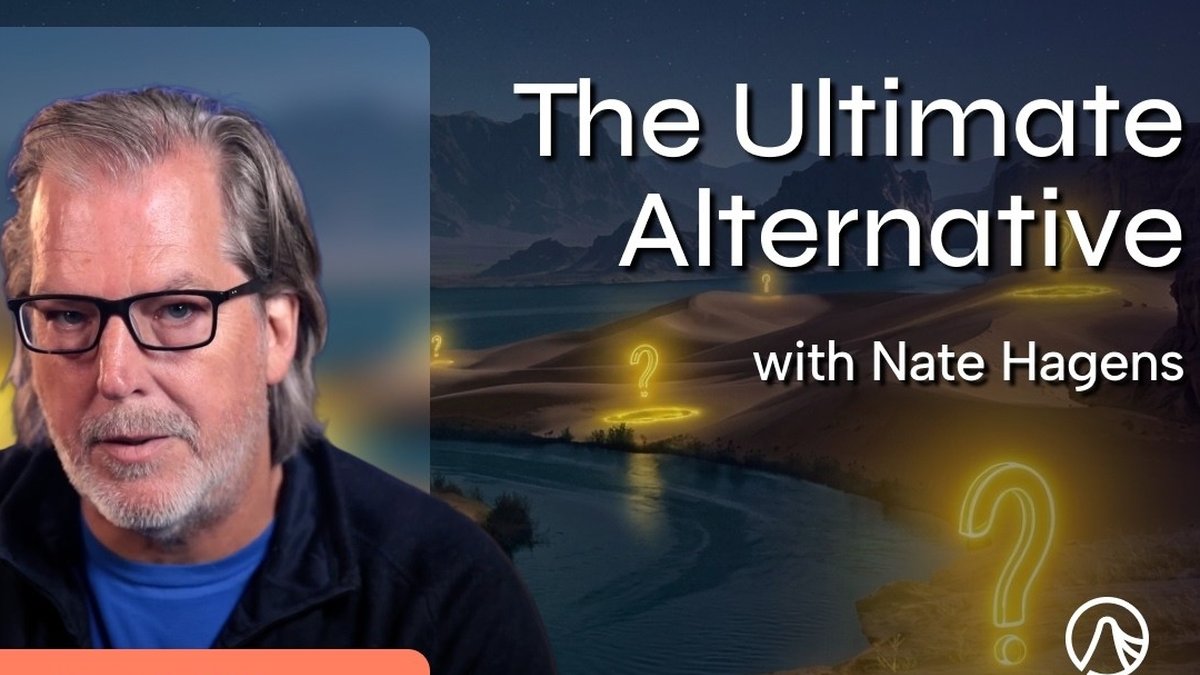
Recorded on: Jun 15, 2026 | This week’s Frankly is another in Nate’s recurring series “Uncomfortable Questions for Unsettled Times“, in which he poses questions about our shared future. Today, he uses headlines regarding a potential ceasefire deal between the U.S. and Iran to confront a subject that has re-entered public discourse with a quiet but startling force: nuclear warfare. Through a wide-boundary lens, Nate outlines how the renewed discussion of nuclear force raises questions that extend far beyond the current conflict, including important (and uncomfortable) questions about nuclear proliferation, human psychology, and the erosion of long-standing taboos. He considers the possibility that many of today’s geopolitical tensions are symptoms of deeper shifts underway in the global balance of power, and asks what happens when societies begin revisiting assumptions that once seemed settled.
While renewed public discussion around nuclear weapons provides the immediate context, this episode is ultimately less about any single weapon or conflict, and more about the forces shaping human decision-making during periods of uncertainty and transition.
Why do societies tend to realize the importance of a norm only when it is being broken? Are today’s conflicts fundamentally about ideology and security, or are they about power, resources, and influence in a changing world? And what happens when established assumptions about global leadership, cooperation, and stability are put to the test?
Facts Only
* The content is from an episode series called “Uncomfortable Questions for Unsettled Times.”
* The episode date is June 15, 2026.
* The discussion uses headlines regarding a potential ceasefire deal between the U.S. and Iran as context.
* The central subject is nuclear warfare.
* The episode outlines questions related to nuclear proliferation, human psychology, and the erosion of long-standing taboos.
* The material considers geopolitical tensions as symptoms of deeper shifts in the global balance of power.
* The episode asks what occurs when societies revisit settled assumptions about global leadership, cooperation, and stability.