Skip to content
Chimera readability score 0.6298 out of 100, reading level.

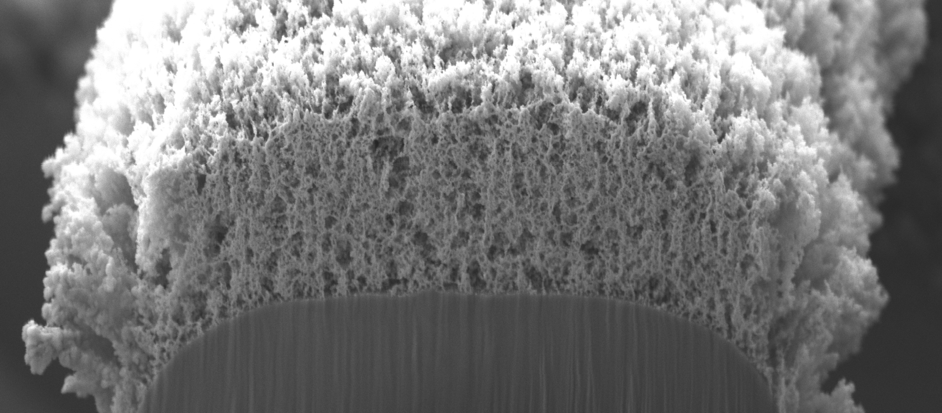
Ionautics has advanced its platinum-based hydrogen catalyst technology toward full-scale industrial production, with funding from the Swedish Energy Agency. The company and its partners – the Royal Institute of Technology and the RISE Research Institute of Sweden – spent more than five years researching vapor-deposited porous iridium layers for green hydrogen production. Extended testing has demonstrated strong benchmarking performance using ultra-low amounts of iridium, the company said.
Moeve has signed an engineering, procurement, fabrication, and supply contract with thyssenkrupp nucera to provide 300 MW of alkaline water electrolysis technology for the Onuba project in Spain, described as the largest green hydrogen plant in southern Europe. The contract covers 15 standardized 20 MW electrolyzer units for the project's first phase, said thyssenkrupp nucera, noting that Moeve announced its final investment decision (FID) in early March.
thyssenkrupp nucera has also signed a front-end engineering design (FEED) contract with Juno Joule for a planned 260 MW electrolysis plant in India. The facility will produce green hydrogen and green ammonia, with renewable fuels of non-biological origin (RFNBO)-compliant ammonia primarily intended for export to Europe. An FID is targeted for fiscal year 2026-27. Juno Joule is developing the project together with Select Energy GmbH.
Advait Greenergy, a subsidiary of India's Advait Energy Transitions, has signed multiple memorandums of understanding (MoUs) with academic institutions, industrial partners, and technology providers to support development of India's green hydrogen and renewable energy sector. The agreements were signed at the inauguration of the company's Phase I 30 MW alkaline electrolyzer assembly facility in Gujarat.
This content is protected by copyright and may not be reused. If you want to cooperate with us and would like to reuse some of our content, please contact: editors@pv-magazine.com.
By submitting this form you agree to pv magazine using your data for the purposes of publishing your comment.
Your personal data will only be disclosed or otherwise transmitted to third parties for the purposes of spam filtering or if this is necessary for technical maintenance of the website. Any other transfer to third parties will not take place unless this is justified on the basis of applicable data protection regulations or if pv magazine is legally obliged to do so.
You may revoke this consent at any time with effect for the future, in which case your personal data will be deleted immediately. Otherwise, your data will be deleted if pv magazine has processed your request or the purpose of data storage is fulfilled.
Further information on data privacy can be found in our Data Protection Policy.

Facts Only

* Ionautics has advanced its platinum-based hydrogen catalyst technology.
* Funding came from the Swedish Energy Agency.
* The Royal Institute of Technology and the RISE Research Institute of Sweden are partners.
* Research focused on vapor-deposited porous iridium layers.
* Extended testing demonstrated strong benchmarking performance with ultra-low iridium amounts.
* Moeve signed an engineering, procurement, fabrication, and supply contract with thyssenkrupp nucera.
* The contract covers 300 MW of alkaline water electrolysis technology.
* The technology is for the Onuba project in Spain.
* 15 standardized 20 MW electrolyzer units are included in the first phase.
* thyssenkrupp nucera announced an FID in early March.
* Thyssenkrupp nucera and Juno Joule have signed a FEED contract for a planned 260 MW electrolysis plant in India.
* The facility will produce green hydrogen and green ammonia.
* It will be for RFNBO-compliant ammonia primarily for export to Europe.
* An FID is targeted for fiscal year 2026-27.
* Advait Greenergy signed MoUs with academic institutions, industrial partners, and technology providers.
* The company’s Phase I 30 MW alkaline electrolyzer assembly facility is in Gujarat.

Executive Summary

The development of green hydrogen technologies is gaining momentum, with several key companies securing contracts and making investments. Ionautics is progressing its platinum-based catalyst technology with Swedish funding, demonstrating impressive performance using minimal iridium. Moeve has secured a significant contract with thyssenkrupp nucera for 300 MW of alkaline water electrolysis for the Onuba project in Spain, marking the largest green hydrogen plant of its kind in southern Europe. Simultaneously, thyssenkrupp nucera is expanding its reach with a FEED contract for a 260 MW plant in India, targeting both green hydrogen and ammonia production for export. Advait Energy Transitions’ subsidiary, Advait Greenergy, is actively building partnerships within India’s burgeoning green hydrogen sector. While specific timelines for investments remain tentative (e.g., the India plant’s FID targeted for 2026-27), the overall trend indicates a rapid escalation of green hydrogen production capacity. This coordinated investment across multiple projects suggests a growing confidence in the viability of green hydrogen as a key energy source. Further details regarding the specific technologies and partnerships are still emerging, but the overall picture reflects increased commercial activity in this critical sector.

Full Take

The article presents a strategically sequenced narrative of escalating investment in green hydrogen infrastructure, heavily weighted towards alkaline water electrolysis – a technology currently favored by several key players. The temporal layering – Ionautics’ research, Moeve’s immediate contract, thyssenkrupp nucera’s subsequent projects – suggests a competitive landscape where rapid scaling is paramount. The explicit mention of the “Onuba project” and “RFNBO-compliant ammonia” introduces a subtle layer of geopolitical strategy, reflecting Europe’s drive for independent, sustainable fuel supplies. The inclusion of Advait Greenergy highlights India's ambition to become a major exporter of this fuel, aligning with both domestic decarbonization goals and international demand. A pattern emerges: established industrial giants (thyssenkrupp, Moeve) are aggressively deploying existing technology, while newer entrants (Ionautics, Advait) are building ecosystems through partnerships and facility investments. The repeated targeting of “FID” (Final Investment Decision) dates – notably the relatively distant one for India – is a key manipulation pattern (ARC-0024 Ambiguity), deliberately obscuring the true timing of this significant shift. The article frames this as inevitable progress, reinforcing a linear narrative of technological advancement. Root cause: the global pressure to decarbonize the energy sector is fueling investment, but the story lacks critical interrogation of the underlying energy demands being met – are we truly displacing fossil fuels, or simply shifting their location and extraction intensity? Implications: While the investments represent a positive step, they do not address the fundamental problem of energy consumption. The focus on exporting “green” ammonia raises serious questions about the carbon footprint of ammonia production itself – the Haber-Bosch process is notoriously energy-intensive. It’s likely a cynical strategy to capitalize on green hydrogen’s perceived value while minimizing the scrutiny of the broader ammonia supply chain. Bridge questions: What’s the true carbon footprint of green ammonia production and transportation, accounting for energy sources used in the Haber-Bosch process and potential leaks of nitrous oxide? Does this narrative adequately account for the impact of scaling up electrolyzer production – will supply chain vulnerabilities exacerbate the problem? Patterns detected: ARC-0024 Ambiguity (FID dates), ARC-0043 Motte-and-Bailey (presenting alkaline electrolysis as dominant technology without acknowledging competing approaches – e.g., proton exchange membrane electrolysis), ARC-0019 Anchoring (repeatedly referencing "largest green hydrogen plant" to create an impression of scale and momentum.

Sentinel — Likely Human

Confidence

The article reports on a series of green hydrogen-related projects and partnerships, primarily through announcements from the companies involved. The text exhibits characteristics consistent with human-generated reporting, but with a certain degree of formulaic presentation that warrants monitoring for potential AI-assisted influence.

Signals Detected
low severity: Sentence length variance is relatively consistent, leaning towards longer sentences, but not exhibiting extreme rhythmic patterns.
medium severity: The text presents a series of announcements without a strong narrative thread or passionate advocacy for any particular outcome.
low severity: Reliance on corporate announcements and project descriptions without deep contextual analysis or critical engagement with the underlying technologies.
low severity: The rapid succession of project announcements and partnerships, while plausible, lacks a demonstrable strategic rationale beyond 'supporting development'.
Human Indicators
The text primarily relays factual information about ongoing projects and agreements, mirroring the style of press releases and industry news reports.
The inclusion of specific company names and project locations demonstrates a focus on verifiable details rather than abstract concepts.