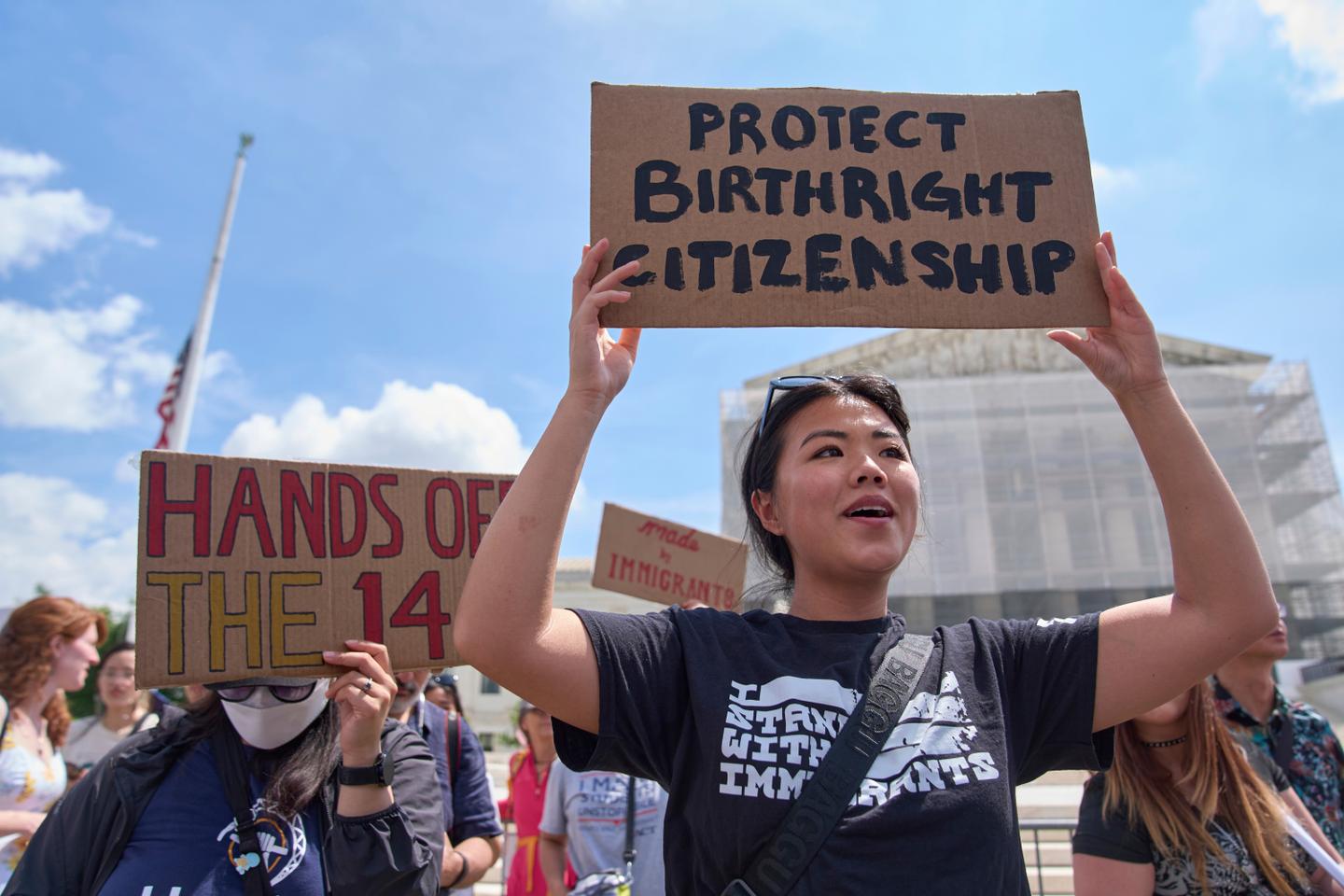
If you are born on US soil, you have the right to American citizenship, even if your parents are undocumented. This constitutional principle, which has been valid for more than a century, cannot be overturned by the White House. That was the Supreme Court's decision in a ruling published Tuesday, June 30. After his reciprocal tariff policy was struck down in February, Donald Trump has now suffered another major setback before the nation's highest court.
The decision reflects less the court's balance – which is otherwise often favorable to the administration's transgressions – than the extreme nature of the presidential order that was debated by the nine justices. Signed on January 20, 2025, Trump's first day back in the White House, the order sought to revoke birthright citizenship for children of undocumented parents, those with temporary visas or those on short-term visits.
The measure was to take effect within 30 days. It never did. Several federal judges suspended it, finding it contradicted the Constitution. The executive branch's defeat on Tuesday comes as little surprise, given the tone of the April 1 public hearing before the court. The justices' doubts centered on a very restrictive reinterpretation of the 14th Amendment, which has gone uncontested for 150 years. More surprising, though, was the narrow margin of the decision (six votes to three).
You have 76.8% of this article left to read. The rest is for subscribers only.
Sentinel — Uncertain
The text demonstrates patterns typical of AI synthesis—a highly structured, assertive narrative focusing on specific political outcomes. Caution is warranted regarding the veracity of the embedded dates and legal claims.