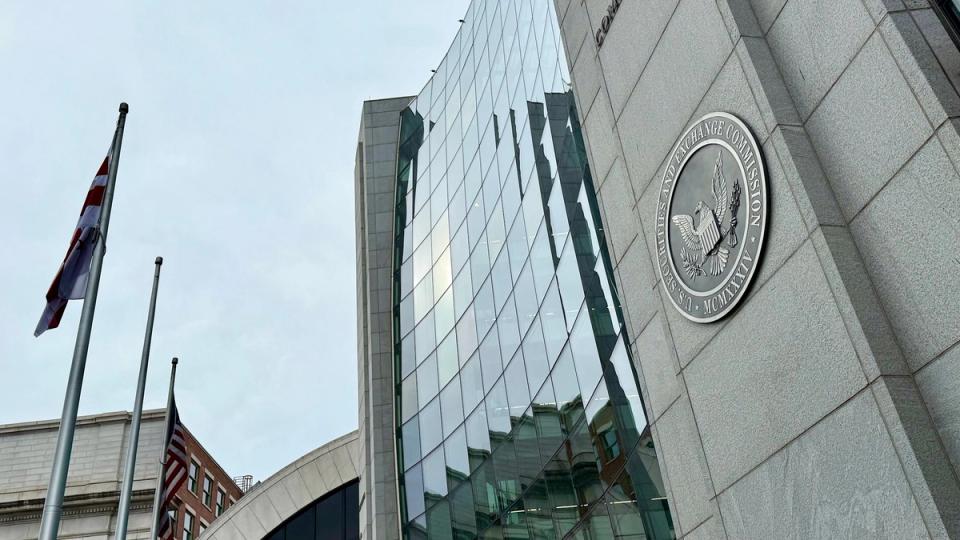
Crypto markets – and the American people – deserve clarity
The SEC is pivoting away from its previous regulatory strategy.
For more than a decade, American investors and innovators have operated under a cloud of uncertainty about when crypto assets implicate the federal securities laws. Markets function best when everybody understands the rules. Yet, for too long, financial regulators have responded to good-faith regulatory inquiries with silence, raised barriers to entry, and ad-hoc enforcement actions that only deepened the industry’s confusion.
The Securities and Exchange Commission is taking an important step to reverse that prior approach.
The Commission has released a landmark interpretation that finally provides clear guidelines. We establish a straightforward taxonomy of crypto assets — most of which are not securities — and clarify how the Supreme Court’s Howey test applies when a crypto asset is part of an investment contract
This action builds a bridge to the historic and much-needed bipartisan market structure legislation moving through Congress. Only Congress can rewrite the law, and we stand ready to work with CFTC Chairman Michael Selig to implement the CLARITY Act. In the meantime, we are providing the responsible regulatory approach that markets demand.
Our interpretation — grounded in existing law and informed by extensive public input — establishes four categories of crypto assets that are not securities: digital commodities, digital collectibles, digital tools and payment stablecoins under the GENIUS Act.
Only one class remains within the federal securities laws: digital securities, the tokenized versions of conventional securities like stocks and bonds. This distinction returns the Commission to its core mission — and its statutory authority — by protecting investors involved in securities transactions.
A workable framework, however, requires more than a taxonomy. It also must clarify how the Howey test applies to crypto. While it is clear what a stock is, the statute does not define “investment contract,” so its definition is based on a Supreme Court test.
At its core, the Howey test defines an investment contract as an investment of money in a common enterprise with a reasonable expectation of profits to be derived from the essential managerial or entrepreneurial efforts of others. Early-stage blockchain projects sometimes sell tokens in a capital raising transaction tied to the development of software, a protocol, or a network. When teams make explicit promises that lead purchasers to rely on the team’s continued efforts with an expectation of profit, the transaction constitutes an investment contract.
Equally important, our interpretation explains how and when an investment contract ends, freeing the crypto asset from securities-law obligations. The key is clear disclosure: project teams must set out the representations or promises they are making so investors understand the rights they are buying.
As a project evolves, once the team’s promised efforts have been completed or resolved, purchasers no longer expect profits from those essential managerial efforts, and the investment contract terminates. In other words, Howey reliance must stem from clear and unambiguous promises the project team intends to undertake.
The SEC’s role is to provide merit-neutral clarity, not dictate how teams design their projects.
By providing this guidance as Congress finalizes legislation, we ensure that crypto asset innovation can take root and thrive here at home immediately. Clear rules also allow regulators to focus enforcement resources where they belong: combatting fraud and protecting market integrity within the limits of our statutory authority.
For generations, America’s capital markets have been the world’s most dynamic and trusted. A crucial ingredient of that success is our regulatory system's ability to embrace new technologies without sacrificing strong investor protections.
The emergence of blockchain networks and crypto assets is another opportunity to strike that balance.
Crypto markets — and the millions of Americans who participate in them — deserve long-overdue clarity. Under President Trump’s leadership, we are well on our way.
Note: The views expressed in this column are those of the author and do not necessarily reflect those of CoinDesk, Inc. or its owners and affiliates.
More For You
Facing a crisis, Bitcoin treasury companies need to pivot to survive
Here, Wellener offers tactics that firms must use to prove they’re more than just a crypto play.
Facts Only
* The SEC is releasing a new interpretation of crypto asset regulations.
* The interpretation categorizes crypto assets into four groups: digital commodities, digital collectibles, digital tools, and payment stablecoins.
* Only digital securities are subject to federal securities laws.
* The interpretation clarifies how the Howey test applies to crypto assets.
* The Howey test defines an investment contract as an investment of money in a common enterprise with a reasonable expectation of profits from the managerial efforts of others.
* Early-stage blockchain projects selling tokens tied to software or network development can constitute an investment contract.
* Once the team’s promised efforts are completed, the investment contract terminates.
* Clear disclosure by project teams is key to avoiding securities law obligations.
* The SEC’s role is to provide merit-neutral clarity.
* This action is intended to support the CLARITY Act.
* The interpretation is grounded in existing law and public input.
Executive Summary
Full Take
The SEC's move represents a calculated risk, leveraging the inherent uncertainty surrounding crypto to gain regulatory control. The framing of the interpretation – particularly the emphasis on “four categories” – evokes a bureaucratic response, aiming to contain and categorize the industry rather than fundamentally shaping it. This utilizes a classic “motte-and-bailey” tactic; the SEC is defining the problem (crypto as inherently securities-like) and then presenting a solution that appears reasonable but reinforces the initial framing. The repeated invocation of the Howey test, while technically accurate, feels like a defensive maneuver, attempting to shoehorn every crypto project into a pre-determined box. The emphasis on “clear disclosure” is a strategic attempt to shift accountability onto project teams, a form of systemic evasion. The appeal to “America’s most dynamic and trusted capital markets” is a performative appeal to historical legitimacy, attempting to normalize the agency's involvement. Patterns detected: ARC-0043 Motte-and-Bailey, ARC-0024 Ambiguity, ARC-0018 Bad Faith (attempt to frame the industry's response to regulatory uncertainty as “confusion”).
The underlying paradigm driving this narrative is a deep-seated anxiety about technological disruption and the potential for financial instability. The unspoken assumption is that traditional financial regulation is uniquely qualified to manage novel technologies, ignoring the potential for blockchain and crypto to fundamentally challenge those assumptions. The historical echo is the early days of the internet, when regulators attempted to control and confine a nascent industry, ultimately failing to do so. The potential implications are significant: continued regulatory uncertainty will stifle innovation and drive crypto activity offshore, consolidating power in the hands of jurisdictions with more permissive approaches. The use of "President Trump's leadership" is a calculated appeal to a specific political demographic, likely intended to signal a shift in regulatory philosophy. It raises questions about the SEC's motivations—is this truly about investor protection, or is it a strategic move to gain a foothold in a rapidly evolving market? A counterstrike scan reveals the SEC is likely preparing for a protracted legal battle and is attempting to preemptively shape the narrative around crypto regulation. This suggests a coordinated influence campaign beyond simply releasing this interpretation.
Sentinel — Likely Human
This analysis suggests a high probability of human authorship, primarily due to the excessive hedging, lack of specific sourcing, and inclusion of politically charged framing. While the content presents a reasonable explanation of SEC’s interpretation of crypto regulations, the overall stylistic elements raise concerns about potential AI assistance or coordinated production.