Developer was granted extended time to pay back debt on 117-unit multifamily property for second straight year
By Andrew Coen September 4, 2026 11:40 am
reprintsIt’s déjà vu for GAIA Real Estate.
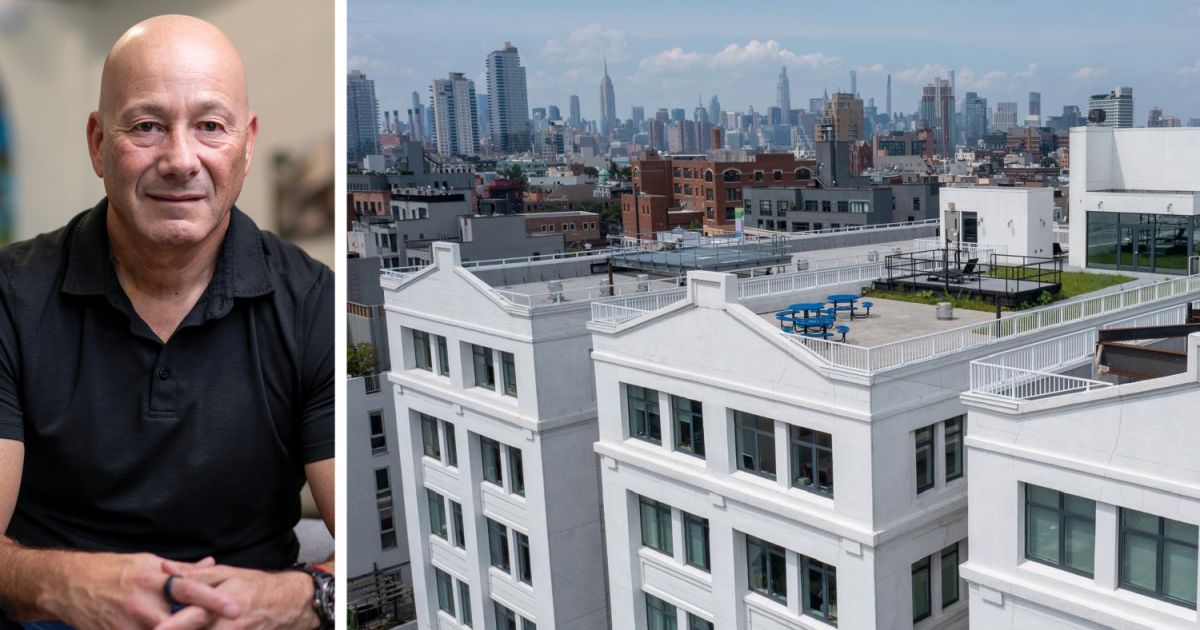
The developer landed for the second straight year a one-year extension for its $48 million loan on loan with Raymond James Bank backing a multifamily property at 55 Hope Street in Williamsburg, Brooklyn, Commercial Observer can first report. The extension pushed the loan maturity to August 2027, which will be five years after Gaia acquired the 1907-built and 2012-renovated apartment building previously utilized as a pencil factory.
“We acquired the property at the height of the COVID-19 pandemic, amid significant uncertainty in New York, and have since increased net operating income significantly through active management and a long-term approach to value creation, Danny Fishman, CEO and co-founder at Gaia Real Estate, said in a statement. “This extension demonstrates our ability to identify opportunities across market cycles and position our investments for sustained performance in Brooklyn’s multifamily market.”
Fishman added that lenders were interested in refinancing the loan given that the loan is less than 50 percent loan-to-value with a “very strong” debt service coverage ratio, but he opted to go the extension route due to the current rising interest rate climate.
After purchasing the 117-unit property from Hope Street Capital for $80 million in August 2022, Gaia added coworking space and refurbished the building’s rooftop while also providing tenant concessions. Hope Street Capital acquired the building for $17 million in 2010 and converted it from industrial to residential use, The Real Deal previously reported.
Raymond James Bank did not immediately return a request for comment.
Andrew Coen can be reached at acoen@commercialobserver.com.
Facts Only
* Gaia Real Estate received a one-year extension for its $48 million loan on a multifamily property.
* The property is located at 55 Hope Street in Williamsburg, Brooklyn.
* The loan was with Raymond James Bank.
* The loan covers an 117-unit multifamily property.
* The loan maturity was pushed to August 2027.
* Gaia acquired the property in August 2022.
* Danny Fishman, CEO and co-founder at Gaia Real Estate, provided a statement regarding the extension.
* The property was previously utilized as a pencil factory.
* Hope Street Capital acquired the building for $17 million in 2010.
* Gaia added coworking space and refurbished the rooftop after acquisition.
Executive Summary
A developer secured a one-year extension for the $48 million loan on a multifamily property located at 55 Hope Street in Williamsburg, Brooklyn. This extension was granted for the second consecutive year and pushes the loan maturity date to August 2027. The property is an 117-unit building that Gaia Real Estate acquired in August 2022. The developer, Danny Fishman of Gaia Real Estate, stated that the extension reflects the ability to identify opportunities across market cycles and position investments for sustained performance in the Brooklyn multifamily market.
The reason for opting for an extension rather than refinancing was related to the current interest rate climate, despite lenders expressing interest in refinancing given the property's favorable loan-to-value ratio and strong debt service coverage ratio. Prior to Gaia's acquisition, Hope Street Capital had purchased the building in 2010 for $17 million and converted it from industrial use to residential. Gaia Real Estate subsequently implemented value creation strategies, including adding coworking space and renovating the rooftop while offering tenant concessions.
Full Take
The narrative centers on the strategic positioning of real estate investment across economic cycles, framed by flexibility in debt management. The decision to pursue an extension despite favorable credit metrics suggests a prioritization of long-term value creation over immediate refinancing, especially amidst rising interest rates. This reflects a specific market strategy where managing cash flow and capitalizing on operational improvements—like active management and value enhancement—are seen as primary drivers of sustained performance rather than short-term financial restructuring.
The pattern here involves positioning assets to absorb macroeconomic uncertainty by extending timelines, suggesting that perceived stability is often an artifact of strategic duration rather than immediate liquidity concerns. The contrast between the lenders' interest in refinancing based on strong metrics and the developer's choice highlights a divergence in risk tolerance predicated on differing views of market longevity. This raises questions about the systemic prioritization: does the focus on sustained performance inherently create a longer-term, more resilient investment structure, or does it merely defer necessary capital adjustments until conditions are more favorable? The implication is that investment resilience might be defined by adaptability within constraints rather than maximizing immediate financial optimization.
Bridge Questions: If market volatility continues to increase, how might this strategy of extending debt maturities impact the ability to react swiftly to unforeseen shifts in regional Brooklyn multifamily demand? What is the cost-benefit analysis for Gaia Real Estate when foregoing an immediate refinance versus maintaining flexibility over the next five years? How do these long-term asset management approaches influence broader lending practices within the New York real estate sector during periods of high rate uncertainty?
Sentinel — Human
The text exhibits the structure and specificity of human journalistic reporting, detailing financial events and attributing statements clearly.