16 March 2026
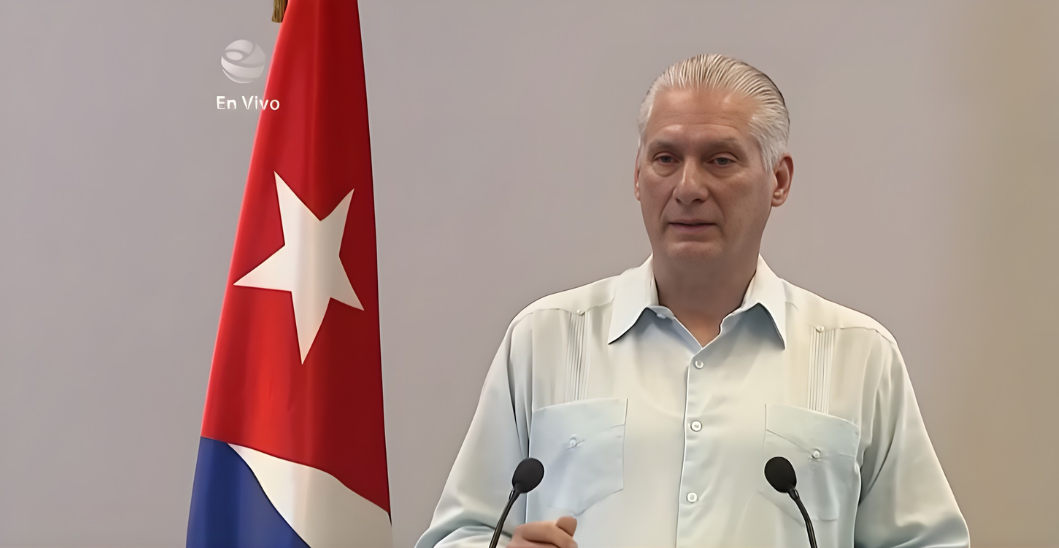
Speaking on 13 March from the Presidential Palace, Cuba’s President acknowledged that there is an ongoing process of bilateral exchanges between the two nations. Addressing Cubans and the media, he noted that the exploratory conversation had been facilitated by international actors “as in the past” when Raul Castro led Cuba’s negotiations with the Obama administration.
“These talks,” he said, “have been aimed at finding solutions through dialogue to the bilateral differences between our two nations.” Their purpose, he noted, “is, first and foremost, to identify which bilateral problems need a solution,” and to “determine the willingness of both parties to take concrete actions for the benefit of our people.” This involves, Cuba’s President said, “finding areas of cooperation through which we can confront threats, and guarantee the security and peace of both countries, as well as the security and peace of our region.”
Confirming that the exchanges are in an initial phase, he made clear that there is internal unity in in the Cuban system in relation to the process. The exchanges, he said, are being undertaken “in accordance with the consistent policy that the Cuban Revolution has defended in its history, led by Army General Raúl Castro as leader of the Revolution.”
Emphasising Cuba’s collegiate approach to strategic decision making, he said that Cuban officials recent discussions with US government representatives had involved “collegial action within the highest structures of the Party, the State, and the Government.”
Speaking about the process, Díaz-Canel said that it involves “great discretion,” is likely to be long, and “must begin by establishing contacts, creating possibilities for channels for dialogue, and fostering a willingness to engage.” All of this, he stressed, takes time. “Only then are agendas built, negotiations and conversations undertaken, and agreements reached. We are still far from this because we are in the initial phases of this process,” he told Cubans.
Cuba sets out its objectives
In his remarks, Díaz-Canel outlined three objectives for the present part of the process. These are, he said, to “determine which bilateral problems need solving; to establish possible solutions to these problems;” and to determine “if there is a willingness to take concrete actions for the benefit of our people.” This implies, he said, “identifying areas of cooperation to address threats and guarantee the security and peace of both countries.”
The exchanges with Washington, Díaz-Canel noted, involve a “very sensitive process” requiring “enormous and arduous efforts to find a solution and create spaces for understanding, allowing us to move forward and away from confrontation.” Cuba, he observed in a lengthy statement, has expressed a willingness to conduct talks based on equality and respect for the political systems of both states, and their sovereignty.
The outcome of the bilateral negotiating process, President Díaz-Canel said, will be reported to Cubans “exactly as it happens,” regardless of the speculation surrounding the issue.
Other issues also addressed
In his remarks, Díaz-Canel also addressed related issues of concern to Cubans. Speaking about the fuel and power generation crisis facing the country, Cuba’s President noted that “No fuel has come in for three months” as recent US measures had made it impossible to access fuel on the international market. Although the country had recovered more than 1,400 MW of its distributed generating capacity, this, he said, “cannot be used to meet peak energy demand due to a lack of fuel.”
Cuba’s President went on to address the impact of the US energy embargo on productivity and employment, consequent measures being introduced to relocate labour, the use of business profits to pay salaries, and the prioritisation of education, particularly in universities.
New investment opportunities coming for Cubans living overseas
On the subject of relations with Cubans abroad, a matter that may come to the fore in any detailed negotiation with the US, Díaz-Canel made clear that they have the right to participate in the country’s economic and social development and that it continues to be the government’s responsibility to “welcome them, listen to them, attend to them, and provide them with a space for participation.” In doing so he acknowledged that the number of Cubans residing abroad or extending their stay overseas has been growing, and “is significant.”
Observing that many of those who have left are professionals formed by Cuba’s educational system and maintain their cultural roots and their identity with the nation, Cuba’s President said that new measures to facilitate their participation in Cuba’s development programme are to be introduced. They will be announced soon, he told Cubans, by the Deputy Prime Minister and Minister of Foreign Trade and Foreign Investment, Oscar Pérez-Oliva.
Vatican playing a role
Although not spelt out, The Vatican’s has confirmed that it has played a significant role, acting as an early intermediary between the US and Cuba. When asked about this by journalists the Holy See’s Secretary of State, Cardinal Parolin, noted that it “speaks with all interlocutors to relaunch dialogue and work for peace, as is also the case for Cuba.” The Cardinal added that “everything that had to be done has been done,” before going on to observe, “We have seen the Foreign Minister and we have taken the necessary steps always in view of a dialogue solution to the problems that exist”.
His remarks were followed by the announcement by the Cuban authorities that they would authorise the release of 51 prisoners, describing it as a gesture of goodwill towards the Vatican for Holy Week. According to two human rights NGOs, fifteen of the number released were political prisoners while the rest had been imprisoned for other offences.
US President’s remarks suggest resolution may take time
President Díaz-Canel’s remarks came at the end of a week of multiple, seemingly random Cuba-related remarks by President Trump, made to the media during unrelated events or when he was speaking about the war in the Middle East. Taken together, the US President’s comments indicate in general that “a deal” with Cuba is being considered, that talks are being led by the US Secretary of State, Marco Rubio, and the issue is unlikely to be addressed until the war with Iran has ended.
Addressing a White House reception for the winning 2025 US Major League soccer team, Trump appeared to make clear his timing. In a public aside to Marco Rubio, who was seated nearby, the US President said in a reference to the war with Iran: “Your next project will be Cuba. It’s waiting, but let’s finish this one first.” Then, addressing Jorge Mas, a leading Cuban-American businessman also present and who is the Managing Partner of the winning soccer team, Trump additionally sought to reassure the Cuban exile community. “It will only be a matter of time before you and many other amazing people return to Cuba,” he said.
In Miami, Trump additionally told NBC local affiliate that Cuba is interested in negotiating with Washington, and told other media outlets that a “friendly takeover” is possible. Speaking separately to Reuters about a possible deal, he said “I can see that happening. Marco Rubio is dealing on it and at a very high level,” before going on to observe that Cuba is “a nation in deep trouble and they want our help.”
Trump also confirmed to the group of Latin American leaders attending the ‘Shield of the Americas’ summit in Doral that other US officials have been involved in the recent exchanges with Cuba (Details Cuba Briefing 2 March 2026). Separately, the House Speaker Mike Johnson (R- Louisiana) in comments to the media has ruled out a military option. “I don’t think there’s a need. I don’t think there’s an appetite to put boots on the ground in Cuba. I think some of this is happening organically,” he said.
Shape of possible final deal outlined
The shape of a possible deal from a US perspective has appeared in a widely quoted article published in USA Today. The publication quoting unnamed US sources “with knowledge of the administration’s plans,” reported that Washington is seeking an economic deal involving ports, energy, and tourism, the ending of some sanctions, and will allow the Cuban leadership to remain in Cuba. Agreement could also include, according to the publication, a relaxation on US travel to Cuba.
Although the report’s sources appeared to focus on the end of any substantive negotiation, the subject of investment is believed to have been touched on during an exploration of the parameters of any more formal negotiation that may take place. USA Today’s sources additionally suggested that the new US approach to Cuba reflected President Trump’s seriousness in restoring US dominance in the Western Hemisphere.
Exiles concerned that present Cuban system may be left in place
How this approach will play with the many Cuban exiles in Miami and other locations is uncertain. Concern has been growing among Cuban American politicians, businesses, and others in the exile community who believe it is their right to return to Cuba to take control of its future, and are adamant that there should be no dialogue or contact with anyone in the existing Cuban system. Their fear, voiced on social media and on Spanish language TV and radio stations is that they are being sidelined and that Washington’s focus is not theirs. They see the Trump Administration’s emphasis on ensuring stability and security in the northern Caribbean, securing economic opportunity for all US businesses in relation to investment in critical infrastructure and tourism, oil and trade, and only at a much later date multi-party democratic elections, as not being in their political, economic, and family interests.
Opposition to negotiations that might lead to any form of continuity involving the present Cuban system of government, is seeing Cuban American representatives in Congress becoming increasingly vociferous in expressing their deep concern. “We can’t leave any Castros in power…. if they are talking to any Castro, it’s only about when they will leave, how they will leave, what the conditions will be, but not about anyone staying,” Congresswoman Maria Elvira Salazar, (R-Florida) has been quoted as saying.
In a seemingly related development that appears to be at odds with the negotiating approach being pursued by Rubio and the broader US administration at the President’s behest, first reported by the Washington Post, a decision has been taken by the US Justice Department to form a working group to examine possible federal charges against officials or entities within Cuba’s government for potential criminal offences, including narcotics trafficking, immigration, and violent repression.
Rubio walking a political tightrope
Despite his previous rhetoric and his need to keep Cuban Americans in the Republican Party onside should he wish to make a future run for President, Marco Rubio is promoting a scenario of dialogue, and gradual change. Such an approach those around him believe, would avoid a total collapse of Cuban civil society, conflict and a refugee crisis, and limit the influence of those in South Florida who believe that they are Cuba’s future, something wholly unacceptable to the present Cuban leadership.
As Cuba Briefing has previously reported, significant business interests close to President Trump see the process of change in Cuba involving first a period of economic stabilisation with US support, possibly linked to international humanitarian and economic aid; then a period of foreign external investment involving the restoration of critical infrastructure and the stimulation of productive enterprises involving Cuban non-state enterprises; and finally in a much improved and freer economy, a transition to western style democratic elections.
Photo Credit: Photo Credit: En Vivo.
16 March 2026, Issue 1312
The Caribbean Council is able to provide further detail about all the stories in Cuba Briefing. If you would like a more detailed insight into any of the content of today’s issue, please get in touch
Facts Only
Cuba’s President Díaz-Canel confirmed ongoing bilateral talks with the U.S., facilitated by international actors, aimed at resolving differences through dialogue.
The talks are in an initial phase, focusing on identifying bilateral problems, potential solutions, and mutual willingness to act.
The Vatican has acted as an intermediary, and Cuba released 51 prisoners, including 15 political prisoners, as a gesture of goodwill.
U.S. President Trump stated that negotiations are led by Secretary of State Marco Rubio but will be addressed after the war with Iran ends.
Trump suggested a "friendly takeover" of Cuba is possible and reassured Cuban exiles that they may return to Cuba in the future.
The U.S. is reportedly seeking an economic deal involving ports, energy, tourism, and a relaxation of some sanctions.
Cuban exiles in Miami oppose negotiations that might leave the current Cuban government in place, advocating for regime change.
The U.S. Justice Department has formed a working group to examine potential federal charges against Cuban officials for narcotics trafficking, immigration, and repression.
Cuba faces a fuel and power generation crisis, with no fuel imports for three months due to U.S. measures.
New measures to facilitate participation of Cubans living abroad in Cuba’s economic development are expected to be announced soon.
The U.S. House Speaker Mike Johnson ruled out a military option in Cuba, stating that change is happening "organically."
Cuban-American Congresswoman Maria Elvira Salazar insisted that no Castros should remain in power under any negotiated deal.
Executive Summary
Cuba and the United States are engaged in preliminary bilateral talks, facilitated by international actors, to address longstanding differences and explore areas of cooperation. Cuban President Díaz-Canel emphasized that the process is in its early stages, focusing on identifying key issues, potential solutions, and mutual willingness to act for the benefit of both nations. The Vatican has played a mediating role, and Cuba released 51 prisoners as a gesture of goodwill. Meanwhile, U.S. President Trump has indicated that negotiations are ongoing but deferred until after the conflict with Iran concludes, with Secretary of State Marco Rubio leading the efforts. The U.S. is reportedly seeking an economic deal involving ports, energy, and tourism, while Cuban exiles in Miami express concerns about the potential continuation of the current Cuban government. The process remains sensitive, with Cuban-American politicians and business leaders advocating for regime change rather than dialogue.
The talks are framed within Cuba’s historical policy of sovereignty and respect for political systems, with Díaz-Canel stressing internal unity and a collegiate approach to decision-making. The U.S. appears to prioritize stability and economic opportunities, while Cuban exiles fear being sidelined in favor of a gradual transition that preserves elements of the current system. The Justice Department’s formation of a working group to examine potential charges against Cuban officials adds complexity to the negotiations, reflecting ongoing tensions between diplomatic engagement and hardline opposition to the Cuban government.
Full Take
The strongest version of this narrative presents a cautious but potentially historic shift in U.S.-Cuba relations, with both sides engaging in preliminary talks mediated by the Vatican. The Cuban government frames the process as consistent with its revolutionary principles, emphasizing sovereignty and mutual respect, while the U.S. appears to prioritize economic stabilization and regional security. The inclusion of Cuban exiles’ concerns adds a layer of complexity, highlighting the domestic political pressures in the U.S., particularly in Florida, where hardline opposition to the Cuban government remains influential.
Patterns detected: ARC-0024 Ambiguity (vague references to "friendly takeover" and "organic" change), ARC-0043 Motte-and-Bailey (U.S. framing negotiations as pragmatic while exiles demand regime change).
The root cause of this narrative is the longstanding U.S.-Cuba conflict, now intersecting with geopolitical shifts, economic crises, and domestic political calculations. The U.S. appears to be balancing between engaging Cuba for strategic and economic reasons while managing the expectations of a vocal exile community. The Cuban government, meanwhile, is navigating internal unity and economic collapse while seeking to maintain its political system.
Implications for human agency and dignity are significant. Cuban citizens face severe fuel shortages and economic hardship, while exiles fear being excluded from shaping Cuba’s future. The U.S. approach risks prioritizing stability over democratic transition, potentially leaving the current system intact. Second-order consequences could include increased migration, economic instability, or even conflict if negotiations fail to address core grievances.
Bridge questions: How might the U.S. reconcile its economic interests in Cuba with the demands of Cuban exiles for regime change? What role could international actors play in ensuring a transition that respects both sovereignty and human rights? Would a gradual economic opening in Cuba lead to political liberalization, or entrench the current system?
Counterstrike scan: A coordinated influence campaign would likely amplify divisions between U.S. policymakers and Cuban exiles, framing negotiations as a betrayal while promoting regime change as the only moral option. The actual content aligns partially with this pattern, as exiles’ opposition is highlighted, but the article also presents the U.S. government’s pragmatic approach, suggesting a more nuanced narrative than a pure manipulation effort.
Sentinel — Human
The article shows strong signs of human authorship, with varied sentence structure, specific attributions, and nuanced political analysis. While some coordination indicators exist (e.g., repeated themes), they align with standard journalistic practice rather than synthetic generation.