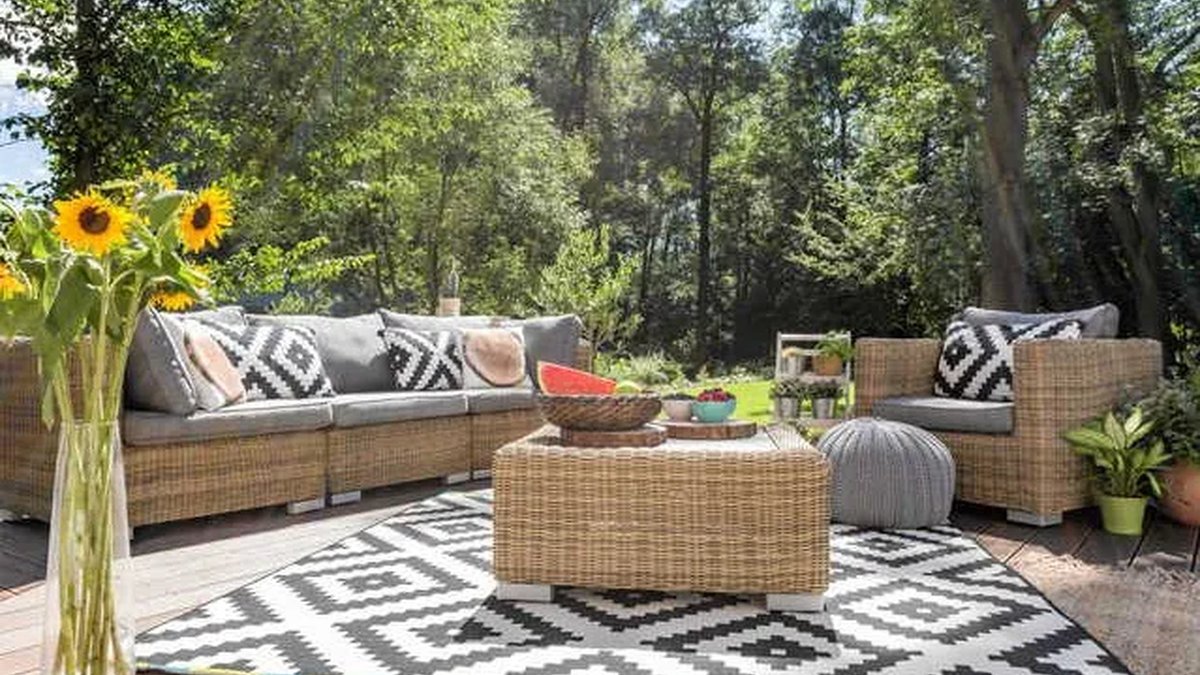
The dos and don’ts when it comes to picking a floor covering for your backyard oasis
We independently select everything we recommend. Buying through us may earn us a commission, which supports our work.
If you’re lucky enough to have an outdoor space, an easy way to make it feel more welcoming is to put down a rug. And if you choose it wisely, that rug will also complement your decor, stand up to wear and tear, and add a layer of safety between you and slippery surfaces.
But it’s easy to get that choice wrong. Prioritizing looks over function, for example, can result in a rug that won’t last past a season. Here are four critical mistakes, according to experts.
Mistake 1: Picking the wrong material. A good, easy-to-clean synthetic option is polypropylene, which resists moisture, fading and stains, according to the website for Canadian-operated retailer Aosom. Nylon is durable and stain resistant, but it could heat up quickly in the sun. Polyester, meanwhile, is fade resistant — but it can hold on to oil-based stains.
As for natural materials, jute or sisal might work: “These are eco-friendly and add a lovely natural texture to your space,” says Aosom. “However, they’re best suited for covered or protected patios since they don’t fare well with moisture or snow.”
There’s also the option of a blended material. “Wool-synthetic blends offer the softness of wool with added durability and can be suitable for outdoor use if placed in covered areas,” says Aosom.
Mistake 2: Choosing the wrong size. “Ideally, your outdoor rug should be large enough for at least the front legs of your seating pieces to sit on it,” Jenny Reimold, a home style expert at HomeGoods, told Better Homes & Gardens. But if you want to divide an outdoor space into smaller zones — such as a grilling space or dining space — smaller rugs could work better.
“In larger outdoor spaces, using a smaller rug strategically can sometimes help define a cosy seating area and allow more of the surrounding landscape to shine,” Ben Hyman, CEO of Revival Rugs, told the publication.
Mistake 3: Ignoring functionality. Many Canadians experience extreme weather conditions that demand rugs with extra grit. “If you deal with heavy rain or snow, prioritize water-resistant or synthetic materials like polypropylene for long-term durability,” says the Aosom site.
High-traffic areas demand a durable material that’s easy to clean, such as nylon or polypropylene, according to Aosom. And if you have children or pets, a stain-resistant material will help fend against spills and muddy paws.
Mistake 4: Not considering safety. What good is a rug that’s durable and easy to clean if you worry about slipping every time you step on it? Consider placing your rug atop a non-slip rug pad that’s designed for outdoor use. And, for extra traction, choose a rug that has a physical texture to it, such as ribbing or raised sections.
“Homeowners frequently forget to consider slip resistance or proper anchoring, which can create a tripping hazard, especially on decks or smoother patio surfaces,” said Mazzei.
Postmedia is committed to maintaining a lively but civil forum for discussion. Please keep comments relevant and respectful. Comments may take up to an hour to appear on the site. You will receive an email if there is a reply to your comment, an update to a thread you follow or if a user you follow comments. Visit our Community Guidelines for more information.
Facts Only
* Polypropylene resists moisture, fading, and stains.
* Nylon is durable and stain resistant but can heat up quickly in the sun.
* Polyester is fade resistant but can hold oil-based stains.
* Jute or sisal are eco-friendly but do not fare well with moisture or snow.
* Wool-synthetic blends offer softness with added durability for covered outdoor use.
* Outdoor rugs should ideally be large enough for at least the front legs of seating pieces.
* Smaller rugs can be used strategically to define smaller zones.
* Water-resistant or synthetic materials like polypropylene are recommended for heavy rain or snow.
* High-traffic areas require durable, easy-to-clean materials such as nylon or polypropylene.
* Stain-resistant materials help guard against spills and mud.
* Non-slip rug pads should be considered for slip resistance.
* Physical textures like ribbing or raised sections can increase traction.
Executive Summary
Full Take
Sentinel — Human
This analysis presents practical advice structured around material science and homeowner concerns, exhibiting the typical structure and integration of sourced information found in consumer-focused content.