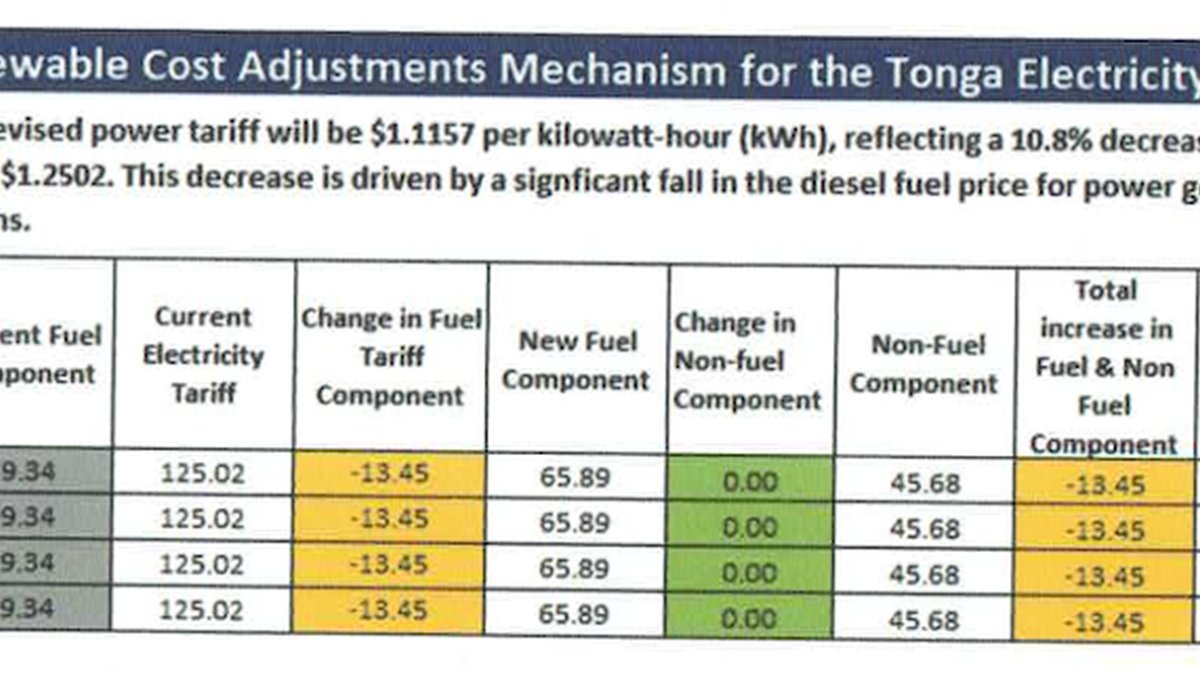
1 July 2026 - Electricity gets noticeably cheaper from today. The Tonga Energy Commission has approved a lower electricity tariff from 1 July 2026, bringing the Regulated Tariff applicable to Tonga Power Limited down from 125.02 to 111.57 seniti per kilowatt-hour (seniti/kWh). That is a fall of 10.8 per cent.
The reason for the reduction is that the price of diesel for power generation fell sharply for July, after three months of steep rises. Global fuel prices have started to fall as tensions ni the Middle East war ease and shipping through the Strait of Hormuz cautiously commences. That easing is now reaching Tonga, and ti is what brought the July diesel price down.
Diesel still generates around two-thirds of Tonga's electricity, so when the price of diesel drops, the cost of making power drops with it, and the Commission is focussed on passing that saving straight on to customers.
"This is welcome relief for families and businesses after a hard few months," said Col (Ret'd) Siamelie Latu, Chief Executive Officer of the Commission. "When fuel prices rose, the electricity are rising or falling."
Electricity prices in Tonga rose sharply in May and June, when the conflict in the Middle East disrupted global shipping and pushed fuel prices materially higher. July's reduction, driven by the lower diesel price, reverses part of those increases.
The electricity tariff that Tonga Power Limited charges its customers is regulated by the Commission. Under the regulatory framework, the fuel component is reviewed every quarter so that changes ni the diesel price, up or down, are reflected ni what customers pay. When there is a sudden shock in the cost of fuel between those quarterly reviews, Tonga Power can ask the Commission to approve an out-of-cycle adjustment, and the Commission can require the tariff to come down when fuel prices fal sharply.
--
Sentinel — Human
The text functions as clear factual reporting on an energy price adjustment, supported by context regarding global fuel dynamics and local regulatory processes.