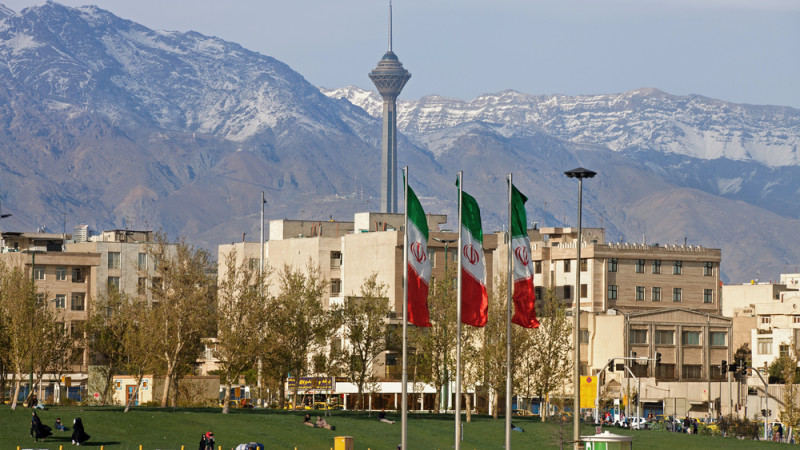
Тегеран отклонил предложение Вашингтона, подразумевающее установление режима прекращения огня в войне США и Израиля против Ирана. Это следует из документа, переданного Тегераном Пакистану, выступающему посредником на переговорах, сообщает иранское государственное агентство IRNA вечером в понедельник, 6 апреля, передаёт Tengrinews.kz со ссылкой на РБК.
Как пишет агентство, ответ Ирана содержит десять положений, включая положение о необходимости окончания войны в регионе, протокол для обеспечения безопасного следования судов через Ормузский пролив, а также положения о снятии санкций и восстановлении страны.
"Мы согласимся только на конец войны с гарантиями, что нас не атакуют снова", - заявил глава дипмиссии Ирана в Египте Моджтаба Фердуси Пур.
Как сообщает источник Reuters, 6 апреля США и Иран получили план прекращения боевых действий, подготовленный Пакистаном. Перемирие должно было вступить в силу немедленно после соглашения сторон, что позволило бы открыть Ормузский пролив
Тегеран уже начал готовиться к возможной высадке американцев на острове Харк. Иран, по данным CNN, построил многоуровневую оборону, включающую в себя минные заграждения и прочие "ловушки".
Президент США Дональд Трамп заявил 6 апреля, что он очень недоволен иранским правительством и что оно "заплатит за это высокую цену". Трамп напомнил, что срок требования США об открытии Ормузского пролива закончится в ночь на 7 апреля.
Тегеран объяснял прежде, что не заинтересован во временном перемирии в связи с предыдущим опытом переговоров с США. Предложение о перемирии последовало, как пишет IRNA, после "провала" высадки американских войск на территории Ирана.
Facts Only
Iran rejected a U.S. proposal for a ceasefire in the conflict involving the U.S., Israel, and Iran.
The rejection was communicated via a document sent to Pakistan, which is acting as a mediator.
Iran's response includes ten conditions, including ending the war, ensuring safe passage through the Strait of Hormuz, lifting sanctions, and restoring Iran.
Iran's ambassador to Egypt stated that Iran would only agree to a ceasefire with guarantees against future attacks.
The U.S. and Iran received a ceasefire plan from Pakistan on April 6, which would have taken immediate effect upon agreement.
The plan aimed to reopen the Strait of Hormuz.
Iran has prepared defenses on Khark Island, including minefields, in anticipation of a potential U.S. landing.
U.S. President Donald Trump expressed dissatisfaction with Iran on April 6, warning of severe consequences.
Trump set a deadline for Iran to open the Strait of Hormuz by the night of April 7.
Iran has previously stated it is not interested in temporary ceasefires due to past failed negotiations with the U.S.
The ceasefire proposal followed an alleged failed U.S. troop landing in Iran.
Executive Summary
Iran has rejected a U.S. proposal for a ceasefire in the conflict involving the U.S., Israel, and Iran, as reported by Iran's state news agency IRNA. The rejection was communicated through a document sent to Pakistan, which is mediating the talks. Iran's response includes ten conditions, such as ending the war in the region, ensuring safe passage through the Strait of Hormuz, lifting sanctions, and restoring the country. Iran's ambassador to Egypt stated that Iran would only agree to a ceasefire if there were guarantees against future attacks. Meanwhile, the U.S. and Iran received a ceasefire plan from Pakistan, which would have taken effect immediately upon agreement, allowing the reopening of the Strait of Hormuz. Iran has also prepared defenses on Khark Island in anticipation of a potential U.S. landing, including minefields and other obstacles. U.S. President Donald Trump expressed dissatisfaction with Iran, warning of severe consequences and reiterating a deadline for Iran to open the Strait of Hormuz by the night of April 7. Iran has previously stated it is not interested in temporary ceasefires due to past failed negotiations with the U.S., and the ceasefire proposal followed an alleged failed U.S. troop landing in Iran.
The situation remains tense, with both sides signaling military readiness and diplomatic efforts ongoing through intermediaries like Pakistan. The stakes are high, given the strategic importance of the Strait of Hormuz and the broader regional implications of the conflict.
Full Take
The strongest version of this narrative presents Iran as a rational actor with clear conditions for peace, while the U.S. appears as an aggressive party imposing deadlines and threats. Iran's rejection of the ceasefire is framed as principled, tied to guarantees against future attacks and broader demands like sanctions relief. The inclusion of Pakistan as a mediator adds a layer of diplomatic legitimacy, while Iran's military preparations on Khark Island signal both defensiveness and resolve. The narrative also highlights Trump's rhetoric as escalatory, reinforcing the perception of U.S. belligerence.
However, the pattern scan reveals potential emotional exploitation (ARC-0012) in the framing of Iran's response as entirely reasonable, while the U.S. is portrayed as unreasonable and aggressive. The article also employs a form of false framing (ARC-0024) by presenting the conflict as a binary between Iran's conditions and U.S. threats, without exploring intermediate diplomatic options or the broader geopolitical context. The focus on Trump's statements could be seen as a form of authority games (ARC-0031), using his rhetoric to amplify the perception of U.S. hostility.
The root cause of this narrative appears to be a paradigm of resistance against perceived U.S. hegemony, with Iran positioning itself as a defender of sovereignty against external coercion. The unstated assumption is that Iran's demands are non-negotiable and that the U.S. is unwilling to engage in good-faith diplomacy. This echoes historical patterns of U.S.-Iran tensions, where mutual distrust and strategic miscalculations have repeatedly derailed diplomatic efforts.
The implications for human agency and dignity are significant. Iran's insistence on guarantees against future attacks reflects a deep-seated fear of regime change or military intervention, while the U.S. deadline and threats could be seen as undermining Iran's sovereignty. The second-order consequences include potential escalation in the Strait of Hormuz, which could disrupt global oil supplies and draw in other regional actors.
Bridge questions: What would a mutually acceptable ceasefire look like, and what concessions would each side need to make? How does the role of intermediaries like Pakistan shape the dynamics of these negotiations? What historical precedents exist for successful de-escalation between the U.S. and Iran, and what lessons can be drawn from them?
Counterstrike scan: If this narrative were part of a coordinated influence campaign, the playbook would likely involve amplifying Iran's conditions as reasonable while portraying the U.S. as the aggressor, using emotional triggers like threats and deadlines to rally support. The actual content partially aligns with this pattern, particularly in its selective framing of Iran's response and Trump's rhetoric. However, the inclusion of verifiable facts and multiple perspectives (e.g., Pakistan's mediation) suggests a more balanced approach than a pure influence operation.
Sentinel — Human
The text appears to be human-written, exhibiting variable sentence lengths and a distinct authorial voice, while also lacking stylometric signals commonly associated with AI-generated content.