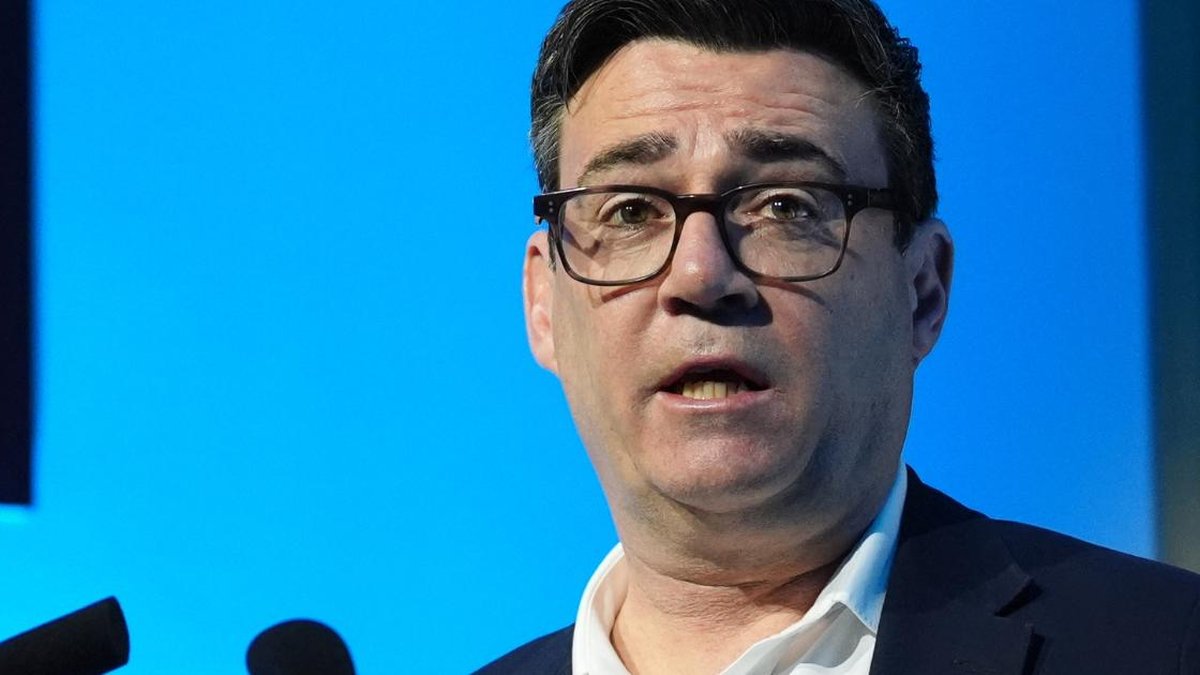
ANDY Burnham has been told to “do better” by campaigners after he apologised for Labour’s initial response to Israel’s genocide in Gaza.
The likely next prime minister said the UK should be “clear in our criticism of what has happened in Gaza”, while also condemning Hamas’s attack on October 7 2023 and subsequent acts of antisemitic violence in Britain.
But in a video posted to social media on Thursday, he added: “I know many people feel that at the start of Israel’s military action in Gaza, my party didn’t get it right and I am sorry about that.
“The response has too often not been good enough. We need to do better.”
READ MORE: Fox cub rescued in Glasgow after nearly two days with head trapped in bottle
While he acknowledged Labour had subsequently recognised a Palestinian state, imposed restrictions on arms exports and sanctioned some Israeli ministers, he suggested a government under his leadership would go further.
Burnham said: “Let’s be honest, the UK was too slow to call for a ceasefire and we must now do more to strengthen our approach.”
He added that action would include “looking at further sanctions, both on those involved in the violence in Gaza, but also looking at measures to ban trade in goods with illegal settlements”.
But he stopped short of accusing Israel of perpetrating a genocide against Palestinians, as some Labour MPs have.
Now, the Palestine Solidarity Campaign (PSC) has written to Burnham, saying the UK Government needs to “do better”.
In the letter to Burnham, Peter Leary – deputy director of PSC – added that “we must now see decisive action”.
Responding to Burnham’s claim that it is for international courts to decide if Israel is guilty of genocide in Gaza, the letter highlighted that “a vast array of experts and human rights organisations agree” that Israel is guilty of genocide, and that world leaders such as Spain’s Prime Minister Pedro Sanchez has similarly declared it as such.
The letter also highlighted that the "the Genocide Convention requires all states – including Britain – to take action to prevent genocide as soon as they become aware there is a serious risk of it.”
It concluded: “You have indicated that your words will now be followed by further action", asking Burnham if he will (1) recognise the findings of the UN Commission of Inquiry that Israel has committed genocide and commit to implementing the July 2024 ICJ ruling in full, (2) adopt the policy passed at Labour Conference 2025 and impose comprehensive sanctions on Israel, including a full arms embargo, (3) ban all trade with Israel’s illegal settlements, and (4) reverse the authoritarian use of public order and anti-terror legislation to suppress protest in support of Palestinian rights.”
Facts Only
* Andy Burnham apologized for Labour’s initial response to Israel’s actions in Gaza.
* Burnham stated that the response had not been good enough and called for the UK to do better.
* Burnham indicated the UK was too slow to call for a ceasefire.
* Proposed actions included looking at further sanctions on those involved in the violence in Gaza and measures to ban trade with illegal settlements.
* Burnham did not accuse Israel of perpetrating a genocide against Palestinians.
* The Palestine Solidarity Campaign (PSC) wrote to Burnham requesting decisive action.
* The PSC referenced expert consensus and the Genocide Convention, noting that world leaders have declared genocide.
* The letter asked Burnham if he would commit to recognizing UN findings, implementing the ICJ ruling, imposing sanctions, banning trade with settlements, and reversing anti-terror legislation.
Executive Summary
Full Take
Sentinel — Human
The text appears to be a human-authored synthesis of political commentary, skillfully weaving direct quotes and external demands into a coherent narrative about accountability for the conflict in Gaza.