A nation must think before it acts.
After a month of combat operations, the United States and Israel have made it clear that they will not allow Iran to become a nuclear power. Based on Iran’s history of domestic repression and foreign terrorism, this is a positive development. However, an unexpected consequence is that Iran may emerge from this conflict with increased international influence due to its demonstrated ability to close the Strait of Hormuz. How Iran will use this newfound leverage remains to be seen and could depend on the length of the conflict and how it ends. The world could soon see an agreement that prevents a major international economic crisis and gives each side some claim to victory. The other possibility is a long conflict in which one or all of the parties try to achieve maximalist goals, resulting in worldwide economic distress, yet no guarantee that military force will give any party a final advantage over the other.
The fighting between Israel and America on one side and Iran on the other that began on February 28, 2026, was not the outbreak of a new war but the continuation of a five-decade-long conflict between Iran’s theocracy, its Sunni neighbors, and the West. Since its inception, the Islamic Republic of Iran has legitimized its rule by domestically incorporating Shia theology into all aspects of daily life and pursuing a foreign policy dedicated to the destruction of Israel and the removal of American influence from the region. Iran invested in nuclear and ballistic missile programs as a means to this latter end. It also conducted unconventional warfare operations that killed Americans from Beirut to Afghanistan and Iraq and threatened American economic trade routes and partners from the Bab-el-Mandeb Strait to the Levant. The destruction or degradation of Iran’s nuclear and ballistic missile programs by joint US-Israeli strikes in June 2025 and today is just another chapter of this conflict. So are efforts at regime decapitation and change. How should Americans view this conflict as it stands today, and what might they need to prepare for in the near future?
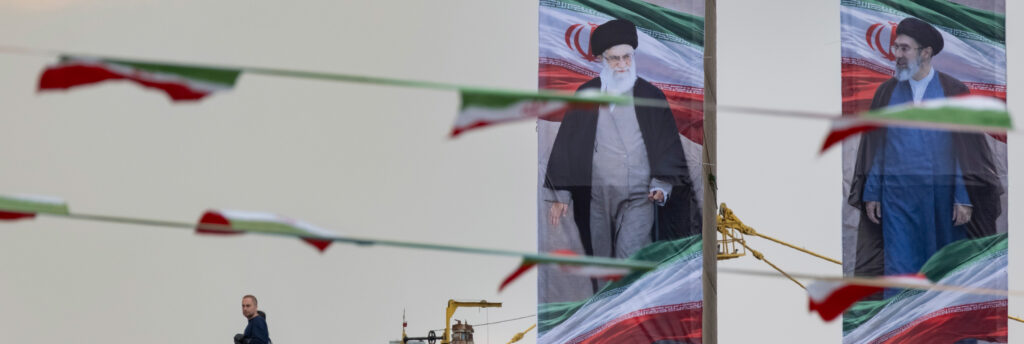
The replacement of Iran’s Supreme Leader Ayatollah Ali Khamenei with his son Mojtaba Khamenei maintains the regime’s strong theological and anti-Western orientation. Mojtaba Khamenei is unlikely to deviate from the direction set by his two predecessors due to a military defeat—Iran has suffered defeat before. Furthermore, some estimate the influence of the Iranian Revolutionary Guard Corps (IRGC) has actually increased within Iran’s government since these attacks began. Yet, whoever leads Iran will have to make decisions about the current conflict based on the balance of power between the two sides. While the fog of war makes the view of this balance difficult to see, two factors are already clear.
First, Iran is a much weaker threat to Israel and the region due to the degradation of its nuclear weapons and ballistic missile programs.
Second, Iran is stronger as a force in international economics due to its demonstrated ability to close the Strait of Hormuz. Ironically, this latter factor may provide it with more leverage in international affairs than the former.
Even if Iran had developed a nuclear weapon and viable delivery system, something four decades of effort could not, its ability to turn that capability into leverage would have been limited due to the narrow utility of nuclear weapons beyond deterrence and the certainty of mutual assured destruction if Iran ever used one against Israel.
However, Iran has shown the world it can close the Strait of Hormuz without a navy or air force. The use, or the threat of use, of drones, cruise missiles, and mines against shipping in the strait has given Iran unprecedented leverage on the world’s economy despite having lost control of its own airspace.
In the first two weeks of this conflict, Iranian missiles or drones struck 22 merchant ships, sending maritime insurance rates skyrocketing and forcing most international shipping to anchor outside the strait or stay inside the Persian Gulf with their cargoes. Not all shipping has stopped. Iran is currently running what Lloyds of London characterized as a “toll booth system” allowing select ships to pass through Iranian territorial waters with an IRGC escort if they have either made diplomatic coordination with Tehran or paid fees (in Chinese yuan) reportedly equaling two million US dollars per vessel. For those not willing or allowed to do so, the strait is effectively closed, something that did not even happen during the 1984–1988 Tanker War between Iran and Iraq.
Twenty percent of the world’s oil and natural gas and a third of its fertilizer pass through the Strait of Hormuz as well as substantial amounts of other crucial materials such as petrochemicals and helium (a vital coolant in chip manufacturing and MRI machines). The closure of the strait to most of the world’s shipping is already causing a cascading series of international economic problems including increased inflation, market volatility, and supply chain disruptions.
The administration is sending two Marine Expeditionary Units (MEUs) with approximately 5,000 Marines to the region and deploying several thousand paratroopers of the 82nd Airborne Division. One third of the actively deployable ships in the US Navy are in the Middle East. Speculation is that these forces will be used to open the strait if reported negotiations with Iran fail to.
It is at this moment that the conflict is most likely to either de-escalate back to the long-term smoldering of tensions that have defined US and Israeli relations with Iran since 1979 or escalate into a long war.
Facing the specter of a ground war and increased inflation that will undermine its chances in the mid-term congressional elections, the administration may decide to pocket its victories of having destroyed or severely degraded Iran’s nuclear and ballistic missile programs and decimated its leadership (as a lesson to future Iranian governments). It can therefore afford to come to an agreement, formal or understood, with Tehran with tangible results to show for its efforts.
What will Iran want to end this fighting? Iran will want what every state wants: to survive and not be coerced. The air war has considerably damaged the regime’s ability to maintain itself and has further wrecked its military and economy. However, Iran’s regime succeeds by surviving. Since the first commandment of politics is “thou shalt stay in power,” an accord or modus vivendi that allows it to do so will be a victory for it as well. Therefore, the stage could be set for some type of agreement that ends this latest chapter of conflict with Iran.
What might such an agreement look like? Its general form would probably end attacks on Iran’s regime, although leave UN sanctions in place, in exchange for an end to Iranian attacks against maritime shipping. The question of Iran’s nuclear and missile programs might be left unresolved but also rendered moot due to the destruction already inflicted on both. This would be similar to the agreement that ended the Cuban Missile Crisis when President John F. Kennedy secretly agreed to remove US missiles from Turkey and promised not to invade Cuba in exchange for Premier Nikita Khruschev’s overtly backing down and removing Soviet missiles there.
The wild card for this arrangement could be Israel. On one hand, this operation is popular in an otherwise divided country. Ninety percent of Jewish Israelis support it and the Netanyahu government could be tempted to continue it to achieve maximum results such as a fall of the regime. However, Israel may need to turn the majority of its air force and air defense assets due north to deal with the Hezbollah rocket attacks from southern Lebanon. There are reports that Israel is considering once again occupying this region south of the Litani River, which may force it to focus on just one war at a time. Finally, if the United States wants peace, Israel will be pressured to join as well, despite whatever reservations, to not lose the support of its main ally.
However, if this does not happen soon, then both sides could take steps that will lead to a long war. While President Trump has expressed optimism that this conflict will end soon and stated that other nations need to take care of opening the Strait of Hormuz, it remains to be seen if Iran will stop fighting once the US and Israel stop bombing. Furthermore, only the US has the military capacity to open the strait, whose closure affects the American economy as well as the world’s. Therefore, the United States may feel compelled to use military force to open the Strait of Hormuz and then take steps for regime change that exploits ethnic-national divisions in Iran. Iran may retaliate by fully closing the strait and increasing attacks against its Sunni neighbors to undermine their regimes.
Opening the Strait of Hormuz will require time and costly military operations. The approach of two MEUs to the region has raised speculation that they may be used to either seize Kharg Island, Iran’s main oil export facility, or smaller islands near the strait such as Larak, which the IRGC is using to screen oil tankers allowed to transit its territorial waters, or Abu Musa, which is also claimed by the United Arab Emirates.
Seizing Kharg Island to stop Iranian oil exports will require landing a MEU within artillery and drone range of Iran’s coast to conduct a mission that can be achieved more cheaply and safely by aerial attacks against any tanker docking there. Occupying either Larak or Abu Musa might provide greater leverage against Iran and block its “toll booth” operations, albeit with the same risks involved in occupying Kharg Island.
Iran’s trump card is to mine the Strait of Hormuz and close this international waterway to everyone until it is assured of its own survival. While air strikes have struck Iranian naval mine storage facilities and minelayers, it is unlikely that they have eliminated all of these stealthy weapons. If necessary, Iran could mine the strait using small civilian craft or simply by floating mines down from rivers. This is how North Korea mined Wonsan Harbor during the Korean War.
Minesweeping the Strait of Hormuz will be a slow and dangerous enterprise. The US Navy has only three Littoral Combat Ships (LCS) in the Fifth Fleet with mine countermeasure modules—two of them are currently undergoing maintenance in Singapore. The LCSs and other countermine assets must operate within range of Iran’s anti-ship weapons for a task that usually takes weeks if not months. An international force took over two months to sweep Iraqi mines laid near Kuwait during the First Gulf War. Clearing Haiphong Harbor of US mines laid during the Vietnam War took six months. Joint US-Japanese minesweeping operations to clear Japan’s inner waterways after World War II continued for over two years. All of these operations were also done in peacetime. Therefore, at little additional cost beyond what it is already paying, Iran can either kinetically or financially (through exorbitant maritime insurance rates) stop shipping through the Strait of Hormuz until it has what it wants from the United States and Israel.
Even if mines are not used, Iran’s inventory of drones provides a deterrent to keep maritime shipping from using the strait. An amphibious and/or airborne assault to seize the littoral areas of Iran near the strait to eliminate this threat would be a fool’s errand. Advanced versions of the Shahed-136 drone have a range of approximately 1,200 miles, meaning they can be fired from anywhere in Iran and hit shipping in the Persian Gulf. Even if a ground force occupying Iran’s coast could keep it from launching drones and missiles, it would have to number in the tens of thousands and stay in place until there is regime change in Tehran. Otherwise, the anti-shipping threat returns when the ground force leaves.
Regime change in Iran is easier said than done. After the slaying of 30,000 demonstrators earlier this year, the Iranian opposition may not be ready to try again. The administration could try to jump-start regime change by using ethnic-national forces already conducting insurgencies in Iran—specifically, the Kurds and Baluch. The idea has already been raised and could be raised again. This strategy would require time for insurgencies to grow strong enough to threaten the regime, air support for the insurgents, and a political plan that can unite disparate ethnic factions with anti-regime Persians. A regime change strategy, therefore, requires an extended war until these things can happen.
The Islamic Republic of Iran could fall, thus ending tensions with its neighbors and the West. However, the regime has a core of supporters who know that losing power also means losing their wealth, prestige, and even their lives. It may not go down without a fight. Inciting ethnic-nationalist groups, who make up almost half of the population, towards separatism could push moderate Persians to support the theocracy in order to maintain Iran’s territorial integrity. A civil war that pits Persian Iranians against their Kurdish, Baluch, Arab, Azeri, etc., fellow citizens will weaken the state, end its adventurism in the Middle East, and reduce its military threat to its neighbors. It will also produce massive refuge flows into Afghanistan, Armenia, Azerbaijan, Iraq, Pakistan, Turkey, and Turkmenistan similar to those during the Syrian Civil War, which affected domestic political stability in the Near East and throughout Europe. The risk will be high that regime change will create an extended period of internal chaos in Iran that could also destabilize some of its neighbors.
Furthermore, attempts to undermine Iran’s regime and territorial integrity will lead to increased retaliatory strikes to undermine the Gulf states (Bahrain, Kuwait, Oman, Qatar, Saudi Arabia, and the United Arab Emirates). These countries to date have done a credible job in air defense but will face an inevitable logistical problem in a long war of matching costly interceptors against cheap drones. Moscow has every incentive to keep this war and resulting high oil prices running as long as possible and can provide Tehran its own drones (ironically based on Iranian designs). Drone attacks against Gulf state commercial buildings, desalinization plants, data centers, oil terminals, and tourist spots will cause economic losses and an exodus of workers. This will put considerable economic and political strain on the Gulf states due to decreased oil sales, attacks against vulnerable infrastructure needed to live in the desert, and the loss of commercial, data, financial, and tourist industries as well their role as a world-wide transportation hub.
The two foreseeable futures for this conflict are for the parties to either declare victory short of their maximum goals or to escalate the war into a long-term struggle resulting in months or years of combat. The first scenario would mean a return to the status quo ante in the region with two major modifications: the unlikelihood of Iran ever becoming a nuclear state and the certainty that it will have greater leverage in the future on international economic relations due to its proven ability to close the Strait of Hormuz. The second scenario would mean an uncertain future for the region that could see regime change in Iran and resulting internal chaos and refugee flows or regime survival solving nothing for the United States, Israel, and their Middle Eastern partners. To either outcome would be added the lingering effects of a worldwide economic downturn from the prolonged closure of the Strait of Hormuz. What fate awaits will depend on the calculations of a few world leaders to determine what they want and how much they are willing to sacrifice for it.
Image: An Iranian man walks past the portraits of late Supreme Leader Ayatollah Ali Khamenei and the new Supreme Leader Ayatollah Mojtaba Khamenei during a flag ceremony marking Iran‘s Islamic Republic National Day in the Abbasabad Cultural and Tourist Area in central Tehran, on April 1, 2026. The event takes place amid US-Israeli military operations in Iran. Iranians voted yes in a referendum for the Islamic Republic regime forty-seven years ago. (Photo by Morteza Nikoubazl/NurPhoto)
Facts Only
The United States and Israel initiated combat operations against Iran on February 28, 2026.
Iran's Supreme Leader Ayatollah Ali Khamenei was replaced by his son, Mojtaba Khamenei, following the conflict's escalation.
Joint US-Israeli strikes in June 2025 and 2026 targeted Iran's nuclear and ballistic missile programs.
Iran has demonstrated the ability to close the Strait of Hormuz using drones, cruise missiles, and mines.
Since the conflict began, Iranian attacks have struck 22 merchant ships in the strait, disrupting global shipping.
Iran operates a "toll booth system" allowing select ships to pass through the strait for fees or diplomatic coordination.
The Strait of Hormuz facilitates 20% of the world's oil and natural gas, along with a third of global fertilizer shipments.
The US has deployed two Marine Expeditionary Units (MEUs) and paratroopers from the 82nd Airborne Division to the region.
The US Navy has one-third of its actively deployable ships in the Middle East.
Iran's Islamic Revolutionary Guard Corps (IRGC) has increased its influence within Iran's government since the attacks began.
Minesweeping operations in the Strait of Hormuz would be slow and dangerous, with limited US Navy mine countermeasure assets available.
Iran's Shahed-136 drones have a range of approximately 1,200 miles, allowing strikes on shipping from deep within Iranian territory.
The US and Israel have considered regime change strategies in Iran, potentially leveraging ethnic-nationalist groups like Kurds and Baluch.
Previous Iranian regime crackdowns in 2026 resulted in the deaths of 30,000 demonstrators.
Gulf states face economic and logistical strain from drone attacks on infrastructure, with potential support from Russia for Iran's drone capabilities.
Executive Summary
The conflict between the United States, Israel, and Iran, which escalated in February 2026, represents a continuation of decades-long tensions rooted in Iran's theocratic governance, anti-Western foreign policy, and nuclear ambitions. Joint US-Israeli strikes have significantly degraded Iran's nuclear and ballistic missile programs, reducing its direct military threat to Israel and the region. However, Iran has demonstrated a new form of leverage by effectively closing the Strait of Hormuz—a critical chokepoint for global oil and gas shipments—using drones, missiles, and mines. This has disrupted international trade, spiked maritime insurance costs, and created economic strain worldwide. The US has deployed additional military forces to the region, including Marine Expeditionary Units and paratroopers, signaling potential preparations to reopen the strait if negotiations fail.
The conflict's resolution hinges on whether the parties can reach a negotiated settlement or escalate into a prolonged war. A possible agreement might involve halting attacks on Iran's regime in exchange for ending its maritime disruptions, leaving broader issues like nuclear capabilities unresolved but rendered moot by prior destruction. However, Israel's domestic politics and regional priorities, such as countering Hezbollah, could complicate this path. Alternatively, a prolonged conflict could involve US-led efforts to force regime change in Iran, risking internal chaos, refugee crises, and destabilization across the Middle East. The economic fallout from the strait's closure—rising inflation, supply chain disruptions, and market volatility—adds urgency to the decision-making process, with global implications depending on how key leaders calculate their next moves.
Full Take
The strongest version of this narrative presents a nuanced geopolitical crisis where military action has achieved tactical successes—degrading Iran's nuclear and missile programs—but has also inadvertently granted Iran new strategic leverage through its control of the Strait of Hormuz. The analysis credibly outlines the economic and military stakes, acknowledging the complexity of potential outcomes, from negotiated settlements to prolonged conflict. It avoids oversimplification by highlighting the trade-offs involved in regime change, the risks of internal chaos in Iran, and the broader regional destabilization that could follow.
Pattern scan: The narrative leans toward a realist framework, emphasizing power dynamics and strategic calculations, but it avoids overt emotional exploitation or distortion. However, the framing of Iran's actions as primarily reactive—rather than part of a long-standing strategy of asymmetric leverage—could subtly reinforce a "forced binary" (ARC-0018) between military escalation and diplomatic concession. The discussion of regime change also risks "sanewashing" (ARC-0037) by presenting it as a viable solution without fully interrogating the historical failures of such interventions.
Root cause: The paradigm driving this narrative is the enduring US-Israeli effort to contain Iran's regional influence, coupled with Iran's survivalist strategy of leveraging asymmetric capabilities to offset conventional military weaknesses. The unstated assumption is that Iran's regime is inherently destabilizing, yet the analysis does not deeply explore how external pressures might reinforce its coercive domestic policies.
Implications: The conflict underscores the fragility of global economic interdependence, where a single chokepoint can trigger cascading disruptions. Human agency is constrained by the calculations of a few leaders, while the costs—economic strain, refugee flows, and potential civil war—are borne disproportionately by civilians in the region and global consumers. Second-order consequences include the potential for Russia to exploit the crisis by supplying Iran with drones, further entrenching a multipolar arms race.
Bridge questions: What alternative strategies could address Iran's nuclear ambitions without granting it economic leverage through the Strait of Hormuz? How might the Gulf states' air defense capabilities evolve to counter Iran's drone threats without relying on US intervention? What historical examples of regime change in the Middle East should inform—or caution against—current policy considerations?
Counterstrike scan: A coordinated influence campaign pushing this narrative might amplify the economic threats of the strait's closure to pressure policymakers toward military action, while downplaying the risks of regime change. The actual content, however, presents a balanced assessment of both military and diplomatic paths, avoiding overt alignment with such a playbook. The inclusion of potential downsides—refugee crises, internal chaos—suggests a genuine effort to inform rather than manipulate.
Sentinel — Human
Sentinel analysis incomplete — partial response from fallback model.