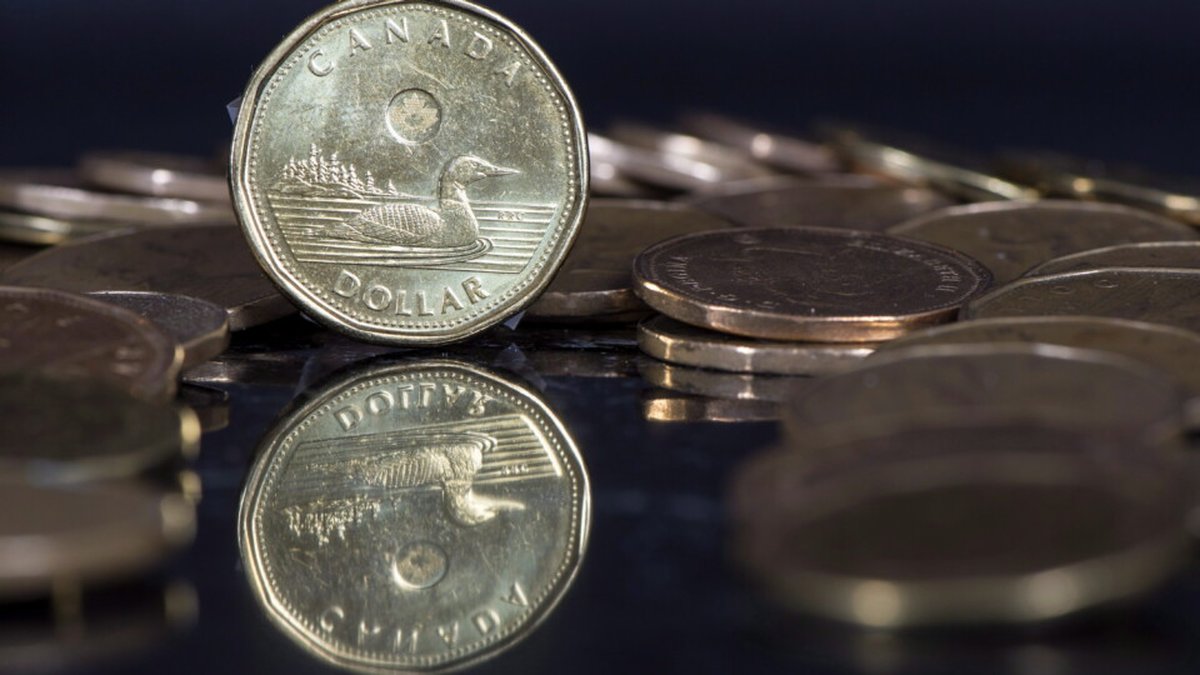
The July 1 deadline to renew the Canada-United States-Mexico Agreement (CUSMA) came and went without a renewal, as the Trump administration declined to extend the pact and started the decade-long clock on its potential wind-down. The Canadian dollar, already sagging, touched a 14-month low near 70 cents U.S. last week, and analysts have trimmed their forecasts accordingly.
But the currency strategists and economists who spoke to The Hub say the loonie’s dip has less to do with trade negotiations than with a widening gulf between interest rates in the two countries.
A rates story, not a trade story
“The timing of the move shows this is clearly a rate differential story, driven in particular by Kevin Warsh’s notably hawkish first FOMC [Federal Open Market Committee] meeting as chair,” said Bradley Saunders, North America economist at Capital Economics. “CUSMA uncertainty hasn’t really changed in recent months, as everyone knew the July 1st deadline would be missed.”
If anything, Saunders argued, U.S. Trade Representative Jamieson Greer’s stated preference for bilateral deals that preserve the “load-bearing pillars” of CUSMA has provided more certainty, not less.
Shaun Osborne, chief foreign exchange strategist at Scotiabank Global Banking and Markets, explained how dramatically rate expectations have flipped this year. In January, markets priced in more than 50 basis points of Federal Reserve easing over 2026 and a modest Bank of Canada hike. Then hostilities in the Gulf sent oil prices and U.S. inflation worries higher, and by the end of June, markets anticipated 40 basis points of American rate hikes instead.
Werner Antweiler, professor at the University of British Columbia’s Sauder School of Business, noted that the bond yield spread is currently thought to be the primary short-term driver of the exchange rate—though shocks can knock the relationship out of alignment.
Still, Osborne believes the yield shock “is largely played out.” Scotiabank expects no U.S. hikes this year and sees the Bank of Canada tightening modestly in the coming months in response to inflation and somewhat stronger growth. “All else equal, we think the CAD is somewhere near a [floor] at this point,” he said.
The greenback has its own problems
Karl Schamotta, chief market strategist at Corpay, argued the loonie’s weakness is more about the surging U.S. economy than domestic issues. “[It’s] more a story about the greenback’s strength than Canada’s failings—the loonie has actually outperformed many of its major counterparts this year.”
The AI boom is pulling capital into the U.S., and investors have turned overwhelmingly bullish on the dollar.
But he thinks markets have overdone it. The Fed tightening may have been excessive once tariff- and war-driven inflation impulses fade.
“A divergence between the Fed and the Bank of Canada is fully priced into the loonie, along with a whole lot of bad news about the economy. That’s a big reason for thinking that it might outperform expectations,” Schamotta told The Hub in an email.
Antweiler pointed to mounting American risks as well. The U.S. faces rapidly growing debt, heavy reliance on short-term borrowing that must roll over frequently, and a Fed under growing political pressure.
“It all comes down to how much investors trust the fiscal discipline of Congress and the monetary discipline of the Federal Reserve. Both are a bit in doubt,” he explained, adding that U.S. inflation expectations now look worse than Canada’s.
What a weak loonie means for Canadians
A softer currency cuts both ways. Foreign travel and imported goods—from groceries to appliances—get pricier. But Osborne noted, “The weak Canadian dollar acts as something of a ‘shock absorber’ for the Canadian economy and helps us adjust to shocks—like CUSMA,” handing exporters a price advantage.
Antweiler added that many Canadian households are naturally hedged through their U.S. stocks, bonds, and ETFs, which gain value when the loonie drops.
Where it goes from here
The forecasts cluster in a narrow band. Capital Economics sees the loonie troughing around 69 cents U.S. in the first half of next year, as sticky core inflation forces the Fed to reverse last year’s three “insurance cuts” while the Bank of Canada is only beginning to consider hikes. But Saunders doubts it falls much further, “Seventy cents appears to be a sort of psychological barrier for investors—hence why the currency has moved sideways in recent weeks once this threshold was reached.”
Schamotta expects “a gradual appreciation toward the 1.35 threshold, punctuated by numerous reversals as conditions and narratives shift,” with a slide to 1.485 possible only if negotiations turn extremely hostile. Scotiabank’s latest outlook and other bank forecasts similarly project the loonie ending the year between 72 and 75 cents U.S.
Antweiler sees “resistance” at about 70 cents, and noted markets do not appear to fear an outright rupture of CUSMA—Trump has not overtly threatened the six-month exit clause, and the likely outcome is new side agreements for specific sectors. It echoes the Bank of Canada’s earlier finding that trade uncertainty, more than rates, drove the loonie’s initial slide.
He offered a caveat, however. “Forecasting exchange rates is a bit of a futile exercise. Markets move as markets move, and if I could forecast exchange rates with any confidence, I would be a rich man.”
Schamotta’s advice for households and businesses follows from that humility. Diversify, hedge cash flows, and resist chasing headlines. “Extrapolating from recent trends, depending on forecasts, or reacting to alarmist headlines can be devastating.”
The Canadian dollar has fallen to a 14-month low near 70 cents against the U.S. dollar, primarily due to diverging interest rates rather than trade negotiations related to the Canada-United States-Mexico Agreement (CUSMA). Analysts suggest that the U.S. economy’s strength and a shift in rate expectations have driven this decline. While a weaker loonie makes imports more expensive, it also benefits exporters. Forecasts indicate the loonie may stabilize around 70 cents, with potential for modest appreciation as the Bank of Canada considers tightening in response to inflation and growth.
How do diverging interest rates between Canada and the U.S. affect the Canadian dollar?
What are the implications of a weak Canadian dollar for Canadian consumers?
What role does the Canada-United States-Mexico Agreement (CUSMA) play in the current economic climate?
Comments (0)