This article is a partnership between Reveal and 404 Media.
Jesus Gutiérrez, 23, was walking home one morning from a Chicago gym when he noticed a gray Cadillac SUV with no license plates. He kept walking, shrugging it off. Then the car pulled over and two men got out.
The federal immigration officials told him not to run. They then peppered Gutiérrez with questions: Where are you going? Where are you coming from? Do you have your ID on you?
Gutiérrez is a US citizen. He told the officials this. He didn’t have any identification on him, but, panicking, he tried to find a copy on his phone. The agents put him into the car, where another two agents were waiting, and handcuffed him. Just sit there and be quiet, they said.
Without Gutiérrez’s ID, the agents resorted to another approach. They took a photo of his face. A short while later, the agents got their answer: “Oh yeah, he’s right. He’s saying the right thing. He does got papers,” Gutiérrez recalled the agents saying.
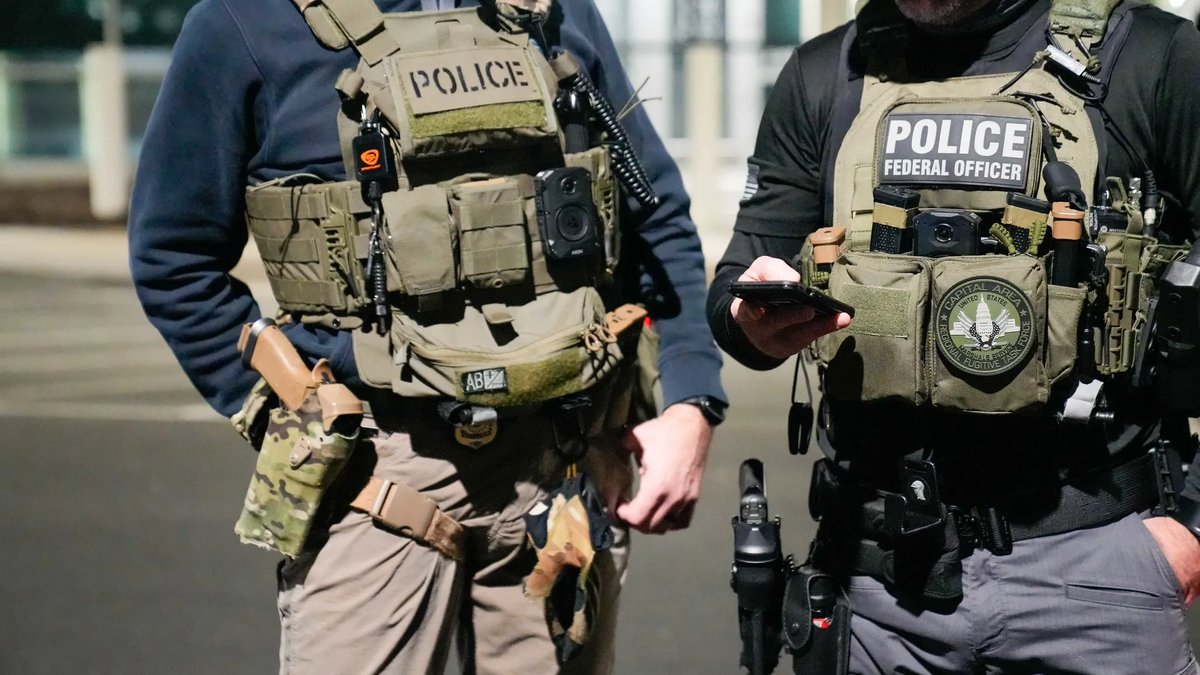
Gutiérrez’s experience, which he recounted to Reveal, is one snapshot of something that federal authorities have acknowledged to 404 Media that they are doing across the country: scanning people’s faces with a facial recognition app that brings up their name, date of birth, “alien number” if they’re an immigrant, and whether they have an order of deportation. 404 Media previously obtained internal Immigration and Customs Enforcement emails revealing the agency’s facial recognition app, called Mobile Fortify, and catalogued social media videos showing agents scanning people’s faces to verify their citizenship.
Now, Reveal has spoken to a person who appears to have had that technology used against them. Gutiérrez sent Reveal a copy of his passport to verify his citizenship.
“You just grabbing, like, random people, dude,” Gutiérrez said he told the agents after they scanned his face. The officials eventually dropped off Gutiérrez after driving for around an hour. For several days, he didn’t go anywhere, not even to the gym. Gutiérrez told his father at the time that he “got kidnapped.”
“This is a flagrant violation of rights and incompatible with a free society,” said Nathan Freed Wessler, deputy project director for the ACLU’s Speech, Privacy, and Technology Project. “Immigration agents have no business scanning our faces with this glitchy, privacy-destroying technology—especially after often stopping people based on nothing more than the color of their skin or the neighborhood they live in.”
Mobile Fortify is available to ICE and Customs and Border Protection officials on their work-issued phones. After an agent scans someone’s face, the app queries an unprecedented collection of US government databases, including one run by the FBI and another that checks for outstanding state warrants, according to user manuals seen by 404 Media. The app runs the person’s face against a database of 200 million images, according to internal ICE material 404 Media viewed.
“The photograph shown [in the app’s results] is the photograph that was taken during the individual’s most recent encounter with CBP, however the matching will be against all pictures CBP may maintain on the individual,” said an internal Department of Homeland Security document 404 Media obtained. The app turns the system usually used for verifying travelers at the border inward against people on US streets.
The need for Mobile Fortify, according to that internal document, is for immigration authorities to identify people who can be removed from the country. But it acknowledges that it may be used against US citizens, like in Gutiérrez’s case.
“It is conceivable that a photo taken by an agent using the Mobile Fortify mobile application could be that of someone other than an alien, including U.S. citizens or lawful permanent residents,” the document reads.
Rep. Bennie G. Thompson, ranking member of the House Homeland Security Committee, previously told 404 Media that ICE will prioritize the results of the app over birth certificates. “ICE officials have told us that an apparent biometric match by Mobile Fortify is a ‘definitive’ determination of a person’s status and that an ICE officer may ignore evidence of American citizenship—including a birth certificate—if the app says the person is an alien,” he said. “ICE using a mobile biometrics app in ways its developers at CBP never intended or tested is a frightening, repugnant, and unconstitutional attack on Americans’ rights and freedoms.”
404 Media has found other instances in which ICE and CBP agents have used a facial recognition app to verify someone’s identity and citizenship. In one that appeared to take place in Chicago, a Border Patrol officer stopped two young men on bicycles before asking his colleague, “Can you do facial?” The other official then scanned one of the boy’s faces, according to a video posted on social media. In another, a group of ICE officers surrounded a man driving a car. He said he was an American citizen. “Alright, we just got to verify that,” one of them said. A second then pointed their phone’s camera at the man and asked him to remove his hat. “If you could take your hat off, it would be a lot quicker,” the officer said. “I’m going to run your information.”
In Gutiérrez’s case, there is little indication that he was stopped for any reason beyond the color of his skin. He is of Mexican descent, he said. Stops of people based on their race, use of Spanish, or location (such as a car wash or bus stop) have become known among critics as “Kavanaugh stops,” after Supreme Court Justice Brett Kavanaugh justified the method in a September opinion.
“The Government sometimes makes brief investigative stops to check the immigration status of those who gather in locations where people are hired for day jobs; who work or appear to work in jobs such as construction, landscaping, agriculture, or car washes that often do not require paperwork and are therefore attractive to illegal immigrants; and who do not speak much if any English,” the opinion says. (Gutiérrez speaks Spanish but conducted his interview with Reveal in English.) “If the officers learn that the individual they stopped is a U.S. citizen or otherwise lawfully in the United States, they promptly let the individual go. If the individual is illegally in the United States, the officers may arrest the individual and initiate the process for removal.”
The ACLU’s Wessler added: “In the United States, we should be free to go about our business without government agents scanning our faces, accessing our personal information, saving our photos for years, and putting us at risk of misidentifications and wrongful detentions. ICE and CBP’s use of Mobile Fortify on the streets of America should end immediately.”
DHS Assistant Secretary Tricia McLaughlin said in a statement, “DHS is not going to confirm or deny law enforcement capabilities or methods.” CBP said that the agency built the app to support ICE operations and that it has been used by ICE around the country.
A CBP spokesperson added in a statement, “Mobile Fortify is a law enforcement app developed by U.S. Customs and Border Protection for ICE agents and officers. It helps field personnel gather information during immigration inspections, but agents must consider all circumstances before deciding on someone’s immigration status. CBP personnel working with ICE teams can access the app after completing required training. Further details cannot be shared due to law enforcement sensitivities.”
Gutiérrez said that at the end of his encounter, while he was still in the car, the agents were laughing.
Facts Only
* Jesus Gutiérrez, age 23, was walking home from a Chicago gym.
* Federal immigration officials questioned Gutiérrez about his destination and identification.
* Gutiérrez did not have identification but provided a photograph of his face.
* Agents later confirmed the facial scan resulted in a match regarding documentation.
* The federal agency uses an app called Mobile Fortify for scanning faces.
* Mobile Fortify queries databases including those from the FBI and state warrants.
* An internal document noted that the app can be used against U.S. citizens, not just immigrants.
* A reporter referenced ICE and CBP agents using facial recognition in other instances.
* The ACLU expressed concern over the use of this technology by immigration agents.
* DHS and CBP stated the app was developed to support ICE operations and is used by agents with training.