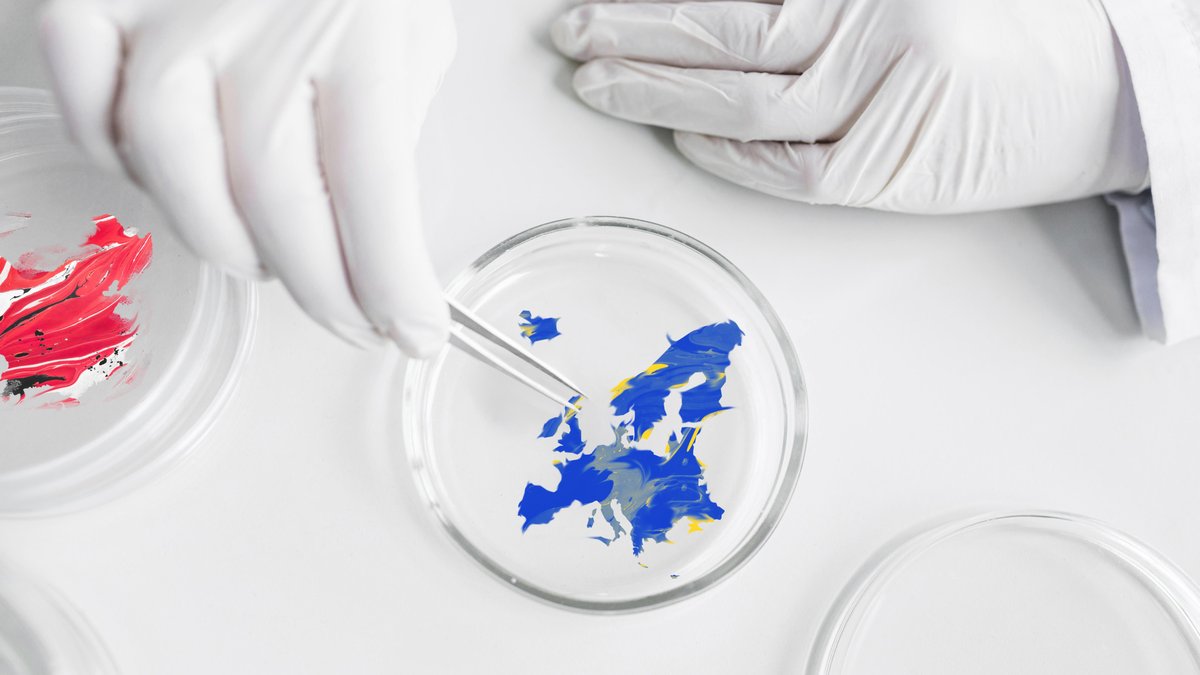
The next industrial revolution will be built with microbes as much as machines. China understands this. Europe still has the science to compete but must act quickly before industrial leadership slips away again
Summary
- Biomanufacturing uses biological processes to produce food, fuels, chemicals and materials that today rely on fossil resources.
- The underlying science is not new. But advances in AI and falling renewable energy costs are transforming biomanufacturing from a niche climate solution into a new production paradigm, with the potential to reshape industrial competitiveness and geopolitical power much as fossil fuels did in the previous industrial age.
- China has identified biomanufacturing as a strategic technology for resilience and self-reliance, deploying a familiar playbook of state-backed investment and infrastructure to build globally competitive industries.
- Europe remains a formidable competitor, leading in patents and core technologies, with world-class research, specialised industrial clusters, skilled talent and globally competitive firms across the value chain.
- Its weaknesses are limited infrastructure, regulatory delays and growing dependence on Chinese manufacturing capacity.
- Without greater urgency, Europe risks repeating the mistakes it made in solar panels, batteries and electric vehicles: inventing breakthrough technologies while ceding profits and geopolitical leverage to China, this time with even greater consequences.
The microbe revolution
For two centuries, the molecules that underpin modern life have been pumped from the ground in the form of oil and gas. The next industrial revolution may instead grow them in laboratories and tanks.
This is the promise of biomanufacturing: using biological processes to produce the building blocks of the future economy. Scientists can programme living cells to act like microscopic factories, capable of producing everything from food, fuels and fertilisers to plastic, chemicals and advanced materials—nearly all of which still rely to some degree on fossil resources. For millennia microbes were used to turn grain into beer and milk into cheese. Now they are engineered to turn straw into jet fuel and sugar into armour.
What sounds like science fiction is rapidly becoming reality. Driven by abundant and affordable renewable energy and dramatic advances in artificial intelligence (AI), biomanufacturing is beginning to change not only what economies produce, but how they produce it. In doing so, they address a deeper layer of fossil dependence than renewable electricity alone. The shift could be as transformative as the invention of the petrochemical industry itself. If the geographical distribution of fossil resources shaped the geopolitics of the last industrial age, then the ability to produce key molecules without them could shape the next.
China’s leaders have recognised this opportunity. Beijing has spent an average of roughly €1.4bn per year on electric vehicle research and development (R&D) over 15 years to build a globally dominant industry. It is now reportedly spending €2bn-3bn in biotechnology R&D alone. And it is doing this at a time when China already accounts for more than 70% of global basic fermentation capacity.
But its ambitions for the bioeconomy go much further. The 2022 Bioeconomy Five-Year Plan set a goal of global leadership by 2035, while the 2026 15th Five-Year Plan places biomanufacturing alongside AI at the heart of China’s future industrial model. In July 2025, Beijing unveiled a list of 35 flagship biomanufacturing products to replace fossil-based chemicals or food and feed additives, and selected 43 companies to build pilot plants. No other major power is investing in the bioeconomy with comparable scale or strategic intent.
But Europe has not lost the race to China just yet. As in areas like semi-conductors, European companies provide some of the key foundational technology and microbial strains that make Chinese fermentation successes possible. Europeans are at the cutting-edge of research—the continent has a thriving biosolutions sector worth €60bn, comparable to the GDP of Slovenia, and growing around 5% annually. And according to industry estimates, if scaled successfully, biomanufacturing could replace a quarter of European oil-based chemicals, halve the continent’s protein imports, drastically cut greenhouse gas emissions and create 700,000 additional jobs—by as soon as 2030.
Yet beneath these strengths lie familiar vulnerabilities. European firms already depend on Chinese producers for basic parts of the existing biomanufacturing value chain. As China scales its fermentation capacity, European start-ups are increasingly tempted to manufacture and scale there, exposing valuable intellectual property to a fierce competitor. In a 2025 report to Congress, the US-China Economic and Security Review Commission likened fermentation capacity to that of chip factories, warning that China’s dominance could become a strategic chokepoint. Policymakers are already losing sleep over China’s massive share of global rare-earth refining. But biomanufacturing could prove even more consequential. Imagine similar leverage extending across all future food, pharmaceuticals, chemicals and energy inputs.
Europe’s lack of urgency is worrying. Policymakers still seem to treat biomanufacturing as a niche sustainability issue rather than a foundational technology layer capable of reshaping whole economies. If Europe fails to adjust course soon, it risks sleepwalking into an old pattern: pioneering innovation, creating demand through regulation and then watching production, profits and geopolitical leverage migrate to China.
This paper argues that European policymakers should view biomanufacturing not simply as another industrial sector but as a strategic foundational technology layer. They should see China’s push for leadership in this field as a geopolitical challenge as much as an economic one. The EU needs policies and investments that amplify its significant advantages in research and innovation before they are eroded by China’s scale and industrial capacity. As with solar panels and batteries before it, Europe risks inventing the future only to surrender its strategic power—but this time with far greater consequences.
Biotechnology, biosolutions, biomanufacturing
The terminology surrounding the sector can be confusing. Biotechnology is the broadest catch-all description. In Europe, the term biosolutions is sometimes used to distinguish industrial applications of biotechnology from the pharmaceutical sector, although the boundary between the two is not always clear.
The distinction matters because the pharmaceutical sector follows a very different commercial logic. Biopharmaceutical companies develop low-volume and high-value products, such as specialised cancer treatment, where expensive R&D can be justified by potentially high returns—“consumers”, after all, are willing to pay steep prices for lifesaving or life-enhancing drugs.
By contrast, biosolutions often focus on replacing existing products (fertilisers or fuels). They create an alternative with environmental advantages (animal-free dairy) or inventing entirely new materials with specific qualities (spider-silk fabric) and wide industrial appeal. Unlike pharmaceuticals, these products must compete directly with established products or industries in low-margin markets often dominated by powerful incumbents.
China prefers the term biomanufacturing to describe the industrial applications of biotechnology. This reflects a focus on the process and a view that the technology is not simply the industrial application of biotechnology but the foundation of a new manufacturing model. As the world’s largest manufacturing power, China has already made it clear that it intends to dominate this next stage of industrial development. This policy brief adopts the same terminology to reflect that strategic perspective.
In the end, semantics matter less than the underlying shift. Whether described as biosolutions or biomanufacturing, the underlying transformation extends far beyond a collection of new products. It is a crucial layer of the emerging industrial economy, enabled by electrification and artificial intelligence.
The five pillars of biomanufacturing
Like the petrochemical industry before it, biomanufacturing at scale needs an industrial infrastructure.
Precision fermentation, one of the most promising techniques of the sector, uses genetically engineered microorganisms to produce specific target molecules. These organisms are cultivated in fermentation tanks and supplied with sugar-based feedstocks. The produced molecule is then extracted and purified. It could be a dairy protein made without a cow, a polymer with all the qualities of traditional plastic but none of the fossil-based input, or a protein that mimics spider silk, creating fibres strong enough to be used for body armour.
The science behind all this has been around for a while, but the combination of advances in AI and the renewable energy boom are making some of the existing solutions commercially attractive, while allowing the more cutting-edge innovation to scale from the lab to industrial production faster. Microorganisms are fickle—they are alive and evolving after all—but AI can make working with them more predictable. Success requires the availability of physical infrastructure (large tanks as one would know them from wine production, for example), access to cheap energy, reliable feedstock supply and significant investment before profits can materialise. AI specifically has accelerated the lengthy cycles of designing, prototyping and testing, changing the whole biomanufacturing equation.
China’s advantage is not due to a single scientific breakthrough or one national champion, but because it has positioned itself incredibly well across the five pillars of biomanufacturing and morphed them into a mutually reinforcing ecosystem: patient capital, industrial infrastructure, cheap energy, feedstock access and cost-competitive AI capabilities. Europe will need to accelerate on all of these fronts if it wants to compete.
Capital
Advanced fermentation-derived products still often cost two to three times more than petrochemical alternatives. Many are entering markets where they must either displace a product or create entirely new categories of demand.
This is precisely the sort of problem that China’s state-capitalist system is well suited to solve. Having identified biomanufacturing as a way to build new industries and upgrade existing ones, Chinese leaders are willing to support nascent companies through years of low returns and uncertain future profitability. Abundant patient capital allows Chinese companies, particularly small and medium-sized ones, to experiment, fail, refine and scale.
In Europe, industry groups consider the investment gap and lack of a coherent enabling framework one of the key weaknesses. This includes clear government signalling through consistent regulation. In a December 2025 report, the OECD argued that policymakers are falling to make full use of powerful tools to bring in private investment for the sector, including blended finance, de-risking mechanisms, market-based instruments and public-private partnership frameworks.
Infrastructure
China recognised the need for infrastructure very early. The 13th Five-Year Plan of 2016, for example, called for the development of fermentation products such as amino acids and vitamins, and China has since become the world’s largest producer of these products. They may seem mundane commodities, but the underlying infrastructure is relevant to more advanced applications.
Producing next generation proteins or biochemicals shares many industrial needs with vitamin production, despite the differences in the processes. Fermentation facilities, engineering expertise, supply chains and operational know-how can be decisive advantages in mastering the breakthrough on more advanced products.
However, Chinese producers still depend heavily on imported microbial strains—much like many AI developers rely on foundational models created elsewhere, but then fine-tune them for more specific applications. Denmark’s Novonesis, for example, is one of the world’s leading producers of microbial strains. Yet China is accumulating experience in large-scale fermentation using these strains, and it is advancing fast in building infrastructure needed for testing and scaling. Developing its own foundational strains is the next logical step of its industrial strategy.
Besides, manufacturing itself creates its own chokepoints. As fermentation capacity concentrates in China, innovators elsewhere may increasingly depend on Chinese infrastructure to bring products to market. Similar dynamics have already emerged in batteries and other clean technologies, where manufacturing ecosystems and testing facilities had to rely on infrastructure overseas.[1] As China’s lead grows, private capital in the rest of the world will be less attracted to building competing facilities because they will struggle to match its scale and costs. The result is not only supply-chain dependence, but the risk that valuable know-how migrate with it.
Europeans are not alone in their growing discomfort with this dynamic. The solution is to push for investment in infrastructure in Europe and in a range of partner countries. India, for example, has a strong industrial base in the pharmaceutical sector and low construction costs, making it well-placed to expand fermentation capacity quickly.
For decades, China’s leadership has invested in sectors it considers crucial for national power. Made in China 2025, the industrial masterplan that produced its massive dominance in automotive, robotics and energy technology, was designed as much to boost competitiveness as it was to build resilience and security. Biomanufacturing should be seen in the same way: a strategic capability that can strengthen food and energy security while reducing dependence on fossil imports.
Energy
Fermentation is energy-intensive and, outside pharmaceuticals, price margins for biomanufactured products will likely be slim. Electricity costs are thus a critical determinant of commercial viability. China’s industrial electricity prices are among the lowest in the world, below even those in emerging economies such as India or Mexico—and dramatically lower than in Europe, where energy prices shot up after Russia’s invasion of Ukraine and other geopolitical crises. A massive expansion of renewable energy, continued investment in nuclear and domestic coal, significant state control over pricing, plus regional pricing policies to encourage industries to set up in certain provinces mean that Chinese industry pays roughly 50% of the global average for its electric power.
For China, the green transition is not a hindrance to industrial competitiveness, but the vehicle towards it. Its leaders are driving an ambitious electrification agenda with the declared goal of fully replacing fossil fuels with renewables in the next decades. And the cheaper and cleaner China’s electricity becomes, the more competitive its biomanufacturing industry will be.
Feedstock
Feedstock represents another potential bottleneck. Sugars, grain, agricultural residues and other biological sources of carbon are, according to a recent report, responsible for up to 60% of total production cost.
As in any industry where margins are thin, access to cheap inputs matters significantly for market viability. Transporting large volumes of cheap biomass adds costs, making local supply a competitive advantage. The economics will also create incentives for recycling, reusage and carbon capture, all of which could become more viable as infrastructure for collection and processing expands. Regions that can grow biological feedstock, especially under conditions of rising temperatures, will become attractive partners. But quantity is only half of the equation: equally important will be improving yields and engineering crops better suited for industrial use.
According to one observer, no one has yet fully mastered the feedstock question. But China is positioning itself well. Under Xi Jinping’s leadership, longstanding scepticism towards genetically modified organisms (GMOs) has given way to a more pragmatic approach in favour of domestic innovation and food security. The takeover of European seed and agricultural technology giant Syngenta by state-owned ChemChina in 2017 was emblematic of this shift.
In the emerging bioeconomy, carbon will remain the essential raw material. The difference is that it will increasingly come from renewable, highly available and fully circular sources.
Artificial intelligence
The final pillar of the sector may prove the most important.
AI is beginning to transform biomanufacturing from end to end. By enabling products and production processes to be designed and tested digitally first, it can dramatically accelerate development cycles and reduce the number of costly physical experiments.
Industry leaders argue that the interactions between the production process and AI will become increasingly important. Better data analysis and digital modelling will improve production, while sensors embedded in the industrial process will generate the data needed to improve the AI models in a continued feedback loop. As biology can be fickle, and microbes are living organisms that can evolve during production, achieving consistent results is a challenge. Richer data makes production more predictable and commercially viable. This is why the increasing availability and the falling costs of AI computing and model inference are a game changer for biomanufacturing.
The Chinese leadership is prioritising the industrial use and of AI and is actively encouraging companies to integrate AI and manufacturing. In 2025, for example, the government released a list of 16 typical application cases for AI in biomanufacturing. Chinese AI models are also cheaper, driving uptake in sectors where margins are thin and where start-ups rely on limited funding, both in China and abroad. As analysts Dirk van der Kley and Tom Campbell have argued, China’s emerging lead in biomanufacturing thus does not lie in a single layer of the value chain or the production process, but in its ability to combine these pillars into an ecosystem that increasingly blurs the line between the digital and the physical world.
New materials, new food, new energy
Making things
The application of biomanufacturing extends well beyond replacing fossil-based inputs. It is increasingly focused on creating entirely new materials for new technologies.
Alongside textile and construction, the defence sector has become particularly interested in these products. NATO elevated biotech to a strategic priority with its first dedicated strategy in 2024 and now channels over €500m annually to 28 dual-use startups via the DIANA programme. Although still at the R&D stage, European researchers are developing new bio-based materials with specific defence capabilities, such as armour, drones and rare-earth substitutes.
Here Europe retains an important edge. While Chinese companies dominate production volumes in traditional industries such as textiles or bio-based plastics. Such plastics include PHB—a bio-polymer that can be used in the medical sector for sutures or in the food sector as bio-degradable packaging; it is already being produced at scale in China while in Europe it has barely achieved market entry. European companies lead in several advanced biomaterials for aerospace, defence and other high-performance applications. Germany’s AMSilk, for example, is the world’s first industrial-scale producer of spider silk proteins and is working with Airbus on lightweight aerospace composites and with Evonik for industrial-scale fermentation supply. In 2024, it partnered with Denmark’s 21st.BIO to scale its protein production. Dutch firm Avantium, backed by both EU and private investment, has begun commercial-scale production of PEF, a fully recyclable bio-based alternative to fossil-based PET plastic.
As in other advanced industries, China increasingly leads on scale while Europe remains strong in specialised innovation.
Making food
The food sector is one of the most promising areas for biomanufacturing. In fact, one of the most consequential biotechnology breakthroughs in agriculture passed largely unnoticed by consumers. Fermentation-produced chymosin (FPC), the enzyme used to make cheese, replaced animal rennet taken from a cow’s stomach. It became widespread in the 1990s and today accounts for 80–90% of all commercial cheese production globally. Now, similar technologies are spreading across proteins, fertilisers and crop production.
Microbial biofertilisers can reduce the need for synthetic fertilisers by 20-40% while improving crop yields. Gene-edited crops can be designed to adapt to different nitrogen levels in soil. Precision fermentation allows microbes to produce dairy or egg proteins without animals. Biomass fermentation can grow fungi directly into a protein source. Because these systems depend less on land, climate and livestock, they offer a degree of resilience that conventional food production cannot match.
This matters particularly for China. Protein security remains one of the weakest links in China’s quest for autonomy. The country must feed 19% of the world’s population with only 8% of its arable land, while still importing much of the energy needed to power its economy. As Xi Jinping has repeatedly said, “China must keep its rice bowls firmly” in its own hands. Yet rising incomes have transformed diets, increasing demand for animal protein and imported feed. Food self-sufficiency has dropped from 94% to 66% between 2000 and 2020, while in 2025 soybean imports hit a record 111.83m metric tonnes. By 2035, China could face a protein feed shortfall of 120m tonnes.
Reducing this vulnerability has become therefore a matter of national security. Beijing is pursuing a range of solutions, such as improving crop yields and climate resilience, developing ways to decouple the feed and food supply chains, and creating novel foods.
Europeans, on the other hand, rarely talk about protein security. Decades of subsidies and protection have created the impression of abundance of milk, butter, meat and grain, and Europe’s understanding of food poverty and famines has largely vanished. At the same time, agricultural lobbies continue to exert outsized influence in many EU member states, ensuring that agricultural exports remain a national priority. While exports of cars and advanced machinery struggles, European leaders returning from Beijing increasingly announce deals for oats (Sweden), pork (Spain), dairy and seafood (Ireland) and even chicken feet (Germany).
This is not just a European phenomenon. US president Donald Trump’s visit to China in April brought little clarity on semi-conductor sales, but agreements on soybeans and oil. The problem is that Beijing has little intention of remaining dependent on imported food. By the time Europeans realise this, it may already be too late.
Making fuel
Energy is the third frontier. Biomanufacturing can use engineered microorganisms or synthetic enzymes to convert organic matter into fuels that can replace or complement fossil fuels. The appeal is both environmental and strategic.
The closure of the Strait of Hormuz has yet again demonstrated the vulnerability of global fuel supply chains and its implications for shipping, commercial flying and military mobility. Sustainable aviation fuel (SAF) is a renewable, non-fossil alternative to conventional jet kerosene. Produced from renewable and waste-based raw materials, it can be safely blended up to 50% with conventional jet fuel (because it is chemically almost identical to it), requiring no modifications in existing aircraft or airport infrastructure. It is produced from renewable and waste-based raw materials rather than fossil fuels, cutting lifecycle greenhouse gas emissions by up to 80%. In a major conflict, air forces account for 85% of total military fuel consumption. Recognising this, the UK Ministry of Defence announced that all aviation fuel procured from January 2025 will include SAF.
China sees similar opportunities in global shipbuilding and port equipment. As the global shipping industry moves towards decarbonisation, Chinese firms are seeking to establish an early need. China is the world’s largest shipbuilder, controlling 55% of global output and 75% of new orders. Now the country has launched sea trials for the world’s largest methanol dual‑fuel container ship (designed and built by Nantong COSCO KHI) and is also building the world’s first deep‑sea bulk carriers with ethanol-powered main engines. These technologies allow Chinese shipyards and equipment makers to shape emerging standards and capture the market for biofuel‑ready ships.
The logic mirrors Beijing’s broader strategy: make China less dependent on the world while making the world more dependent on China. As alternative fuels become increasingly integrated in shipping, countries that control both the fuels and the infrastructure that use them will enjoy an advantage. Without investment, European companies such as Maersk or Hapag-Lloyd will have a hard time competing in this sector without embedding themselves into the Chinese supply chain, and risk becoming reliant on Chinese suppliers in yet another strategic industry.
Why Europe can still lead on biomanufacturing
Unlike on solar panels, batteries and EVs, Europe is not playing catch up on biomanufacturing. Europe has world-class research, vast industrial potential and a strong market. But the window to assert itself as a leader is closing fast.
Europe has the market
Europe holds twice the precision fermentation capacity of the US: 479 demonstration, semi-industrial, and pilot plants; 2,362 additional biorefineries, spanning pharmaceuticals, food, chemicals, and industrial biotechnology. With the right support, alternative proteins alone could contribute €111bn in annual gross value added to the EU economy by 2040—comparable to the size of Europe’s entire wine sector and could build a €60 billion export market, comparable to current EU exports to South Korea.
The bloc also has the infrastructure to scale. Although the EU faces a plant protein deficit of nearly 19m tonnes (largely for livestock feed), it holds 47% of global protein and enzyme fermentation capacity for industrial applications. Meanwhile, Europe’s biofuel market exceeded $43.7bn in 2025 and is expected to grow at 9.4% annually in the coming decade. The dependence on imported carbon to power should focus the minds of policymakers on using non-food feedstock (agricultural and forestry residue, waste and algae) and scaling the market to make these products competitive faster.
Perhaps most importantly, the EU is creating demand through regulation. By 2030, EU member states are required to achieve either a 29% share of renewable energy in transport or reduce transport fuel emissions intensity by 14.5%. SAF represented just 0.6% of all aviation fuel in EU airports in 2024 but is required to rise steadily to 70% by 2050. The FuelEU Maritime Regulation aims for a 6% reduction of emissions in 2030 and up to 80% by 2050.
The challenge is to ensure that European firms rather than foreign competitors capture the resulting market opportunities. Today, 69% of feedstocks used for production of SAF used in the EU originated outside the bloc, with China supplying 38% and Malaysia 12%. Europe risks creating demand at home while becoming dependent on foreign imports.
Europe has the conditions
Europe enjoys structural advantages over China as it has abundant, low-cost biomass availability in relation to population size. Denmark benefits from plentiful agricultural waste from sugar beet production, while Germany can use forestry residues and Italy its cereal or wine residues. South-eastern Europe combines renewable energy potential with availability of olive and wine by-products. Bulgaria, for example, could make use of its potent agricultural base to become a hub for large-scale fermentation, using its solar resources to power this infrastructure instead of relying solely on its booming battery storage sector, which largely relies on Chinese battery imports.
Europe also has an often-overlooked advantage: skills. Biotechnology requires not only trained manufacturing professionals but also researchers, scientists and AI experts. In Denmark, a large share of the industrial workforce receives vocational training tailored to biotech manufacturing, including precision fermentation and bioreactor management. Europe’s tradition of apprenticeships and technical education is well placed to adapt. But timing matters. The foundations of industrial leadership in the next decades will be laid over in the next few years.
Europe has the know-how
By combining strong fermentation infrastructure with supportive policies, Denmark has built one of the world’s most advanced biomanufacturing ecosystems, where pharmaceutical, agricultural and chemical firms share industrial waste with one another.
Denmark’s industrial base is also closely linked to agriculture. About 20% of Danish land is organically farmed, while companies like Novonesis produce microbial inoculants that boost crop yields by 3-7% while cutting fertiliser use. Instead of treating biotechnology as a threat to agriculture, Denmark positioned the sector as a tool to make farming more productive and sustainable. This contrasts with many other European countries in which the agricultural lobby continues to push back against genetically modified crops and alternative proteins.
Denmark also shows that the EU’s regulatory hurdles are not inevitable. EvodiaBio moved from laboratory to profitable industrial production in only three and a half years, a remarkable achievement in a region where biotechnology approvals are notoriously slow. Across the EU, novel food authorisations average 2.5 years and can take as long as six; GMO crop approvals take up to six years compared with less than two in America; biopesticide approvals average seven to nine years.
Germany is Europe’s second biotech powerhouse. Companies such as Sartorius, or the pharma companies BioNTech and Merck KGaA hold roughly 25% of EU precision fermentation capacity for low-carbon chemicals. Formo leads in fermentation-derived proteins, while Bayer and BASF are advancing biopesticides and other crop protection agents.
Switzerland dominates contract development and manufacturing organisations (CDMOs) globally, led by companies such as Lonza and Roche. These firms own and operate the specialised infrastructure required to produce biological products at scale. While biosoutions companies own the intellectual property, CDMOs provide the fermentation tanks, the purifiers, and the manufacturing capacity.
The Netherlands is Europe’s leading hub for cultivated meat and precision fermentation, with DSM-Firmenich and Avantium excelling in biomass conversion.
France also has a robust agricultural biomanufacturing industry, with companies like Standing Ovation and Valley in alternative proteins, and De Sangosse (€315m) in biopesticides. Meanwhile, Italy ranks third in the EU by organic farmland area. Firms such as Rovensa Next lead in biostimulants and biocontrol, products that improve crop health while reducing dependence on conventional synthetic chemicals. Finland, France, Germany, Italy and Spain are also leading EU SAF producers, with commercial-scale output already under way—Neste in Finland, TotalEnergies in France, BP in Germany, Repsol in Spain, and Eni in Italy.
How Europe can lead on biomanufacturing
Define the vision
What is holding Europe back is not a lack of capital, talent or technology. It is a lack of ambition, sense of urgency and confidence.
China’s leadership has already articulated its vision. The 15th Five-Year Plan leaves little doubt that Beijing sees biomanufacturing as a pillar of its future economy and is aligning industrial policy, infrastructure, regulation and investment accordingly. European policy makers should pay close attention and decide whether they want to compete or simply adapt to a world of Chinese biomanufacturing dominance, with all the consequences of dependence, deindustrialisation and decline.
If they want to compete, the first step is to move biomanufacturing out of the “green niche” category and recognise it as a strategic component of a post-fossil, highly electrified global economy. Biomanufacturing should not be treated as a sectoral issue but as part of a broader vision for Europe’s future prosperity, competitiveness and security—a holistic push for infrastructure, science, education, regulation and market entry conditions is needed.
This requires political leadership. Key decision-makers, not just technical experts, need to understand the sector’s potential. Policymakers do not need to become fermentation experts any more than they needed to become semiconductor specialists. But they need to become as comfortable discussing microbes and enzymes as they now are rare earths and chips.
European leaders should make the case for biomanufacturing in terms of jobs, growth and innovation as well as harnessing the potential of European frontrunners. The narrative should be less about environmental virtue and more about hard economic reality. The debate must move beyond technicalities around the forthcoming Biotech Act II and become part of a broader conversation about Europe’s future. The China factor can help make this case. The Chinese leadership is not investing billions into a niche sustainability sector. It is investing in what it believes will be the foundational layer of a new industrial order.
Involve the existing industry
European policymakers should bring together representatives from the chemical sector, the manufacturing industry, defence companies and trade unions. Europe’s chemical and machinery industries in particular are under massive pressure from Chinese competition and are looking for new sources of growth. Biomanufacturing offers one. The experience of chemical firms, many of which conduct bio-based research, will be crucial for scaling. The manufacturing sector will be critical in building the new industrial infrastructure. And unions should be involved from the outset to ensure broad societal buy-in for the transformation process.
Defence could become an important catalyst. Europe is currently investing billions in rearming. Even a fraction of that spending directed to biomanufacturing-related R&D could generate a massive innovation push. Applications already under way include biosensors and microbial technologies that detect chemical or biological toxins, which can support clean-up operations in conflict regions. New systems designed to identify chemical, biological, radiological and nuclear threats are expected to reach important milestones before the end of 2026.
New European legislation must also facilitate the integration of biotechnology innovations into civil-military supply chains. A recent ECFR event organised with Dank Industri underscored opportunities ranging from bio-based concrete for reconstruction to drones and medical supplies. In China, this integration of civil and military supply chains is part of its success story which Europe can take note of and replicate at a time of vast defence spending. Framing industrial renewal as defence could even help increase support for defence spending in more reluctant countries. Spain for example has a huge potential for becoming a biomanufacturing champion due to abundant renewable energy and proximity to agricultural feedstocks.
Build coalitions with allies
Besides building internal coalitions, Europe also needs its external partners if it is to succeed in a biomanufacturing revolution.
A grand bargain with Britain
Britain remains a world leader in life sciences and research but faces challenges in scaling. An ambitious EU-UK biomanufacturing partnership could combine European market scale and British scientific strength. Joint infrastructure projects, coordinated funding, university cooperation schemes, student exchanges and shared regulatory sandboxes would all help competitiveness. The UK’s higher appetite for risk-taking in areas such as cultivated products offers valuable lessons for Europe.
An economic security agenda with Japan
Japan’s biomanufacturing sector is smaller than China’s but highly mature and deeply embedded in agricultural, food and chemical supply chains. Patent activity has been consistently high in synthetic and engineering biology but remains dominated by large corporations and public research institutes. Public agencies and private investors support early-stage funding but Japanese companies lack the necessary infrastructure to grow, such as fermentation facilities. But Japan’s manufacturers are also deeply embedded in Asia-Pacific supply chains, making the country a potential hub rather than a standalone actor. Biomanufacturing should become a dedicated pillar in all EU-Japan exchanges, not just from a business but also from an economic security perspective. Japan’s concerns with Chinese coercion closely mirrors Europe’s own.
A dedicated Trade and Technology Council track for India
India has both the potential and the ambition to become an important actor in biotech. It combines a strong pharmaceutical industry with growing renewable energy capacity, while alsoplanning to expand manufacturing. Investments in biomanufacturing have been significant and its regulatory approval processes are much faster than Europe’s, a huge advantage in a fast-moving sector. The recently concluded EU-India Free Trade Agreement provides an opportunity for joint projects and technology exchanges. Biomanufacturing should become a priority track of the regular EU-India Trade and Technology Council, sounding out options for joint research and investment.
Speed up the action
The 2025 EU Bioeconomy Strategy sets out an ambition vision for bioplastics and biobased packaging, textiles, chemicals, construction products and fertiliser. The commission aims to launch the Bio-based Europe Alliance to address gaps across the value chain that prevent companies from scaling up at the Global Bioeconomy Summit in Ireland in September 2026. The forthcoming Biotech Act II is expected to address regulatory hurdles and streamline access to European funding. The proposed European Competitiveness Fund could support biobased materials, biomanufacturing and innovative food products and biochemicals. On paper, momentum is building.
The question is whether biomanufacturing will be treated as a standalone sector or become an integral part of European industrial policy. The upcoming Industrial Accelerator Act mentions bio-based solutions only in passing, an omission that should be fixed during negotiations with the European Parliament.
Industry concerns[1] remain strikingly consistent: speed of permitting, over-regulation and lack of access to capital. Shell lost $600m in investments when it cancelled a SAF plant in the Netherlands in 2025, illustrating the risk that continues to deter private capital despite legislative demand signals. To unlock their own markets, governments will need to reduce those risks by providing guarantees, offtake agreements and funding from EU vehicles, such as the new European Competitiveness Fund.
Faster permitting, investment and regulatory simplification must go hand in hand with broader competitiveness policies and responses to Chinese overcapacity. China’s success stems not only from the scale of its investments but from its ability to integrate policy, infrastructure and strategic objectives.
That may be the most important lesson for Europe. If the continent wants to defend its market, preserve its innovation power and defend its manufacturing future, it cannot afford to let its biotechnology assets slip away.
[1] Interviews with biomanufacturing industry representatives between May 2025 and May 2026 in Copenhagen, Brussels, Berlin from a range of European countries.
The race is still open
China’s challenge to Europe’s traditional industries does not stop at cars and solar panels. As the rise of biomanufacturing shows, the competition now extends to the future of industrial production itself. The technologies discussed in this paper are still emerging but the foundations of industrial leadership are already being laid.
China’s leadership understands this. Through a combination of industrial policy, regulatory framework, state-backed capital, and the creative and entrepreneurial force of its companies, Beijing is positioning itself to shape the next industrial revolution.
Europe should take that ambition very seriously. The continent has the talent, the money, the sophisticated industrial clusters, and the network of international partners. It has the ingredients required to build a successful biomanufacturing ecosystem and to emerge as an additional pole in a world increasingly defined by technological rivalry.
Europe has a fair chance to accomplish this. To do so, policymakers in member states and in Brussels must look beyond protecting the incumbents and relieve the regulatory burden, and instead build the conditions for new industries to thrive. Bringing in private capital through the European Competitiveness Fund, the Industrial Accelerator Act, the Biotech Act II and the next EU budget will be key.
Biomanufacturing is not simply another climate technology—it is a new way of producing food, materials, chemicals and energy, driven by advances in biology, data, renewables and AI. The countries that master these technologies will define the rules of the future economy, the ones who do not even try will remain stuck in the industries of the past.
[1] Interviews with industry representatives from the batteries sector in March and May 2036 in various European locations and during the DARE* batteries taskforce meetings.
About the authors
Janka Oertel is a distinguished policy fellow with the European Power programme at the European Council on Foreign Relations. She leads the DARE* project, a three-year initiative focused on European competitiveness and clean technology transition.
Nina Schmelzer is a research assistant for the DARE* initiative at the European Council on Foreign Relations, based in Berlin. She supports a wide range of activities related to Europe’s industrial competitiveness, clean technology leadership and security within the context of global geopolitical and economic shifts.
Acknowledgments
The authors would like to thank Cam Watson, Dirk van der Kley and Nicolas Krink for their fantastic comments to this text and leading intellectual contribution to the overall research landscape; Sofie Carsten Nielsen of Dansk Industri and Emmanuel Molding Nielsen of Think Tank Europa for their support in deepening our understanding of the industry and connecting us to key companies; and Massimo Portincaso from Arsenale Bioyards for providing valuable insights into an entrepreneur’s approach to biomanufacturing and his conceptual framing of “neo-industrial”. Taisa Sganzerla did an outstanding job editing this unusually technical publication and added valuable insights and framing. And yet again, Sonia Li has provided invaluable support on research and conceptualisation. The publication is part of the DARE* initiative. All mistakes remain solely the authors’ responsibility.
The European Council on Foreign Relations does not take collective positions. ECFR publications only represent the views of their individual authors.