In these early days of Operation Epic Fury, while much remains unknown, one thing has become clear: how little the conventional wisdom about foreign policy in Washington, D.C., has to do with the realities taking shape on the battlefield. Traditionally, four things were assumed to be near inevitable if the United States and/or Israel were to take significant military action against Iran:
- Iran’s supreme leader would be untouchable.
- The Islamic Revolutionary Guard Corps would deploy its terrorist proxies to ignite a regional war.
- Israel would be isolated in the Middle East and vulnerable to attack from Arab neighbors.
- The United States would be isolated on the world stage and limited in what it could do to support Israel, which would benefit Russia and China.
All four assumptions are dead wrong.
Obviously, the supreme leader was not untouchable. He was eliminated in one of the opening strikes of the mission, along with much of Iran’s senior leadership. His arrogant foolishness in gathering that leadership together was in fact the opportunity that prompted Epic Fury in the first place.
>>> Now Is the Time for Iran’s People To Take Back Their Country
But that did not prevent the survivors from organizing a succession meeting on Tuesday, March 3, which was in turn targeted. The demoralized remnants of the regime are now attempting to re-establish command and control with little in terms of structure or internal communications.
In addition, the predicted mass regional attack on Israel has not materialized. Because of Iran’s disastrous decision to launch missiles against its neighbors—even those who had been acting as its mediators, such as Qatar and Oman—the region has unified not against Israel, but against Iran.
There are even reports of Arab nations potentially participating in the strikes on Iran. The Abraham Accords, although under strain since the Hamas attack on Israel on Oct. 7, 2023, have held.
Iran’s terrorist proxies, rather than rising up to attack Israel, have been remarkably inactive given their patron’s desperate straits. Hamas in Gaza has been all but silent. Hezbollah in Lebanon have fired some rockets, but nothing like the overwhelming barrage of precision-guided missiles that was once feared. The Houthi in Yemen have stuck to threats rather than attacks. None of them appear to be interested in a multi-front war against the combined might the U.S. and Israel have demonstrated.
While it is true that Russian President Vladimir Putin and Chinese President Xi Jinping have put out strong statements condemning the American action, they have actually done precious little to support their supposed ally Iran, which is reportedly registering complaints about the quality of the missile-defense systems they supplied.
And America, rather than being isolated, is re-established as the pre-eminent military power on the planet, while Russia and China hardly look like reliable partners. Even our originally timorous European allies have come around to supporting the mission.
Of course, this is a real war, and no one is claiming it will be neat or simple. It’s a difficult mission that has already and will continue to cost American lives and treasure to successfully prosecute. But there’s no denying it is very different from what the so-called “experts” have predicted for the last 47 years.
So, while success is far from guaranteed, this new reality presents several opportunities as well as risks, and should prompt a reassessment of other assumptions that have constrained American action against Iran for so long.
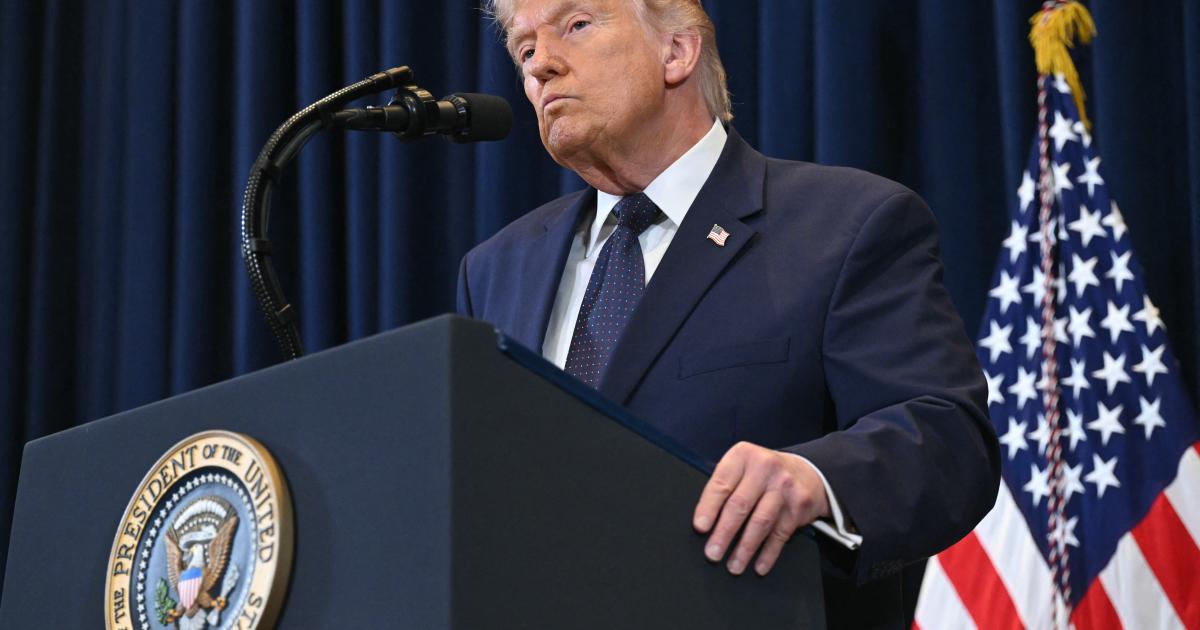
President Donald Trump has a history of doing things in the Middle East that had been declared impossible. Experts knew that moving the U.S. Embassy from Tel Aviv to Jerusalem would cause a massive regional attack on Israel. Eliminating Qasam Soleimani would ignite a regional war. Additional regional normalization between Israel and regional neighbors could not be reached until there was a two-state solution with the Palestinians.
>>> Operation Epic Fury Is Peace Through Strength in Action
Another piece of conventional wisdom Trump seems poised to disprove is the so-called “Pottery Barn Rule” for regime change—“you break it, you buy it.” This dictate that the U.S. had to rebuild a hostile country once its government was removed—even if that government had supported a vicious attack on our own soil—led to catastrophic mission creep in Afghanistan and Iraq as, after the success of those military campaigns, attempts to remake those countries dragged on for decades and ended in failure.
America should not repeat this error. Presumably, Trump will want to bring the kinetic phase of this mission to a close as soon as his objectives are achieved. Then we will see if the Iranian people will take advantage of the best opportunity they have had since the revolution to reclaim their government.
Iran is, after all, a country, not a piece of crockery in a store, and President Trump’s mission is not nation-building. It is to give the American people the opportunity to go through the next half-century freed from the deadly threat of the Islamic Republic, especially if that regime were to acquire a nuclear weapon.
It would be even better to go through that period with a prosperous and secure partner in what the new Iran becomes. And that future will ultimately be for the people of Iran to secure.
This piece originally appeared in Fox News
Facts Only
Operation Epic Fury is a military campaign involving the United States and Israel against Iran.
The operation began with strikes that killed Iran’s supreme leader and much of its senior leadership.
A succession meeting of surviving Iranian leaders on March 3 was targeted in a follow-up strike.
Iran launched missiles against neighboring countries, including Qatar and Oman, which had previously acted as mediators.
The predicted regional attack on Israel by Iran’s terrorist proxies (Hamas, Hezbollah, Houthis) has not materialized.
Hamas in Gaza has been largely silent, and Hezbollah in Lebanon has fired only limited rockets.
The Houthi in Yemen have issued threats but not launched attacks.
The Abraham Accords have remained intact despite prior strains following the October 7, 2023, Hamas attack on Israel.
Reports suggest Arab nations may be participating in strikes against Iran.
Russia and China have condemned the U.S. action but provided minimal support to Iran.
European allies have shifted to support the U.S. mission.
The operation challenges the "Pottery Barn Rule" of regime change, avoiding prolonged nation-building.
President Trump’s stated objective is to eliminate the threat of the Islamic Republic, particularly its nuclear ambitions, without committing to rebuilding Iran.
Executive Summary
Operation Epic Fury, a military campaign involving the United States and Israel against Iran, has defied long-standing assumptions about regional dynamics. The operation began with strikes that eliminated Iran’s supreme leader and much of its senior leadership, disrupting the regime’s command structure. Contrary to expectations, Iran’s terrorist proxies—Hamas, Hezbollah, and the Houthis—have remained largely inactive, and regional allies like Qatar and Oman have distanced themselves from Iran after it targeted them with missile strikes. The Abraham Accords have held despite prior strains, and there are reports of Arab nations potentially participating in strikes against Iran. Internationally, Russia and China have issued condemnations but provided little material support to Iran, while European allies have rallied behind the U.S. The operation challenges the "Pottery Barn Rule" of regime change, suggesting a shift away from prolonged nation-building efforts. President Trump’s approach emphasizes decisive military action followed by a swift exit, leaving Iran’s future to its people. The mission’s success remains uncertain, but it has already reshaped perceptions of U.S. military power and regional alliances.
The narrative highlights a break from conventional wisdom, portraying the operation as a strategic gambit that could redefine Middle East geopolitics. However, the long-term consequences—including potential Iranian retaliation, regional instability, and the feasibility of a post-regime Iran—remain unresolved. The piece frames the operation as a bold departure from past U.S. interventions, emphasizing its potential to liberate Iran from its current regime without committing to nation-building.
Full Take
The strongest version of this narrative presents Operation Epic Fury as a paradigm-shifting military campaign that dismantles decades of foreign policy orthodoxy. It credits the operation with achieving what was previously deemed impossible: neutralizing Iran’s leadership, isolating its proxies, and unifying regional actors against Tehran—all while avoiding the quagmire of nation-building. The piece frames this as a vindication of Trump’s "peace through strength" doctrine, contrasting it with the failures of prolonged interventions in Afghanistan and Iraq. By emphasizing the lack of Iranian retaliation and the unity of Arab states, it paints a picture of a decisive, low-cost victory that could reshape the Middle East.
However, the narrative leans heavily on a pattern of **ARC-0024 Ambiguity**—glossing over the uncertainties of war (e.g., "no one is claiming it will be neat or simple") while simultaneously declaring the operation a success. It also employs **ARC-0043 Motte-and-Bailey**, asserting that the mission avoids nation-building while implying that a pro-Western Iran will naturally emerge. The piece dismisses decades of foreign policy consensus as "conventional wisdom" without engaging with the complexities of post-regime transitions or the potential for unintended consequences.
The root cause of this narrative is a paradigm of **military determinism**—the assumption that decisive force alone can resolve geopolitical conflicts without prolonged engagement. This echoes Cold War-era "roll back" strategies but ignores the lessons of Iraq and Libya, where regime collapse led to chaos rather than stability. The unstated assumption is that Iran’s people will seamlessly transition to a pro-Western government, a gamble that underestimates the fragility of post-authoritarian states.
The implications for human agency are profound. If successful, the operation could free Iranians from a repressive regime, but the cost—both in lives and regional stability—remains unclear. The narrative benefits those advocating for aggressive military solutions while shifting the burden of reconstruction onto Iranians themselves. Second-order consequences could include a power vacuum, proxy wars, or a resurgent Iranian nationalism.
Bridge questions: What historical examples suggest that regime decapitation leads to stable democratic transitions? How might Iran’s proxies adapt if the central regime collapses? What would it take to convince skeptics that this operation won’t repeat the mistakes of past interventions?
Counterstrike scan: A coordinated influence campaign would amplify the operation’s early "successes" while downplaying risks, using emotional appeals (e.g., "freedom for Iranians") and false binaries (e.g., "strength vs. weakness"). The actual content aligns with this pattern but stops short of outright deception—it’s more a selective framing than a systematic manipulation. The piece’s optimism is notable, but it doesn’t cross into outright propaganda.
**Patterns detected: ARC-0024 Ambiguity, ARC-0043 Motte-and-Bailey**
Sentinel — Human
The article shows strong signs of human authorship, with a distinct voice and stylistic quirks, though some claims lack direct sourcing. Low confidence in synthetic origin.