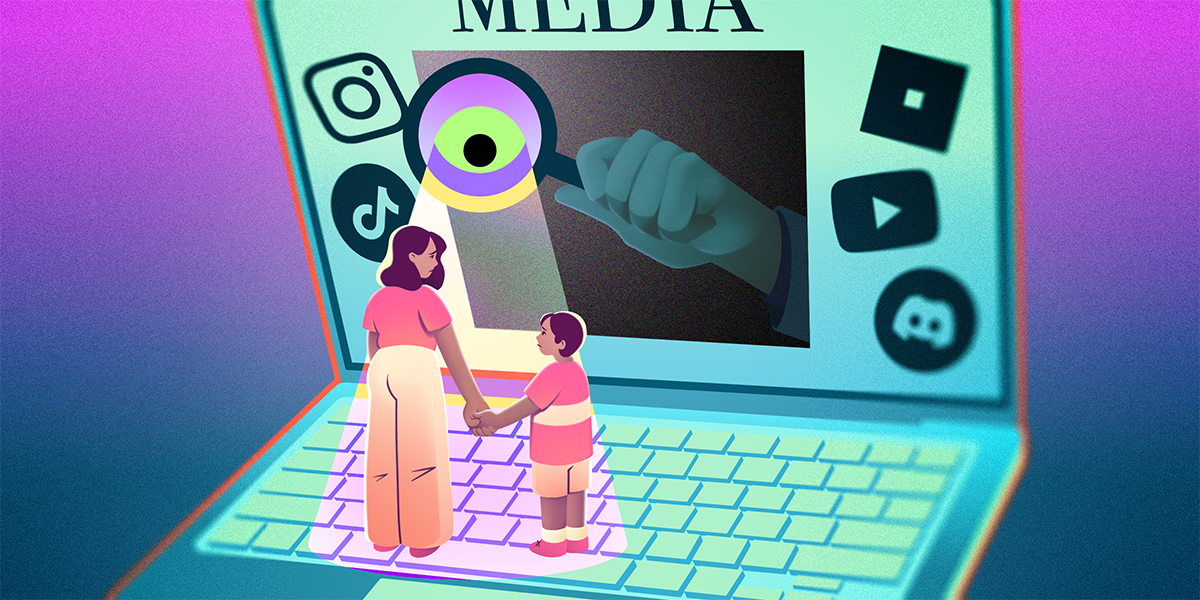
As statehouses ramp up for 2026, we’re seeing a familiar and concerning trend of lawmakers rushing to regulate the internet based on shockingly shaky science. From the California State Assembly to the Massachusetts and Minnesota legislatures, a wave of bills is crashing against the digital lives of young people, with proponents of these measures framing social media access as a "public health epidemic," or a "mental health crisis," even though we have yet to see any of the settled science that those labels usually invoke.
As a digital rights organization dedicated to the civil liberties of all users, EFF’s expertise lies in reminding lawmakers that young people enjoy largely the same free speech and privacy rights as adults. EFF is not a social science research shop, but we can read the emerging research. What that research shows is much more nuanced than what is claimed by those proposing to ban young people from social media, and it is clear that research and theories used to justify these sweeping bans is far from settled. The rush to ban access to digital platforms is being fueled by "pop psychology" narratives and a collection of statistically flawed studies that do not meet the rigorous standards required for such a massive infringement on youth autonomy and constitutional rights.
The Lie of A "Settled" Consensus
The current legislative push relies heavily on a specific, media-friendly narrative that the "great rewiring" of the adolescent brain is a proven fact. This theory suggests that smartphones and social media are the primary, if not sole, drivers of a global uptick in teen anxiety, depression, eating disorders, self harm, etc. While this narrative makes for a compelling airport-bookstore read, it quickly collapses under the scrutiny of the broader scientific community.
Independent researchers, including developmental psychologists from institutions like the University of California, Irvine, and Brown University, have repeatedly found that the evidence for such claims is mixed, blurry, and often contradictory. Large-scale meta-analyses covering dozens of countries have failed to show a consistent, measurable association between the rollout of social media and a decline in global well-being. In reality, we are seeing a classic case of what many of our middle school science teachers warned us about: "correlation" being sold as “causation."
Additionally, the studies used to support these measures often fail to account for or exclude significant alternative explanations for rising teen anxiety and depression, such as the lasting impact of pandemic-era isolation, the persistent threat of school gun violence, and mounting economic or climate-related stress. By focusing narrowly on social media, these findings frequently overlook the broader societal factors that also impact youth mental health.
The Cult of the "Anxious" Expert
The current push for blanket social media bans relies almost exclusively on the work of Jonathan Haidt, particularly his book The Anxious Generation. While Haidt is an amiable and brilliant storyteller, he is not a clinical psychologist or a specialist in child development. He is a social psychologist who writes about moral psychology at a business school. Nonetheless, the book has made it to every Best Seller list, and with Haidt revered as an expert on podcasts with massive reach, like Oprah, Joe Rogan, Michelle Obama, and Trevor Noah—his message has been heard by a large subset of society, which primarily relies on: no smartphones or social media before age 16, phone-free schools, and more “unsupervised, real-world independence.”
To highlight Haidt’s reach when it comes to legislation banning social media: the California committee analysis for the proposed California social media ban mentions Haidt 20 times; the Governor of Utah promoted the book as a “must-read” months before signing the nation’s first social media ban; Haidt is cited in bill analysis for the bill banning social media in Florida; his work is mentioned in a federal bill aiming to ban phones in schools; and he provided formal testimony before the U.S. Senate Judiciary Committee (Subcommittee on Technology, Privacy, and the Law) in May 2022.
While Haidt’s research has been paramount to legislation stripping millions of young people of their rights to expression and connection, his conclusions are not without challenge, and many experts in the field argue that the evidence is less than ironclad.
The “Bad Science” Fueling Social Media Bans
While we can admit that Jonathan Haidt’s "great rewiring" theory makes for a gripping narrative, we cannot ignore that independent researchers and statisticians have identified significant flaws in the data used to justify it. Which means we are currently watching policymakers legislate blanket bans based on evidence that would be rejected in almost any other field of public health.
The reality is that research has consistently disproven the oft-assumed link between social media use and poor mental health in youth, and actually indicates that moderate internet use is a net positive for teens’ development, and negative outcomes are usually due to either lack of access or excessive use. In one major study of 100,000 adolescents, a “U-shaped association emerged where moderate social media use was associated with the best well-being outcomes, while both no use and highest use were associated with poorer well-being.” We also know that young people’s relationship with social media is complex, as it provides them essential spaces for civic engagement, identity exploration, and community building—particularly for LGBTQ+ and marginalized youth who may lack support in their physical environments.
But again, the image Haidt presents in his book is increasingly at odds with the broader academic consensus. As mentioned, critics argue that the evidence for the mental health impacts of social media is mixed, blurry, and often misinterpreted. NYU statistics expert Aaron Brown, writing for Reason, notes that many of the studies in Haidt’s exhaustive reference list are statistically unreliable or fail to show a strong causal link. Prof. Candace Odgers, a leading voice in psychological science, explains the "selection effect" that legislators often ignore:
“Hundreds of researchers, myself included, have searched for the kind of large effects suggested by Haidt. Our efforts have produced a mix of no, small and mixed associations. Most data are correlative. When associations over time are found, they suggest not that social-media use predicts or causes depression, but that young people who already have mental-health problems use such platforms more often or in different ways from their healthy peers.”
This raises a fundamental question of legislative responsibility: If the science is not settled, how can legislators confidently declare a “public health crisis” to justify stripping away young people’s First Amendment rights? By bypassing the rigorous, nuanced findings of the scientific community in favor of a more convenient narrative, legislators are choosing emotion over evidence. Before imposing such draconian restrictions on young people’s access to information, policymakers have an obligation to do the heavy lifting: to dig into the actual research and listen to the experts who are sounding the alarm on oversimplified conclusions.
The Dangers of "Social Contagion" Narrative
Perhaps the most troubling aspect of Haidt’s crusade is its overlap with ideological rhetoric that pathologizes the identities of marginalized youth, and how that makes its way through efforts to ban social media for youth. A recurring theme in the literature favored by proponents of social media bans is the idea of "social contagion"—specifically regarding the rise in young people identifying as transgender or non-binary. Haidt dedicates an entire chapter of his book to this (ch.6, pt 3, p. 165), talking about “Why Social Media Harms Girls More Than Boys,” stating that:
“The recent growth in diagnoses of gender dysphoria may also be related in part to social media trends, [...] the fact that gender dysphoria is now being diagnosed among many adolescents who showed no signs of it as children all indicate the social influence and sociogenic transmission may be at work as well.”
These harmful theories suggesting that social media is "infecting" young people with gender dysphoria are false and not supported by peer-reviewed clinical research. But by legitimizing "experts" who promote these debunked theories, legislators—especially those in states like California who pride themselves on being a sanctuary for LGBTQ+ youth—are inadvertently platforming the same rhetoric used in other states to ban gender affirming care for youth. This "social contagion" narrative is a tool of exclusion, not a scientific reality, and we must be wary of any "public health" argument that treats community-building and self-discovery among marginalized young people as a "purported mental illness" spread via TikTok.
A Better Path: Digital Wellness, Not Bans
Fortunately, there is a measured, evidence-based alternative already emerging. California's A.B. 2071, for instance, is a student-authored "digital wellness" bill that offers a measured, evidence-based alternative rather than prohibition. The bill advocates for a curriculum that teaches students how to manage algorithms, recognize cyberbullying, and regulate their own relationship with technology. Instead of trying to completely shield young people from social media, education-based approaches empower young people and have the benefit of providing skills that stay with a young person long after they leave the classroom.
JustLeadershipUSA, a criminal justice organization, has a slogan that rings true in this instance too: “Those closest to the problem are closest to the solution.” So let’s start listening to what our young people are asking us for—more education—instead of imposing paternalistic, disempowering bans.
Legislating With Precision instead of Emotion
Adolescent mental health struggles are a complex, multifaceted crisis. It is a crisis that has existed for as long as time, and has been driven by economic instability, the opioid epidemic, the threat of school violence, amongst other issues. To pin all of society's woes on a smartphone app is not just a scientific error; it is a policy failure that ignores the real, material needs of young people both online and off.
Legislators must stop legislating as "anxious parents" and start acting as measured policymakers. Because for some youth, social media platforms are a lifeline. UNICEF and other global human rights organizations have warned that age-related restrictions and blanket bans can backfire in three critical ways: isolating marginalized youth (like LGBTQ+ youth, students in rural areas, foster youth, or those with disabilities) who social media is often the only place they can find a supportive community; necessitating invasive mass collection of biometric data or government-issued IDs from all users, including adults; and pushing young people toward less-regulated, "darker" corners of the web where content moderation is non-existent and the risks of actual exploitation are significantly higher.
Legislators have a valid interest in protecting children, but that interest must be pursued through tailored, measured approaches. We cannot allow emotions or a collection of flawed data sets to justify a historic rollback of digital rights.
Facts Only
State legislatures in California, Massachusetts, and Minnesota are proposing bills to regulate or ban social media access for young people.
Proponents of these bills describe social media as a "public health epidemic" or "mental health crisis."
The Electronic Frontier Foundation (EFF) argues that the scientific evidence supporting these claims is not settled and is often statistically flawed.
Jonathan Haidt’s book *The Anxious Generation* is frequently cited in legislative debates, including in California, Utah, and Florida.
Haidt’s work suggests that smartphones and social media are primary drivers of teen anxiety and depression, but independent researchers challenge these claims.
Studies from institutions like the University of California, Irvine, and Brown University show mixed or contradictory evidence linking social media to mental health declines.
Large-scale meta-analyses have not found a consistent association between social media use and global youth well-being.
Critics argue that alternative factors, such as pandemic isolation, school violence, and economic stress, are often overlooked in these studies.
Haidt’s book has been promoted by high-profile figures like Oprah, Joe Rogan, and Michelle Obama, amplifying its influence.
Some legislation, like California’s A.B. 2071, advocates for digital wellness education instead of bans.
UNICEF and other organizations warn that blanket bans could isolate marginalized youth and push them toward less-regulated online spaces.
The "social contagion" theory, which suggests social media influences gender identity, is criticized as unsupported by peer-reviewed research.
Executive Summary
Full Take
The strongest version of this narrative acknowledges legitimate concerns about youth mental health and the role of social media, while critiquing the rush to legislate based on incomplete or misleading science. The EFF and independent researchers rightly highlight the complexity of adolescent well-being, where social media is one factor among many—pandemic fallout, economic instability, and systemic violence also play significant roles. The reliance on Jonathan Haidt’s work, despite its popularity, raises questions about the weight given to media-friendly narratives over rigorous peer-reviewed research. Haidt’s "great rewiring" theory, while compelling, has been challenged by statisticians and developmental psychologists for its correlational overreach and failure to account for confounding variables. The legislative push also risks pathologizing marginalized identities, particularly through the debunked "social contagion" theory, which could inadvertently align with efforts to restrict LGBTQ+ rights.
Patterns detected: ARC-0024 Ambiguity (oversimplifying complex research), ARC-0043 Motte-and-Bailey (invoking "public health crisis" to justify broad restrictions), ARC-0012 Authority Games (elevating Haidt’s work despite limited clinical expertise).
The root cause here is a paradigm of technological determinism—blaming a single tool (social media) for multifaceted societal issues. This echoes historical moral panics, from comic books to video games, where new media is scapegoated for deeper systemic problems. The implications for human agency are stark: banning platforms may disempower youth who rely on them for connection, while failing to address the material conditions driving mental health crises. Who benefits? Policymakers gain a visible "win" by appearing protective, while tech companies face fragmented regulations that may not improve outcomes. The costs fall disproportionately on marginalized youth, who lose vital spaces for self-expression and community.
Bridge questions: What would a truly evidence-based policy look like, one that addresses both online and offline factors in youth mental health? How can we balance protection with autonomy, ensuring young people have the tools to navigate digital spaces safely? What safeguards are needed to prevent legislation from being co-opted by ideological agendas that harm vulnerable groups?
Counterstrike scan: A coordinated influence campaign would amplify fear-based narratives (e.g., "social media is rewiring brains") while suppressing nuanced research. It would leverage high-profile endorsements (like Haidt’s media appearances) to create an illusion of consensus, then push for sweeping bans under the guise of public health. The actual content here aligns partially with this pattern—Haidt’s work is central to the legislative push—but the EFF’s critique provides necessary counterbalance. The presence of dissenting voices and alternative proposals (like digital wellness education) suggests this is not a monolithic manipulation effort, but a contested policy debate.
Sentinel — Human
Sentinel analysis incomplete — partial response from fallback model.