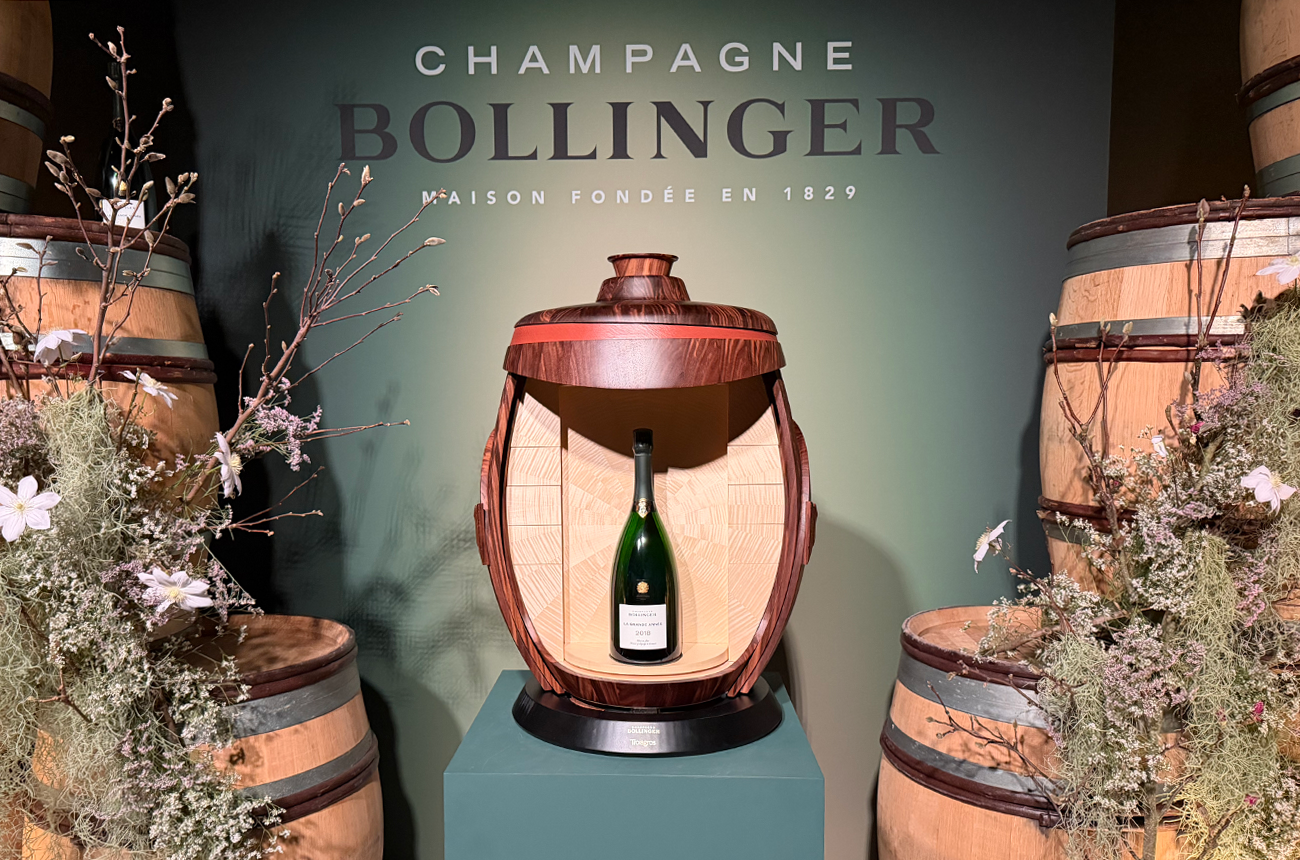
Shivani Tomar shares what she learned on a very special trip to Champagne Bollinger for the launch of its new La Grande Année.
Get our daily fine wine reviews, latest wine ratings, news and travel guides delivered straight to your inbox.
You are now subscribed
Your newsletter sign-up was successful
Nestled in the historic Champagne village of Aÿ lies one of the region’s most recognisable names: Champagne Bollinger.
A family-owned house since its inception in 1829, it is nearing its 200th anniversary in just a few years.
A staple on wine lists and shop shelves, it’s a brand we think we know well. Yet on a recent visit – the launch of Bollinger's classy prestige cuvée La Grande Année 2018 – I still discovered many things that surprised me.
Here are five facts you need to know about this iconic Champagne house.
1. Never-ending underground cellars
Underneath the quiet streets of Aÿ lies an astonishing six kilometres of cellars where wine bottles rest and age patiently in a naturally cold environment.
Descending down 48 steps, the cellar opens out into a maze of endless tunnels. One could easily get lost among the bottles attempting to navigate this rabbit warren.
Thankfully we were guided through by someone who knows them intimately.
Get our daily fine wine reviews, latest wine ratings, news and travel guides delivered straight to your inbox.
2. The house still has a human riddler
While the majority of Champagne houses today rely on automated riddling machines, Bollinger still performs manual riddling for all of its special cuvées and vintage Champagnes.
The house currently has two and a half riddlers: two experienced riddlers and one in training.
Asked how many bottles he riddles in a day, riddler Olivier Lannez says: ‘about 45,000 bottles!’ his eyes gleaming with pride.
3. The last resident cooper in Champagne
Not only does Bollinger own the largest collection of barrels in Champagne, it has the only resident cooper in the region. Gaël Chaunut manages around 4,000 barrels single handedly.
And with a new barrel room just inaugurated, there will be another 1,000 barrels under his remit.
In a nod to traditional cellar practices, chestnut branches are sometimes fixed around the rims of the barrels.
This simple technique protects the cellar floors from scratches when the heavy barrels are moved around.
4. Bollinger makes a still red wine
It may come as a surprise that alongside its famous bubbles, Bollinger also makes a very rare still red wine.
La Côte aux Enfants is made from 100% Pinot Noir grapes, and comes from the legendary La Côte aux Enfants vineyard.
Given it is not sparkling, it cannot be labelled as Champagne, and is therefore labelled under the Coteaux Champenois appellation.
This 4ha plot was once divided between 50 different owners. Recognising the extraordinary potential of this land in the early 20th century, Jacques Bollinger gradually bought each small plot. Bollinger now owns the entire vineyard.
Although this plot of Pinot Noir has long been used for red wine production, both for the still red and for use in Bollinger's prestige La Grande Année rosé, the house also launched a blanc de noirs Champagne from the north-west part of the plot in 2012.
The red is only made in the best vintages, and feels close in style to a top-tier Burgundy: vibrant red fruit, savoury aromas and complex notes of truffle and forest floor. Heavenly!
5. Stepping into a time capsule
Hidden deep within the Bollinger cellars is a historic wine library, which it calls Galérie 1829, housing bottles dating back to the 1830s.
I reflected on how much history these wines must have witnessed, with generations of winemakers from the Bollinger family carrying forward its legacy.
To amuse myself, I first checked my birth year, then my mother’s, and finally my grandmother's, just to live in a moment where three generations of women in my family could share this quiet connection through time.
My ancestors, of Indian heritage, would probably be appalled at the thought of women drinking wine.
Madame Bollinger, though, would probably be proud.
Elisabeth 'Lilly' Bollinger played a pivotal role in making Bollinger into the iconic brand it is today.
After her husband, Jacques Bollinger, died in 1941, she took charge of the house during the Second World War.
A true visionary, she travelled to the United States after the war to promote her Champagne.
She brought in forward-thinking practises, such as late disgorgement and continued traditional ones like oak vinification, that the house still uses today.
So next time when you open a bottle of Bollinger, picture those winding cellars, the team of riddlers, the skill of the cooper, and Lilly Bollinger's legacy.
Related articles
Champagne 1995 vs 1996: How do these vintages hold up 30 years on?
Coteaux Champenois: Champagne’s next big thing or still a work in progress?
Where has all the vintage Champagne gone?
Born and raised in India, Shivani is the awards manager at Decanter, managing the 300-strong cohort of worldwide judges for the world's largest wine competition, the Decanter World Wine Awards, ensuring a seamless judging process and driving the competitive integrity of the awards. After earning a master’s in wine management from the Burgundy School of Business, she moved to London in 2016 and completed her WSET diploma. While Burgundy holds a special place in her heart, Champagne is her go-to bottle. Alongside her full-time role, she has been dipping her toes into wine writing, relishing the opportunity to bring wine stories to the surface. She serves on the Drinks United Advisory Council board.
Facts Only
Champagne Bollinger is a family-owned house in Aÿ, France founded in 1829
Manual riddling performed for special cuvées and vintage Champagnes
Six kilometers of underground cellars exist beneath the village's streets
Two experienced riddlers and one in training at Bollinger
About 45,000 bottles riddled per day by a riddler named Olivier Lannez
The house has the only resident cooper in Champagne region
Gaël Chaunut manages around 4,000 barrels and will manage another 1,000 soon
Bollinger makes a still red wine called La Côte aux Enfants from Pinot Noir grapes
The wine is labelled under the Coteaux Champenois appellation as it cannot be labeled Champagne
The house owns the entire 4ha plot where the La Côte aux Enfants vineyard is located
A historic wine library, Galérie 1829, houses bottles dating back to the 1830s
Executive Summary
Champagne Bollinger is a prestigious Champagne house located in Aÿ, France that was founded in 1829 and is still family-owned. The article discusses the launch of their new La Grande Année 2018 and provides insights about the house that might surprise even knowledgeable wine enthusiasts.
The cellars beneath the village's streets extend over six kilometers, with manual riddling performed for all special cuvées and vintage Champagnes. Bollinger also has the only resident cooper in the region who manages around 4,000 barrels. Additionally, the house makes a rare still red wine called La Côte aux Enfants, made from Pinot Noir grapes, and owns the entire vineyard it comes from. Lastly, hidden deep within the cellars is a historic wine library, Galérie 1829, housing bottles dating back to the 1830s.
Full Take
When analyzing this article from a skeptical perspective, it's essential to acknowledge that Champagne Bollinger is presenting its own narrative about its history and practices. However, the article provides evidence for several key points, such as the manual riddling process and the house's production of a still red wine.
One pattern to watch for in this article is the use of specific details to create an immersive experience, potentially appealing to readers' emotions and increasing engagement with Bollinger's brand (ARC-0043 Motte-and-Bailey). The article also highlights the historical significance of the wine library, emphasizing the rich legacy of the Bollinger family (ARC-0024 Ambiguity).
As for root causes and implications, this piece reinforces the idea that tradition plays a crucial role in Champagne production, with Bollinger maintaining manual riddling and oak vinification practices. However, it's important to question whether this focus on tradition comes at the expense of innovation and sustainability within the industry.
To encourage independent inquiry, readers might consider: what aspects of Champagne Bollinger's history are missing from this narrative? How has the house adapted to changes in consumer preferences and the wine market over the years? What role does tradition play in other Champagne houses, and how do they balance it with modernization?
Sentinel — Human
The article appears likely human-written, demonstrating erratic sentence length variance, a personal voice, and no fabricated claims or suspicious historical references. The presence of a personal anecdote suggests a human touch.