The Volokh Conspiracy
Mostly law professors | Sometimes contrarian | Often libertarian | Always independent
Writings on the Declaration of Independence and the Meaning of the American Revolution
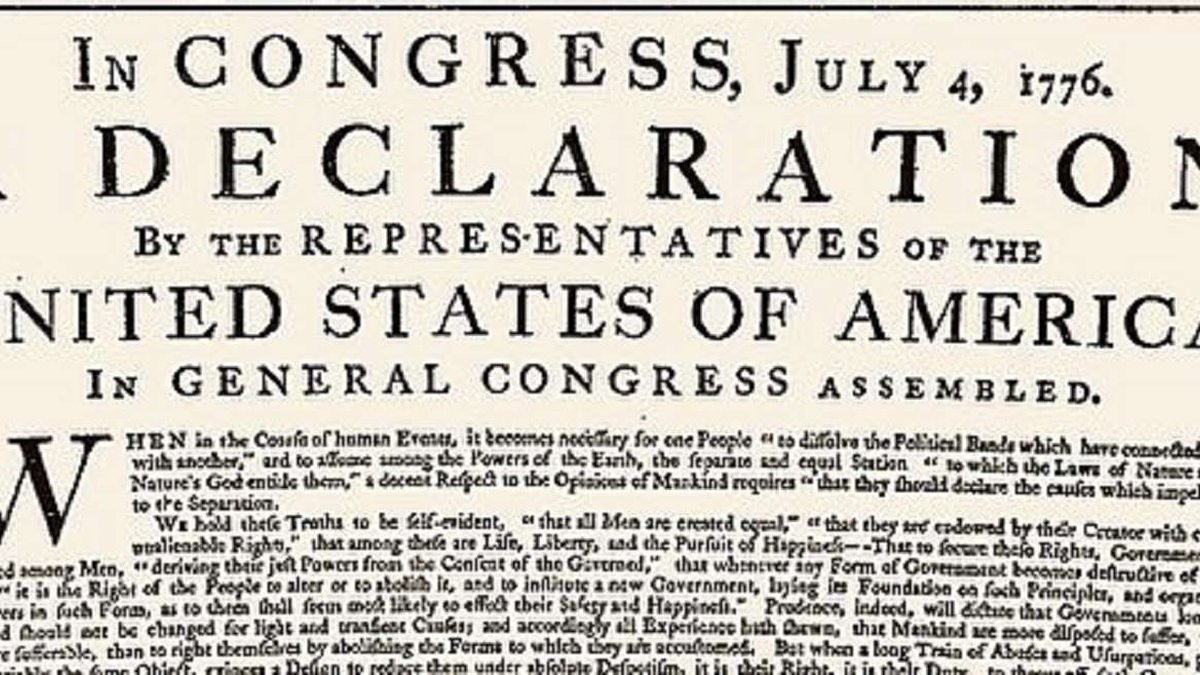
Links to some of my previous writings on these topics, which remain relevant on the 250th anniversary of the Declaration.
Today is the 250th anniversary of the Declaration of Independence.
Over the years, I have written various posts and articles on the American Revolution and the ideals of the Declaration of Independence and the American Founding. Some have obvious continuing relevance to such issues as identity politics, nationalism, immigration, the role of slavery in American history, and more. Particularly relevant, given recent political developments, are the various pieces on the liberal universalist ideals of the Founding and their opposition to ethno-nationalism.
This post is an expansion of last year's similar compendium.
I hope the links are useful, and stir reflection on the principles of the Declaration. Unless otherwise noted, all of these pieces were published as posts on the Volokh Conspiracy blog. I put them in chronological order:
"The Declaration of Independence and the Case for Non-Ethnic Secession," July 4, 2009. Why the American Revolution was different from most modern independence and secession movements.
"Frederick Douglass on Immigration," April 10, 2014. A discussion of Frederick Douglass's great 1869 speech on how American ideals require openness to immigration.
"The Declaration of Independence and the Case for a Polity Based on Universal Principles," July 4, 2017.
"The Universalist Principles of the Declaration of Independence," July 4, 2019. Why it matters that the Declaration elevates universal liberal principles over racial, ethnic, and cultural particularism.
"The Case Against the Case Against the American Revolution," July 4, 2019. A rebuttal to longstanding claims - advanced by critics on both right and left - that the Revolution did more harm than good.
"Slavery, the Declaration of Independence and Frederick Douglass' 'What to the Slave is the Fourth of July?'", July 4, 2020. Douglass's famous speech sheds light on some of America's greatest evils - but also on the great good done by the Revolution and Founding. I think Douglass's speech may be the greatest-ever Fourth of July oration.
"Juneteenth and the Universalist Principles of the American Revolution," June 19, 2021. Why there is no inconsistency in celebrating both July 4 and the abolition of slavery. Indeed, the two are mutually reinforcing.
"Immigration and the Principles of the Declaration of Independence," July 4, 2021. This piece explains why the ideals of the Declaration and the Founding require free migration rights.
"Juneteenth Celebrates a Great American Achievement," June 19, 2023. An extension of some of the key points made in my 2021 Juneteenth post, linked above.
"The Declaration of Independence Promotes Individual Liberty More than Collective Self-Determination," July 4, 2023. The "liberty" the Declaration advocates is more about individual freedom than the power of majorities to rule over the rest of society, or the power of ethnic groups to rule "their" territory.
"The Case Against Nationalism," National Affairs, Winter 2024 (with Alex Nowrasteh). This article is a more general critique of nationalism. But it includes a section explaining why nationalism is inimical to the ideals of the Declaration and the Founding.
"Trump vs. the Declaration of Independence," July 4, 2025. Several items on the Declaration of Independence list of grievances against George III also apply to Trump today, most notably on immigration, trade, and deportation without due process. Like King George, he is "unfit to be the ruler of a free people."
"Gordon Wood on America as a "Creedal Nation" Open to all Races and Ethnicities," Nov. 22, 2025. My analysis of a speech by the greatest historian of the American Founding discussing the universal nature of the ideals of the Founding.
"1776 All-Stars: Why George Mason Is Extremely Underrated," Reason, July 2026. My discussion of the contributions of a crucial Founding Father.
"My House Judiciary Subcommittee Testimony Against the "Preserving a Sharia-Free America Act," Feb. 9, 2026. Summary of my testimony before the US House of Representatives Judiciary Committee's Subcommittee on the Constitution and Limited Government, explaining why discrimination against immigrants based on their speech and religion is unconstitutional and contrary to the ideals of the Founding. The testimony itself is available here.
Sentinel — Human
This text functions as a curated manifesto connecting the ideals of the American Founding to modern political issues, exhibiting a strong, consistent, and specific intellectual voice.