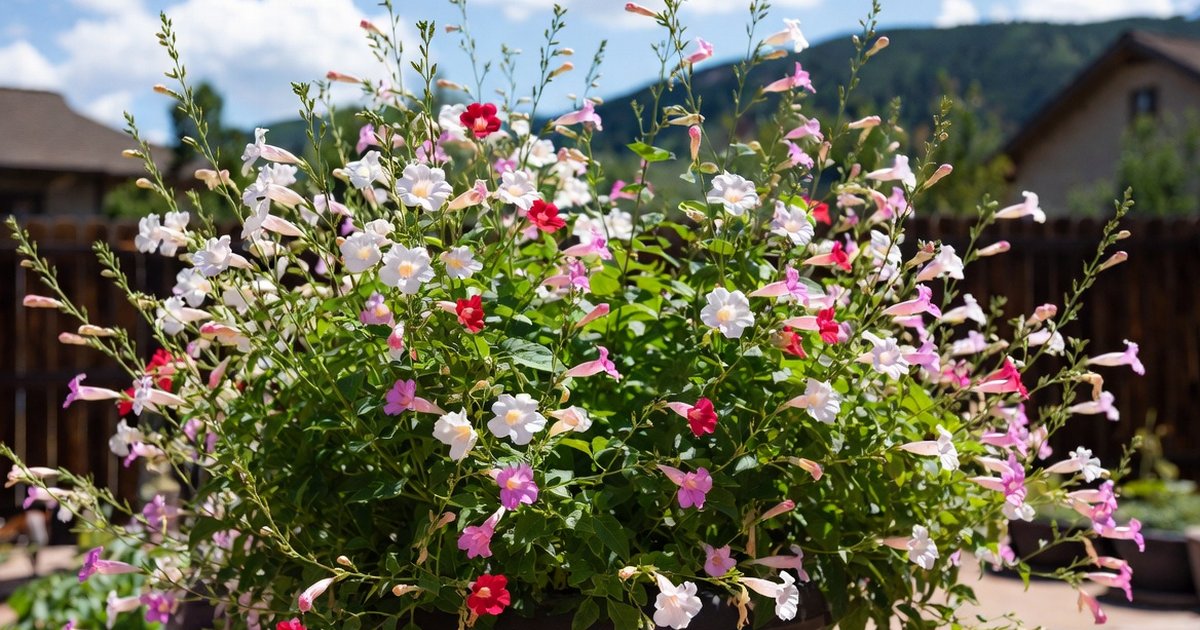
Nicotiana (Flowering Tobacco, Nicotiana alata, N. sylvestris, and modern hybrids) is a graceful, fragrant annual known for its tubular, star-shaped flowers that bloom profusely. Many varieties are delightfully scented (especially in the evening) and come in white, pink, red, lime green, and bicolor shades. Taller types make excellent “thrillers,” while shorter ones work well as fillers.
It pairs beautifully with your growing collection — the upright form complements Millet and Juncus, the soft colors harmonize with Nemesia, Lobelia, and Alyssum, and the fragrance adds another sensory layer near seating areas.
Growing Conditions in Fort Collins
Nicotiana is a warm-season annual that performs very well in Colorado’s sunny summers.
- Hardiness: Grown as a tender annual in Zone 5b. It will not survive winter outdoors.
- Planting time: Late May to early June, after all danger of frost has passed and nights are warm.
- Sun: Full sun to partial shade. In Fort Collins’ intense sunlight, afternoon shade helps prevent leaf scorch and extends bloom time. Many varieties bloom well in dappled light.
- Soil: Rich, well-draining, moist soil. Excellent performer in large containers with good potting mix.
- Water: Keep soil evenly moist, especially during hot, dry Colorado periods. It appreciates consistent watering but tolerates brief dry spells.
Care Tips
- Growth habit: Varies by variety:
- Tall types (e.g., N. sylvestris or ‘Only the Lonely’): 3–5+ feet — dramatic vertical accent.
- Shorter hybrids (e.g., ‘Perfume’, ‘Tuxedo’, or ‘Whisper’ series): 12–24 inches — great for mixed pots.
- Bloom time: Early summer through frost. Deadheading encourages more flowers, though not always necessary with modern varieties.
- Fragrance: Many are strongly night-scented — wonderful near patios and evening sitting areas. Excellent for attracting hummingbirds, moths, and butterflies.
- Fertilizer: Moderate feeder. Use a balanced liquid fertilizer every 3–4 weeks in containers.
- Pests: Generally tough. Watch for occasional aphids, hornworms, or tobacco mosaic virus (remove affected plants).
Fort Collins Pro Tip: Use a tall Nicotiana as a centerpiece with trailing Sweet Potato Vine, Creeping Jenny, Alyssum, and Lobelia around the edges, plus Marigolds and Lantana for color. The combination creates a lush, fragrant, pollinator-friendly container that looks spectacular against the mountain backdrop.
Would you like recommendations for specific varieties (fragrant whites, compact types, tall dramatic ones) or full container recipes?
Facts Only
*Nicotiana* is a warm-season annual.
Hardiness: Tender annual in Zone 5b.
Planting time: Late May to early June.
Sun exposure: Full sun to partial shade.
Soil requirement: Rich, well-draining, moist soil.
Watering: Keep soil evenly moist, especially during hot, dry periods.
Growth habit: Tall types are 3–5+ feet; shorter hybrids are 12–24 inches.
Bloom time: Early summer through frost.
Pest concerns: Potential for aphids, hornworms, or tobacco mosaic virus.
Fertilizer: Moderate feeder, balanced liquid fertilizer every 3–4 weeks.
Fragrance: Many varieties are strongly night-scented.
Executive Summary
Full Take
The framing of the horticultural information centers on aesthetic appeal and sensory experience, positioning the plant not just as a botanical subject but as an amenity for an outdoor living space. The advice implicitly prioritizes the plant's role in creating a "lush, fragrant, pollinator-friendly container" and enhancing the visual "mountain backdrop." This approach shifts the focus from pure botanical science to applied, experiential design.
A pattern emerges where practical care facts (soil, watering, pest management) are interwoven with highly desirable, emotional outcomes (fragrance, spectacular appearance, attraction of hummingbirds). This functions as a form of emotional exploitation, where the perceived value of the plant is tied directly to its sensory and decorative utility. The implicit assumption is that successful gardening is defined by achieving high aesthetic and sensory rewards, rather than strictly adhering to ecological or physiological principles.
The suggestion to use tall varieties as "thrillers" and shorter ones as "fillers" introduces a simplified, performance-based categorization that simplifies biological variation into functional roles. This categorization serves to guide the consumer's selection based on perceived utility rather than inherent genetic characteristics. The overall narrative promotes a system where sophisticated environmental variables are distilled into immediate, desirable consumer outcomes, subtly guiding agency toward purchasing plants that fulfill a specific, highly valued lifestyle aspiration.
Patterns detected: ARC-0011 Framing Effect, ARC-0014 Appeal to Popularity, ARC-0024 Ambiguity
Sentinel — Human
The text exhibits strong human characteristics through its blending of specific, localized practical advice with engaging, contextual language, making it highly likely to be human-written.