In brief
- Adam Schiff and John Curtis plan to introduce a bipartisan bill banning sports-related prediction markets.
- The proposal targets platforms like Kalshi and Polymarket, arguing many of their offerings are unlicensed sports bets.
- The move escalates a broader fight between states, federal regulators, and prediction market firms over regulation.
A bipartisan duo of U.S. senators plan to introduce legislation Monday that would ban American prediction markets from offering sports-related wagers.
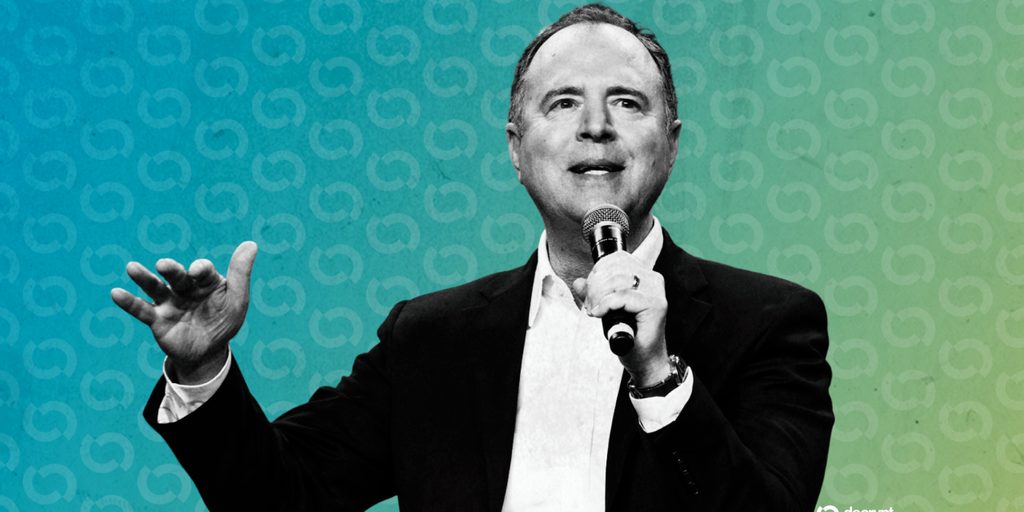
The proposed bill, from Adam Schiff (D-CA) and John Curtis (R-UT), would prohibit prediction market platforms like Polymarket and Kalshi from offering sports markets that they allege constitute unlicensed sports betting by another name. News of the impending bill was first reported by the Wall Street Journal.
“Too many young people in Utah are getting exposed to addictive sports betting and casino-style gaming contracts that belong under state control, not under federal regulators,” Curtis said, in a statement.
The senators said the legislation would prohibit any CFTC registered entity from listing a contract resembling a sports bet or casino-style game, and also “reinforce Congress’ original intent that the Commodity Exchange Act does not permit sports gambling."
In the last year, a growing number of states have sued the nation’s top prediction market platforms, arguing their sports-related markets should comply with state gambling laws. The platforms have pushed back, arguing that because the sports-related wagers are tied to event contracts, they should instead be regulated at the federal level by the CFTC.
A number of judges have not been convinced by that argument. On Friday, Nevada became the first state to successfully ban a prediction market platform, Kalshi—at least temporarily—as the state’s lawsuit against the company proceeds to trial.
Last week, Arizona filed criminal charges against Kalshi, for allegedly operating an illegal gambling service and allowing unlicensed election wagering.
A Kalshi spokesperson told Decrypt that today’s proposed bill would push activity offshore and protect the “monopoly” of U.S. casinos.
“It’s clear this bill is motivated by casino interests that are threatened by competition,” the spokesperson said. “They’re more worried about protecting their monopolies than protecting consumers.”
Over 80% of Kalshi’s lifetime trading volume comes from sports-focused markets, according to data from Dune.
The Trump CFTC has aggressively taken the side of prediction market platforms in the ongoing jurisdictional dispute over sports wagers, which is likely to ultimately be decided by the Supreme Court. CFTC Chair Mike Selig has pledged to put the agency’s resources behind companies fighting against state regulators.
So far, the states that have challenged the CFTC’s legal interpretation run the political spectrum, from Democratic mainstay Massachusetts to deep-red Tennessee. Last month, Utah’s Republican Governor, Spencer Cox, condemned the Trump CFTC’s approach to prediction markets, arguing the platforms are “destroying the lives of families and countless Americans, especially young men.”
On Friday, Rep. Alexandria Ocasio-Cortez (D-NY), the prominent progressive lawmaker, added her voice to the growing chorus of prediction market skeptics.
“I know as a politician these companies are going to spend a billion dollars against me for saying it but… pervasive gambling is not good for society,” she said. “It turns life into a casino, traps people in addiction and debt, surges domestic violence, and fosters manipulation.”
Facts Only
Senators Adam Schiff (D-CA) and John Curtis (R-UT) plan to introduce a bipartisan bill banning sports-related prediction markets.
The bill targets platforms like Kalshi and Polymarket, prohibiting CFTC-registered entities from offering sports or casino-style contracts.
The legislation reinforces the claim that the Commodity Exchange Act does not permit sports gambling.
Multiple states, including Nevada, Massachusetts, and Tennessee, have sued prediction market platforms over sports-related wagers.
Nevada temporarily banned Kalshi following a state lawsuit.
Arizona filed criminal charges against Kalshi for allegedly operating an illegal gambling service.
Kalshi states over 80% of its trading volume comes from sports-focused markets.
The CFTC, under Chair Mike Selig, has supported prediction market platforms in disputes with state regulators.
Utah Governor Spencer Cox criticized the CFTC’s approach, calling prediction markets harmful to families.
Rep. Alexandria Ocasio-Cortez expressed concerns about the societal impacts of pervasive gambling.
Kalshi claims the bill protects casino monopolies and will push activity offshore.
Executive Summary
Full Take
The strongest version of this narrative frames prediction markets as a regulatory gray area exploiting legal loopholes to offer de facto sports gambling, bypassing state protections and fueling addiction. Proponents of the bill argue it closes a dangerous gap, while critics see it as a casino-backed power grab to stifle competition. The pattern here is classic **ARC-0043 Motte-and-Bailey**: platforms claim they’re "event contracts" (motte) while operating as sportsbooks (bailey). Meanwhile, the CFTC’s aggressive defense of these markets—despite bipartisan state opposition—suggests regulatory capture or ideological resistance to state gambling laws.
Root cause: This is a clash between federalist principles and financial innovation. The unstated assumption is that prediction markets are inherently distinct from gambling, yet their economic function mirrors it. Historically, this echoes Prohibition-era battles over vice regulation, where moral panic and economic interests collide. The implications for human agency are stark: if these markets proliferate unchecked, vulnerable populations face heightened addiction risks, while states lose revenue and regulatory control. Conversely, overregulation could push activity into less transparent offshore markets, as Kalshi warns.
Bridge questions: If prediction markets are banned, what alternative mechanisms could emerge for speculative event-based trading? How should regulators distinguish between legitimate financial instruments and disguised gambling? What evidence would change your mind about the societal harm of these platforms?
Counterstrike scan: A coordinated influence campaign would amplify moral panic (e.g., "destroying families") while downplaying economic liberties, or frame casinos as victims of "unfair competition." The actual content includes both casino criticism and genuine harm concerns, but the bipartisan state opposition suggests organic policy debate rather than manipulation. No structural alignment with a hypothetical attack playbook is detected.
Sentinel — Human
The article shows strong signs of human authorship, with natural variability in sentence structure, direct attribution to named sources, and idiosyncratic phrasing that resists AI-generated uniformity.