Skip to content
Chimera readability score 0.6023 out of 100, reading level.
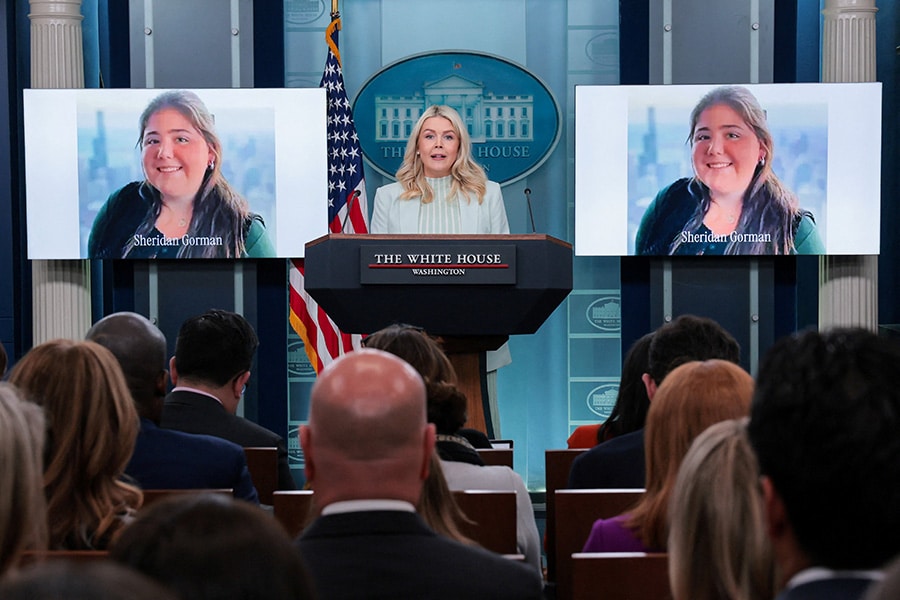
Catholics express grief, warn of politicizing immigration issue in murder of Loyola student March 30, 2026By Simone Orendain OSV News Filed Under: Gun Violence, News, World News CHICAGO (OSV News) — Catholics in Chicago have expressed sympathy and sorrow over the death of a Loyola University Chicago student who was shot and killed March 19 near the school campus. The murder became the subject of political wrangling between local and state leaders and the Trump administration after federal authorities identified the shooter as a Venezuelan national without proper authorization to be in the country. Cardinal Blase J. Cupich of Chicago said at a City Club Chicago appearance in downtown Chicago March 23 he had spoken with the family of Sheridan Gorman, who was a Loyola freshman. “Tom and Jessica, the parents of Sheridan, are taking this very hard,” said Cardinal Cupich. “Tom said to me on the phone, ‘You know, every parent says that their kid is the best in the world. Well, mine was.'” “So I think it’s important to really be in touch with the grief that’s pretty raw in people’s lives. And then, I think, to be able to say to the city, ‘We have to wrap our arms around these people. Their grief is our grief,'” the cardinal said. Officials said 18-year-old Gorman was out with friends to watch the northern lights at a lakeside park just north of Loyola’s main campus. At around 1 a.m., a man with a gun approached them and they tried to flee. He discharged a shot that hit Gorman, killing her. On March 20, Chicago Police arrested Jose Medina, 25, on first-degree murder, attempted murder and other charges. The Department of Homeland Security said in a news release Medina was released into the country May 9, 2023, after being arrested by U.S. Border Patrol and “released again June 19, 2023, after being arrested for shoplifting.” The department filed an arrest detainer requesting that Medina not be released, should charges be disposed of whether through a finding of guilt or innocence. Loyola held a vigil at the packed Madonna della Strada Chapel on the evening of Gorman’s death. Two Jesuit priests led the prayers, which were attended by her parents from Yorktown Heights, N.Y. Loyola President Mark C. Reed, in a school-wide letter posted on the university’s website March 19, called Gorman’s death “a tragic loss and our hearts go out to Sheridan’s family, loved ones and all who knew her.” Michael Okinczyc-Cruz, executive director of the Center for Spiritual and Public Leadership, a Catholic social justice advocate, attended the vigil. “We are heartbroken that Sheridan Gorman’s life was taken in an act of violence, a cherished Loyola student and beloved family member. Our deepest condolences go out to all who mourn the loss of this beautiful soul,” he said in a March 27 statement sent to OSV News. Gorman was a member of Loyola Cru, an international evangelical Christian campus ministry. Loyola Cru, in an Instagram post days after her death, described her as “compassionate, selfless, kind, generous, joyful, willing, and so much fun.” Dominican Father Brendan Curran, a Chicago-based immigrant advocate, told OSV News, “First of all, it’s an absolute tragedy when a young, up-and-coming student … senselessly loses their life. Being in a space that would normally be a very safe space just to visit, just to do the young adult thing of just hanging out with your friends in the college experience. What a tragedy and loss to all of us. And we can’t lose sight of that.” With news that the man arrested in the shooting is not authorized to be in the U.S., local politicians pointed fingers at the Trump administration. President Donald Trump called Gorman’s murder “devastating” and blamed the Biden administration’s “open borders” policy. Illinois Gov. JB Pritzker said March 24 there were “real failures” in the immigration system that “extend beyond Illinois’ borders.” He said there has been a failure to reform it and that Trump failed “to follow his own edict to go after the worst of the worst” referring to the ongoing national immigration crackdown that sparked highly charged protests in Chicago in the fall. Chicago Mayor Brandon Johnson at a news conference March 24 was asked about Medina being from Venezuela. He noted the city and state’s immigrant sanctuary policies were put in place well before his term, which started in 2023. They were approved by a Democratic mayor and a Republican governor respectively. He said the policies are designed to help migrants without papers “not feel intimidated when they reach out” to authorities. Johnson added, it was time for the president and Congress “to act and pass comprehensive immigration reform.” In a statement released to local media March 26, Gorman’s parents chided Pritzker and Johnson for their remarks and noted five days had passed before they each publicly acknowledged Gorman’s death. “We are not interested in political arguments or in watching responsibility shift from one place to another. If there were failures — as the Governor himself has acknowledged — then every one of them must be identified, examined, and addressed directly. The location of those failures matters less than the willingness to confront them honestly,” said the Gorman family. They added: “Our daughter is not a policy debate. She is a life that was taken, and that demands accountability.” A Chicago Tribune report of the Gorman family’s reaction to the local politicians’ remarks said Pritzker’s office on March 26 released a statement saying, “The family of Sheridan Gorman remains in Governor Pritzker’s thoughts as they grieve and navigate the unimaginable loss of their daughter” and that the governor “believes” the suspect should face consequences “to the fullest extent of the law and with the entire weight and urgency of our justice system that her family deserves.” Okinczyc-Cruz said CSPL “laments” the political rhetoric “using this tragedy to push xenophobic policies and attack the dignity of immigrant families.” “Sheridan’s death must not become a justification to inflict even more suffering and pain on immigrant families. Sheridan’s murder shatters a sense of peace and safety that we desire to feel, and it is upon us all to honor her life by dedicating our lives to serving God and humanity as Sheridan so beautifully modeled during her life,” he said. While Medina’s case is pending, Father Curran spoke in broad terms. “First and foremost, an undocumented person who takes the life of another person is a person that must be processed for restorative justice appropriately in a way that holds them responsible, just as much as a person who’s a U.S. citizen, who takes the life of another person,” he said in a March 26 telephone interview. “That’s the problem. The broken immigration system did not cause the death of this youth.” The promoter of peace and justice for his order in the U.S. and Canada, Father Curran said political debate in the wake of the suspect being a foreign national without papers “is a reminder to us of the importance of the harm that we do, in our immigrant community, to each other when we lift up arms, when we are doing other illicit activity. It is doubly harmful to us.” “It’s already been an undue burden upon us that we have to be better citizens than lawfully permanent residents and citizens (of the U.S.) in order to survive in this society, in the anti-immigrant climate,” he said. Read More Gun Violence Annunciation shooting showed online violent radicalization at work, expert says Empty school desks on Minnesota Capitol grounds signify children lost to gun violence Sacramento Catholic school averts possible shooting at Mass, thanks to astute parent Young man doing community service shot dead while painting chapel in Puebla, Mexico Rhode Island’s Catholic community reeling after deadly shooting during high school hockey game Bishop in British Columbia calls for prayer after mass shooting that ‘has traumatized us all’ Copyright © 2026 OSV News Print

Facts Only

Sheridan Gorman, an 18-year-old Loyola University Chicago freshman, was shot and killed on March 19, 2026, near the school’s campus.
The shooting occurred around 1 a.m. at a lakeside park north of Loyola’s main campus while Gorman was with friends.
Jose Medina, a 25-year-old Venezuelan national, was arrested on March 20 and charged with first-degree murder, attempted murder, and other offenses.
Medina was released into the U.S. on May 9, 2023, after being arrested by U.S. Border Patrol, and again on June 19, 2023, following a shoplifting arrest.
The Department of Homeland Security had filed an arrest detainer for Medina.
Loyola University held a vigil for Gorman on the evening of her death, attended by her parents and led by Jesuit priests.
Cardinal Blase Cupich of Chicago spoke with Gorman’s parents and expressed solidarity with their grief.
President Donald Trump blamed the Biden administration’s border policies for the murder.
Illinois Governor JB Pritzker and Chicago Mayor Brandon Johnson criticized failures in the immigration system and called for comprehensive reform.
Gorman’s parents issued a statement on March 26, criticizing politicians for politicizing their daughter’s death and demanding accountability.
Michael Okinczyc-Cruz of the Center for Spiritual and Public Leadership condemned the use of the tragedy to promote anti-immigrant policies.
Dominican Father Brendan Curran emphasized that the broken immigration system did not cause Gorman’s death and called for restorative justice.

Executive Summary

A Loyola University Chicago freshman, Sheridan Gorman, was fatally shot on March 19, 2026, near the school’s campus while out with friends to view the northern lights. The suspect, Jose Medina, a 25-year-old Venezuelan national without legal authorization to be in the U.S., was arrested and charged with first-degree murder and other offenses. Medina had been previously detained by U.S. Border Patrol in May 2023 and released, then arrested again for shoplifting in June 2023 before being released once more. The case has sparked political debate, with President Donald Trump blaming the Biden administration’s border policies, while Illinois Governor JB Pritzker and Chicago Mayor Brandon Johnson criticized systemic failures in immigration reform. Gorman’s family has urged leaders to focus on accountability rather than political arguments, emphasizing that their daughter’s death should not be reduced to a policy debate. Catholic leaders, including Cardinal Blase Cupich and Jesuit advocates, have expressed grief and called for unity, while immigrant rights advocates warn against using the tragedy to justify anti-immigrant policies.

Full Take

The strongest version of this narrative centers on a tragic loss of life and the subsequent political and moral debates it has ignited. The article credibly presents the facts of the case, the responses from religious and political leaders, and the family’s plea to avoid politicization. However, the framing risks emotional exploitation, as the murder is quickly leveraged to advance pre-existing political agendas—whether blaming border policies or advocating for immigration reform. The pattern of weaponized grief is evident, where a personal tragedy becomes a proxy for broader ideological battles, potentially obscuring the human cost.
Root cause analysis reveals a paradigm where systemic failures—immigration policy, public safety, and political accountability—are debated in abstract terms, while the immediate suffering of the victim’s family is sidelined. The assumption that policy debates can or should take precedence over individual grief is problematic, as it reduces a life to a talking point. Historically, this echoes patterns where high-profile crimes are used to justify sweeping policy changes, often with unintended consequences for marginalized communities.
Implications for human agency and dignity are significant. The family’s call for accountability, rather than political point-scoring, highlights the tension between justice and partisan narratives. The immigrant community, already vulnerable, faces heightened scrutiny, while the broader public is left to navigate competing claims about safety and policy. Second-order consequences may include further polarization, eroded trust in institutions, and potential backlash against immigrant populations.
Bridge questions: How can societies balance the need for justice with the risk of politicizing individual tragedies? What would a restorative justice approach look like in this case, and how might it differ from the current political discourse? What perspectives from immigrant communities or criminal justice reform advocates are missing from this conversation?
Counterstrike scan: A coordinated influence campaign would likely amplify the most divisive elements—blaming specific policies or groups while ignoring nuance. The actual content includes multiple perspectives and critiques of politicization, which mitigates this risk. However, the rapid shift from grief to policy debate suggests a media environment primed for exploitation. The article itself does not fully match a manipulative playbook, but the broader discourse it reflects does.
Patterns detected: ARC-0024 Ambiguity (political framing obscures human cost), ARC-0043 Motte-and-Bailey (shifting from specific tragedy to broad policy debates).

Sentinel — Human

Confidence

The article shows strong signs of human authorship, with natural variability in sentence structure, emotional depth in quotes, and specific, verifiable attributions. No significant indicators of synthetic generation were detected.

Signals Detected
low severity: Varied sentence length and natural transitions, with some idiosyncratic phrasing (e.g., 'doubly harmful to us').
low severity: Emotional depth and personal voice evident in quotes from Cardinal Cupich, Gorman family, and advocates.
low severity: No verbatim repetition of talking points across sources; diverse perspectives presented.
low severity: Specific attributions (e.g., DHS news release, named officials) with verifiable details.
Human Indicators
Direct quotes with emotional nuance (e.g., Cardinal Cupich's anecdote about the parents)
Idiosyncratic phrasing in Father Curran's remarks ('doubly harmful to us')
Contextual details (e.g., vigil at Madonna della Strada Chapel) that suggest firsthand reporting