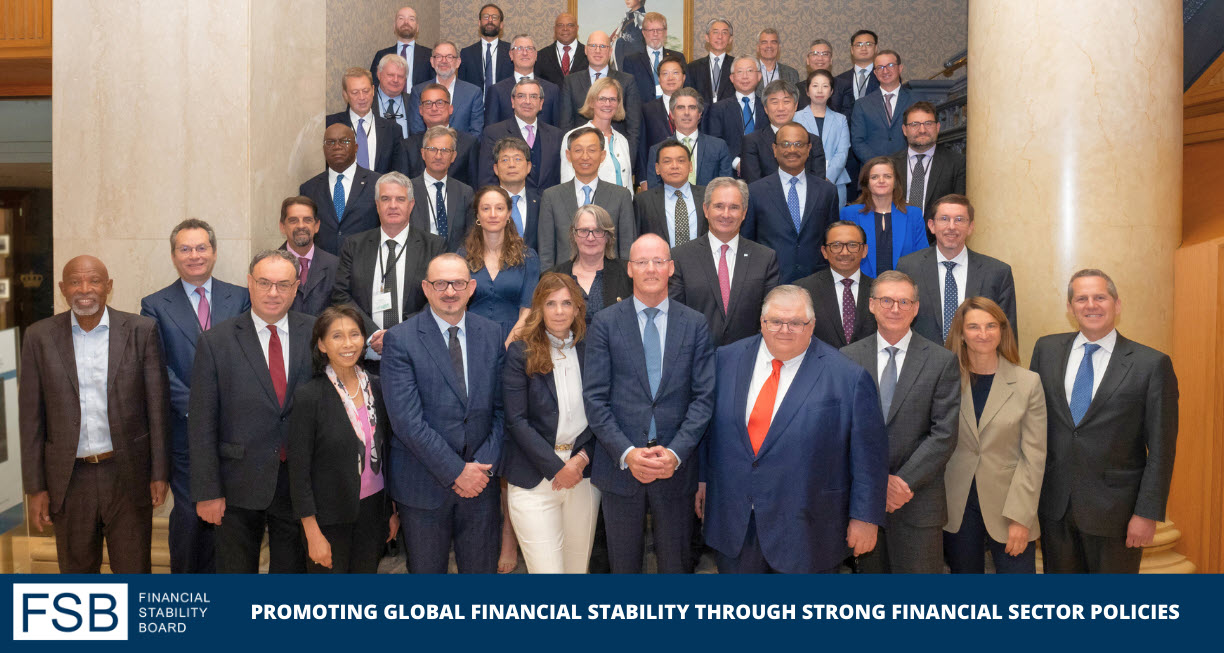
The views expressed in these remarks are those of the speaker in his role as FSB Chair and do not necessarily reflect those of the FSB or its members.
The publication of the Financial Stability Board (FSB) Annual Report – presented this year in an updated format – provides an opportunity to reflect on an eventful year, including my first nine months as Chair. 2025 was a year of notable change for the FSB, with new leadership across some of our Standing Committees and the continued evolution of our priorities. Most significantly, it has been a year shaped by profound shifts in the global landscape, underscoring the critical importance of the FSB’s work.
The world is becoming increasingly fragmented and unpredictable. Multilateralism is being tested. Yet, despite these challenges, the financial sector has demonstrated resilience. The shocks of recent years have not undermined financial stability, a testament to the reforms implemented since the global financial crisis (GFC). However, the financial system itself is transforming, presenting new and complex challenges. Developments such as the rapid growth of private finance, increasing use of leverage in core markets, expansion of digital assets, and advancements in artificial intelligence (AI) are reshaping the financial landscape. At the same time, the global economy faces longer-term structural challenges, including slowing productivity growth and demographic pressures. These trends highlight the importance of openness and innovation, while financial stability remains an essential pre-condition for unlocking these opportunities and achieving sustainable economic growth.
Despite the challenging global environment and against a backdrop of rising vulnerabilities, the FSB has continued to deliver on its mandate.
Since its creation, the FSB has worked to address the fault lines exposed by the GFC, addressing immediate risks while laying the groundwork for a more resilient financial system. Much of this work has been advanced through the implementation of G20 reforms. As this Annual Report shows, the FSB continued to deliver on many fronts in 2025. We finalised recommendations to address leverage in nonbank financial intermediation, assessed the implementation of crypto-asset and stablecoin recommendations, and examined vulnerabilities related to the use of AI in the financial sector. Other questions remain. How can we accelerate progress in cross-border payments? What data do we need to manage cross-border risks and allow regulators and markets to prudently navigate and manage new risks? How can we ensure that our surveillance frameworks are robust enough to keep pace with a rapidly evolving financial system? These and other key questions will guide the next stages of our work.
The strategic review of implementation of G20 reforms that we launched in 2025 has revealed a slowdown in implementation. While cooperation among jurisdictions has strengthened since the GFC, full, timely, and consistent implementation across the broad range of reforms has not yet been achieved. The next phase of the review will focus on identifying the root causes of this slowdown and finding ways to promote implementation more effectively. Enhancing the FSB’s implementation monitoring framework will be a key priority, particularly as member jurisdictions modernise their supervisory and regulatory frameworks to address emerging risks and opportunities.
As we look ahead, we must not be afraid to challenge ourselves. The FSB must remain agile, continually adapting its ways of working to ensure it remains fit for purpose in a rapidly changing world. Encouragingly, despite increased fragmentation and polarisation, FSB members continue to find common ground, displaying their commitment to tackle shared challenges. This commitment is critical because financial stability is a global public good. The risks we face do not respect borders. Multilateralism remains the only way we can effectively address them.
We have reason to be optimistic. To paraphrase Mark Twain: reports of multilateralism’s demise have been greatly exaggerated. Building on the FSB’s tradition of rigour and pragmatism, we will continue to support our members and the US G20 Presidency in the year ahead to keep the financial system stable and resilient.
Facts Only
The Financial Stability Board (FSB) published its Annual Report.
The report discusses changes in the global landscape and the FSB's priorities.
Key issues include private finance growth, leverage use, digital assets expansion, and AI advancements.
The FSB has been focusing on addressing vulnerabilities in these areas.
The report mentions a slowdown in the implementation of G20 reforms.
The FSB addressed issues such as leverage in nonbank financial intermediation, crypto-assets, stablecoins, and AI.
Executive Summary
Full Take
Analyzing the article from a skeptical perspective, we find that it presents an objective report on the FSB's Annual Report and its focus areas for the year. The article acknowledges the challenges facing the financial sector, such as fragmentation, increased use of leverage, and the expansion of digital assets, while emphasizing the importance of financial stability for sustainable economic growth. However, it also highlights concerns about the slow implementation of G20 reforms, suggesting a need for enhanced monitoring frameworks to address emerging risks and opportunities.
Patterns detected: none
Root cause: The narrative reflects the ongoing efforts of the FSB to maintain financial stability in an evolving global landscape while addressing challenges such as slow implementation and emerging risks.
Implications: The focus on addressing vulnerabilities in areas like private finance, leverage use, digital assets expansion, and AI underscores the importance of adaptability in financial regulation. The slow implementation of G20 reforms could potentially undermine the resilience of the financial system.
Bridge questions: What factors are contributing to the slow implementation of G20 reforms? How can we ensure that regulatory frameworks remain effective in addressing emerging risks and opportunities?
Sentinel — Human
This article appears to be likely human-written. The text exhibits slight variation in sentence length, coherent argument with passion, and no matching template pattern, but the overall structure is consistent with a human journalist's writing style.