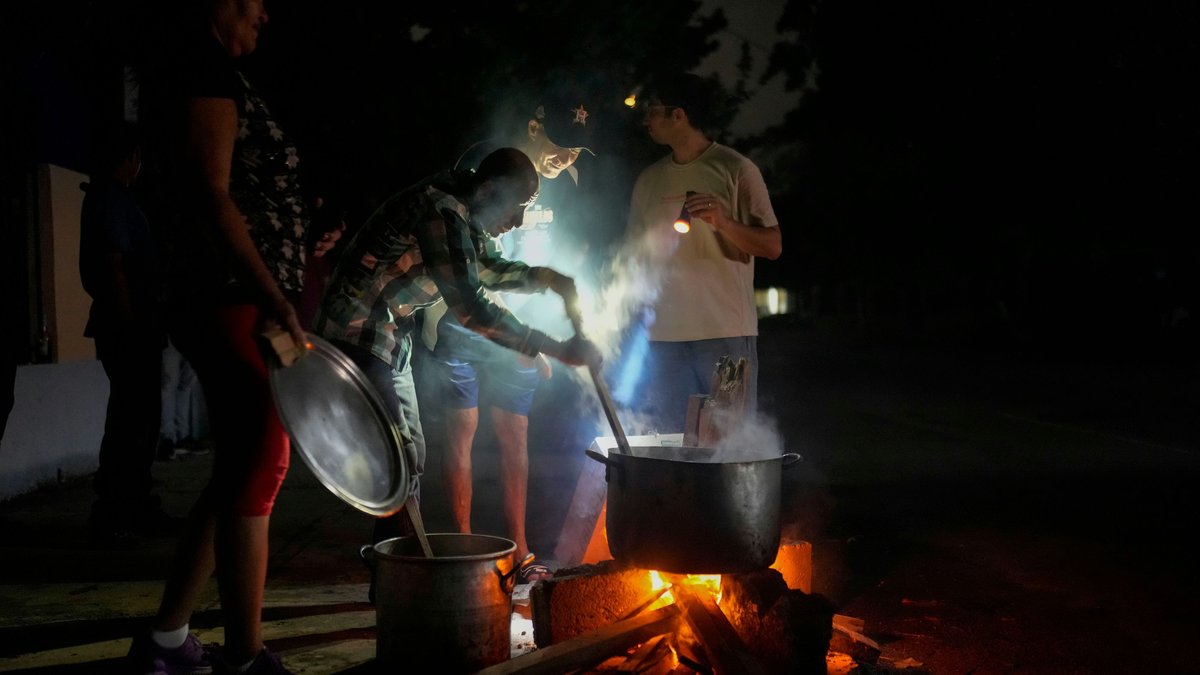
Mexico City, Mexico – Cubans experienced a nationwide blackout on Monday due to a collapse of the national grid, leaving nearly 10 million people without electricity.
For years, the blackouts have been a constant presence in life on the island. The situation worsened by the oil embargo imposed by U.S. President Donald Trump in January and infrastructure that has been underfunded for decades.
“There has been a total disconnection of the National Electric System. The causes are being investigated”, announced the National Electric Union – UNE which stands for its Spanish acronym – on social media.
Hours after the collapse the organization published that some areas were recovering. However, two days after the national power cut, some parts of the country remained disconnected from the grid.
Cuban President Miguel Díaz-Canel blamed the blackout on U.S. policies and praised the “heroic” role of electrical workers during the crisis.
“While the U.S. tries to provoke social unrest by suffocating #Cuba through a fuel blockade, the UNE is mobilizing to fix the collapse of the electrical system,” posted the Cuban leader on X.
“Even before the collapse, we averaged two hours of electricity a day. After Monday, we went nearly 48 straight hours with no service, then got one hour, and now we’re back to the same,” Maikel Jordan Díaz Rodríguez, a Havana resident, told Latin America Reports.
Díaz Rodríguez also said there have been long periods of time with no water service – a common problem in some neighborhoods in Cuba, where water service is interrupted after power cuts.
The collapse is the third one this year and the eighth since October 2025.
Cuba’s energy crisis aggravated earlier this year after a U.S. military operation captured Venezuelan President Nicolás Maduro.
The new government led by Delcy Rodríguez interrupted the flow of Venezuelan oil to the island, eliminating one of its main fuel sources.
Domestic production covers only about 40% of Cuba’s energy needs.
A Russian tanker briefly eased the shortage in March, unloading roughly 730,000 barrels of crude, but that supply ran out in May, as Díaz-Canel acknowledged in a speech.
Featured Image: Cubans cook by flashlight after a previous blackout
Image Credit: Ramon Espinosa via Heute.at
License: Creative Commons Licenses
Sentinel — Human
The text reads like standard journalistic reporting that synthesizes verifiable facts and official statements about a complex political and infrastructure crisis.