Tenzin Nyidon
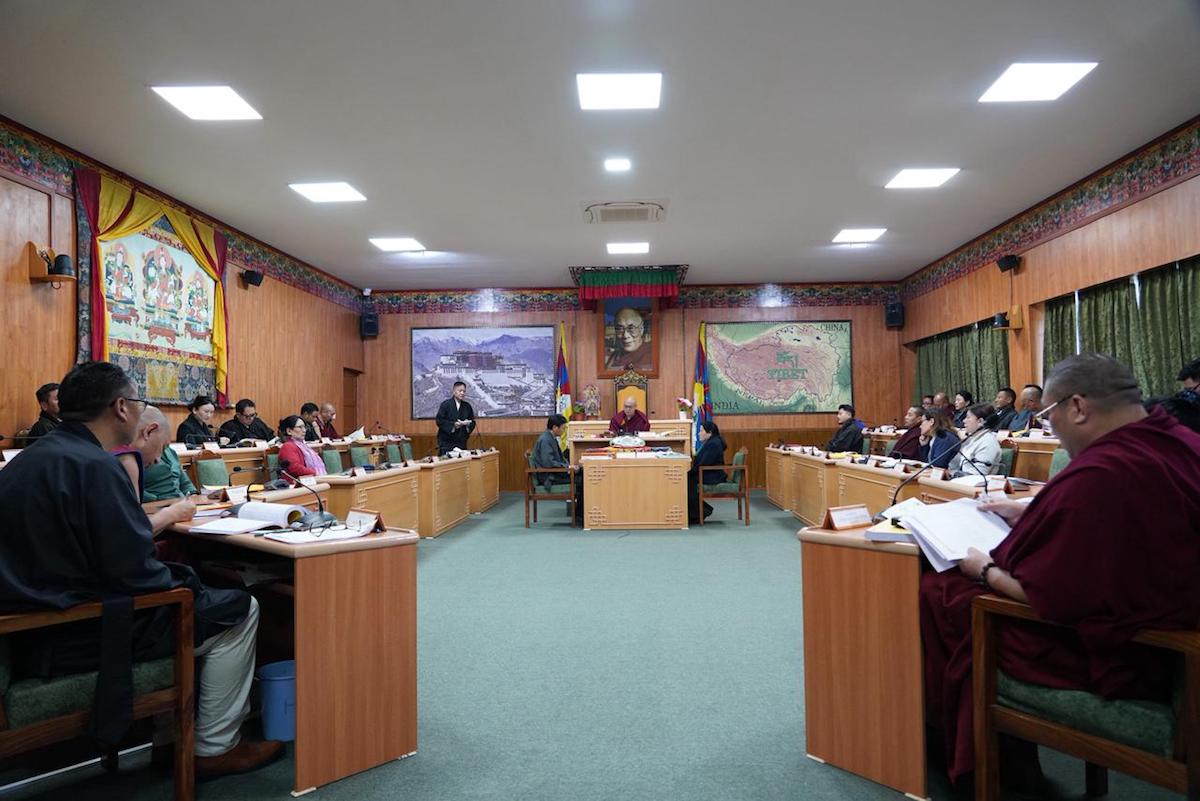
DHARAMSHALA, March 25: The 17th Tibetan Parliament-in-Exile continued deliberations on the proposed budget for the Department of Health on the ninth day of its ongoing 11th session on Wednesday, with discussions centered on the growing needs of individuals with disabilities within the Tibetan community.
Addressing the house, the Central Tibetan Administration’s President Penpa Tsering and the incumbent Health Minister noted that recent data collected from two organizations recorded more than 300 individuals with disabilities within the community. Despite this, existing facilities remain limited. The primary institution, the Ngoenga School for Tibetan Children with Special Needs in Dekyiling Tibetan Settlement, currently accommodates only around 40 to 50 students. Other centers, including Nyingtob Ling near Dharamshala and Karuna in Bylakuppe Tibetan Settlement, are also operating at full capacity, making it increasingly challenging to admit additional individuals.
In response to these challenges, the CTA President stated that the Department of Health has initiated the development of a new and significantly larger facility in Hunsur Tibetan Settlement, Karnataka. Built on approximately 11 acres of land allocated from the settlement, the project is being supported by a Switzerland-based organization that focuses particularly on the care of individuals aged 18 and above with physical or mental health conditions. He noted that the first phase of construction is currently underway, although it requires substantial funding.
He further explained that the proposed Hunsur facility is intended to provide a more spacious and better-equipped environment, addressing the issue of overcrowding in existing institutions. Once completed, it is expected to accommodate adult individuals with special needs, thereby easing pressure on the Ngoenga School and allowing for the admission of younger children.
President Tsering also pointed out that there is currently only one trained clinical psychologist serving the Tibetan community in Bylakuppe. He stressed the importance of encouraging Tibetan youth to pursue education and professional training in mental health and special needs care, particularly as the Hunsur facility is expected to take one to two years to become fully operational. He added that the Department of Health has been entrusted with strengthening coordination and building capacity in this sector.
During the session, Parliamentarian Youdon Aukatsang raised concerns regarding the current approach to care, noting that individuals with physical disabilities and those with intellectual or developmental conditions are often housed together. She stressed that these groups have distinct needs and should ideally be managed separately to ensure more effective care and support.
MP Youdon Aukatsang also highlighted the importance of adopting appropriate and non-stigmatizing terminology when referring to individuals with intellectual or developmental conditions. She observed that within the Tibetan community, awareness of such conditions is increasing, but social stigma and reluctance among some families to openly acknowledge these challenges remain significant issues.
Welcoming the Hunsur initiative, she described it as a positive and necessary step forward, while also acknowledging the contributions of existing institutions such as Ngoenga School and privately run initiatives like Karuna and Nyingtob Ling. She further called for greater community support and engagement to sustain and expand such efforts.
In response, President Tsering emphasized the importance of clearly categorizing different types of disabilities—distinguishing between physical and mental health conditions—to enable better planning and service delivery. He also stressed the need for a compassionate and inclusive approach, emphasising that such conditions should be recognized as medical issues rather than sources of stigma. He further added that families with financial means should be encouraged to contribute toward care costs, which would help ensure the long-term sustainability of these facilities and improve the quality of services.
Clarifying the current arrangements, he stated that individuals above the age of 18 from Ngoenga School are being transitioned to the Hunsur project. “This will help create space at the Dekyiling-based school for younger students, allowing greater access for younger children in need of specialized care,” the CTA President said.
Facts Only
The Department of Health is developing a new facility in Hunsur Tibetan Settlement, Karnataka
The project is supported by a Switzerland-based organization
The facility will accommodate adult individuals with special needs
The first phase of construction is currently underway
Funding for the project is required
There is only one trained clinical psychologist serving the Tibetan community in Bylakuppe
Ngoenga School for Tibetan Children with Special Needs accommodates around 40 to 50 students
Other centers like Nyingtob Ling and Karuna are operating at full capacity
Executive Summary
Full Take
The article highlights the need for improved facilities and services for individuals with disabilities within the Tibetan community, as existing institutions struggle to accommodate the growing number of people in need. The proposed Hunsur facility aims to address this issue by providing a larger and better-equipped environment for adult individuals with special needs. However, concerns have been raised about the segregation of physical and intellectual disabilities, and the importance of using appropriate and non-stigmatizing terminology when referring to individuals with intellectual or developmental conditions has been emphasized. The article also underscores the need for more mental health professionals within the Tibetan community, particularly as the Hunsur facility is expected to take one to two years to become fully operational.
Patterns detected: ARC-0024 Ambiguity (the article does not clarify the specific needs of individuals with intellectual or developmental disabilities and how they will be met in the proposed Hunsur facility), ARC-0039 Overemphasis on Solutions (the article focuses mainly on the proposed solution without discussing the root causes of the problem).
Sentinel — Human
This analysis suggests that the text is likely human-written. The style exhibits idiosyncratic emphasis, a personal voice, and erratic sentence length variance, which are indicative of human authorship. There are no clear signs of synthetic manipulation or fabrication.