Democrats from both chambers sent a letter questioning the impacts to the Director of National Intelligence as Congress faces a deadline to renew FISA Section 702, which allows warrantless collection of foreigners’ communications overseas.
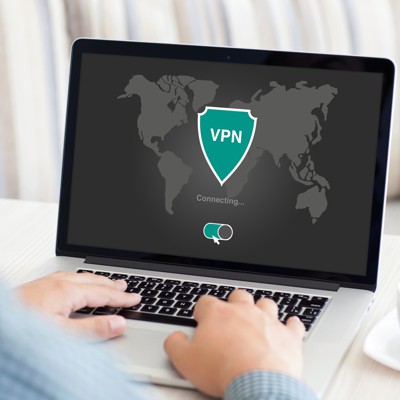
Senate and House Democrats asked Director of National Intelligence Tulsi Gabbard on Thursday to clarify whether the use of virtual private networks could affect Americans’ protections against warrantless surveillance authorities.
The letter — signed by Sens. Ron Wyden, D-Ore., Alex Padilla, D-Calif., Ed. Markey, D-Mass., and Elizabeth Warren, D-Mass., alongside Reps. Sara Jacobs, D-Calif. and Pramila Jayapal, D-Wash. — argues VPN use may complicate how intelligence agencies assess a user’s location, which in turn can shape the legal protections applied to their communications.
Under domestic surveillance law, Americans are generally afforded stronger protections than foreigners overseas, including through requirements for court-approved warrants before their communications are lawfully intercepted. But VPNs — which route traffic through private servers to mask device locations — can obscure where a user is truly based. Under U.S. surveillance rules, users with unknown locations may be treated as foreigners, potentially altering the legal protections applied to their communications, the lawmakers say.
The letter points to provisions underpinning FISA Section 702 — which allows warrantless surveillance of foreigners overseas — and Executive Order 12333 as evidence that users with unknown locations may be treated as foreigners, affecting the protections applied to their communications.
“Under both Section 702 and EO 12333, the government is obligated to seek to determine the non-U.S. person status and location of its targets. Nonetheless, the federal government has taken the position that communications whose source remains unknown are treated as foreign, and thus subject to few privacy protections,” the letter says.
It adds: “While Americans should be warned of these risks, they should also be told if these VPN services, which are advertised as a privacy protection, including by elements of the federal government, could, in fact, negatively impact their rights against U.S. government surveillance.”
The letter comes as Congress faces an April 20 deadline to renew FISA 702, which expires unless renewed by lawmakers. The controversial law is widely deemed a powerful spying authority by intelligence professionals, but the collection mechanisms permit incidental collection of U.S. person communications, which leave the door open to unauthorized queries that privacy advocates say circumvent the Fourth Amendment.
Nextgov/FCW has asked a Gabbard spokesperson for comment.
President Donald Trump said in a Truth Social post this week that he supports a clean, 18-month extension of the 702 statute.
“The fact is, whether you like it or not, it is extremely important to our military,” he said, adding that he has spoken to military leaders and “they consider it vital.”
The Congressional Progressive Caucus recently came out against renewing FISA Section 702, its strongest stance yet, binding its 98 members — nearly a quarter of the House — against a clean reauthorization and complicating Republican efforts to secure enough votes.
Lawmakers’ concerns about Trump-era immigration enforcement and affiliated Fourth Amendment compliance are weighing on the reauthorization fight for 702, congressional aides previously told Nextgov/FCW.
“While Donald Trump and Stephen Miller are showing unprecedented disregard for the basic Constitutional rights of Americans, the last thing we should be doing is handing them massive surveillance powers they will abuse.,” Rep. Greg Casar, D-Texas, the CPC’s chair, said in an X post last week.
Facts Only
Senators Ron Wyden, Alex Padilla, Ed Markey, Elizabeth Warren, Sara Jacobs, and Pramila Jayapal have sent a letter to Tulsi Gabbard, Director of National Intelligence.
The letter concerns the impact of Virtual Private Networks (VPNs) on Americans' privacy protections under FISA Section 702.
FISA Section 702 allows warrantless surveillance of foreigners overseas.
Congress faces an April 20 deadline to renew FISA Section 702.
President Donald Trump supports a clean, 18-month extension of the 702 statute.
Executive Summary
Full Take
The lawmakers' letter highlights potential complications arising from VPN use in relation to U.S. surveillance rules. By routing traffic through private servers, VPNs can obscure users' locations, potentially leading to the application of less stringent privacy protections. This raises questions about Americans' rights against warrantless surveillance and the transparency of these practices. The letter also emphasizes ongoing debate over FISA Section 702, with some lawmakers pushing for its renewal and others expressing concerns about its impact on privacy and civil liberties.
Patterns detected: ARC-0043 Motte-and-Bailey (the letter raises questions about VPNs' impact on surveillance while also supporting their use), ARC-0024 Ambiguity (the letter does not provide clear answers or solutions, but instead seeks clarification).
The ongoing debate over FISA Section 702 underscores the importance of understanding the complex interplay between privacy, national security, and technology. As more Americans turn to VPNs for privacy protection, it is crucial to examine the potential implications of these tools within the context of U.S. surveillance laws. This situation invites further inquiry into the extent to which users should be informed about how their privacy protections may be affected by using VPN services, and whether there are measures that could be taken to ensure greater transparency and accountability in surveillance practices.
Sentinel — Human
The article shows signs of likely human authorship. While there are some stylometric signals that suggest potential automation, the coherence, coordination, and fabrication indicators point to a human writer.