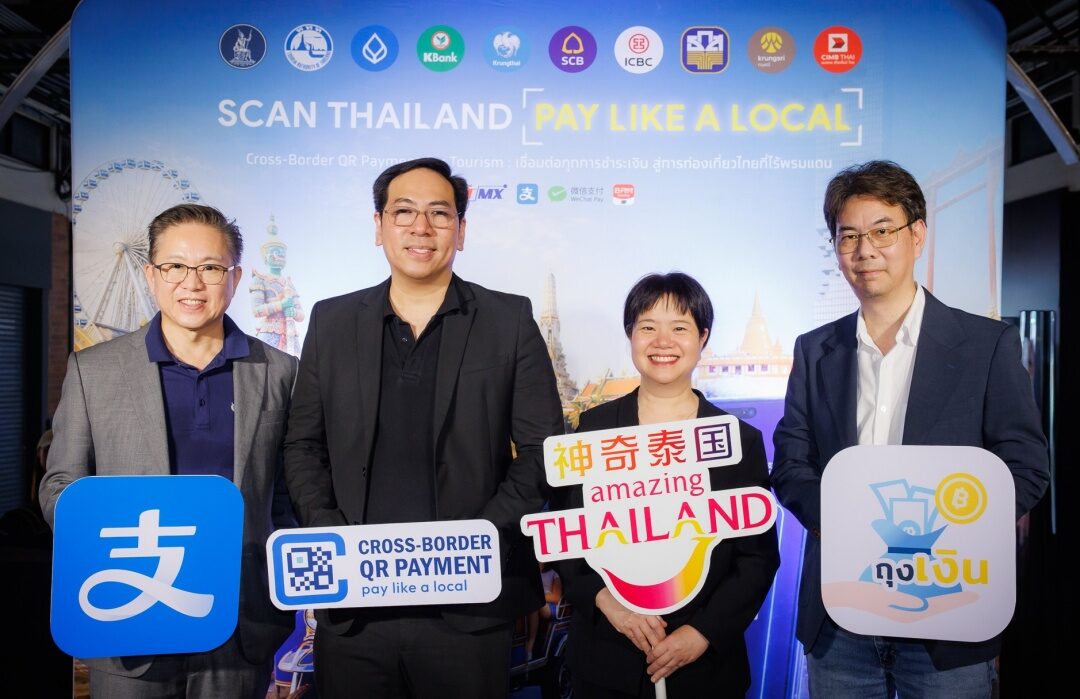
กรุงไทย จับมือ ธปท. และ ททท. จัดงาน Scan Thailand Pay Like A Local ชูแอปฯ “ถุงเงิน” เชื่อมต่อทุกการชำระเงิน สู่การท่องเที่ยวไร้พรมแดน
ธนาคารกรุงไทย ร่วมกับ ธนาคารแห่งประเทศไทย (ธปท.) และการท่องเที่ยวแห่งประเทศไทย (ททท.) จัดกิจกรรม “Scan Thailand Pay Like A Local: Cross-border QR Payment for Tourism เชื่อมต่อทุกการชำระเงิน สู่การท่องเที่ยวที่ไร้พรมแดน” สนับสนุนร้านค้าไทยใช้ QR Payment ร้านค้า
เพื่อยกระดับประสบการณ์การใช้จ่ายของนักท่องเที่ยวต่างชาติในประเทศไทย ภายใต้แนวคิด “Pay Like a Local” หรือ “จ่ายเหมือนคนท้องถิ่น” ให้สามารถสแกนชำระค่าสินค้าและบริการผ่าน Mobile Banking และ e-Wallet ได้อย่างสะดวก ปลอดภัย และไร้รอยต่อ
โดยมี นายกิติพงศ์ มุตตามระ ผู้ช่วยกรรมการผู้จัดการใหญ่ ธนาคารกรุงไทย ร่วมเป็นวิทยากรให้ความรู้เรื่อง QR Code ร้านค้า พร้อมแนะนำประโยชน์และการใช้งาน ณ เอเชียทีค เดอะ ริเวอร์ฟร้อนท์
ภายในงาน ธนาคารได้ร่วมออกบูธให้คำปรึกษาแก่ผู้ประกอบการที่สนใจสมัครใช้งานแอปพลิเคชัน “ถุงเงิน” โซลูชันรับชำระเงินดิจิทัลที่รองรับทั้งการรับชำระเงินภายในประเทศและ Cross-Border QR Payment ช่วยให้ร้านค้ารับชำระเงินจากนักท่องเที่ยวต่างชาติได้หลายประเทศ
อาทิ จีน สิงคโปร์ มาเลเซีย อินโดนีเซีย เวียดนาม เกาหลีใต้ ฮ่องกง สปป.ลาว และกัมพูชา อีกทั้ง สามารถเข้าร่วมโครงการ “ไทยช่วยไทยพลัส” และโครงการสนับสนุนจากภาครัฐในอนาคต ช่วยขยายฐานลูกค้า เพิ่มโอกาสทางธุรกิจ และบริหารร้านค้าได้อย่างมืออาชีพ
เนื่องในโอกาสฉลอง 60 ปีกรุงไทย “ทุกก้าว เพื่อล้านอนาคต” ธนาคารจัดแคมเปญพิเศษ สำหรับร้านค้าใหม่ที่สมัครแอปพลิเคชัน “ถุงเงิน” และมียอดรับชำระจากนักท่องเที่ยวต่างชาติ ครบ 10 รายการขึ้นไป (ขั้นต่ำ 50 บาท/รายการ) รับฟรี! บัตรกำนัลบิ๊กซี มูลค่า 100 บาท ตั้งแต่วันนี้-31 สิงหาคม 2569 ตามเงื่อนไขที่ธนาคารกำหนด
ผู้ประกอบการที่สนใจ สมัครเป็นร้านค้า “ถุงเงิน” ได้ที่ธนาคารกรุงไทยทุกสาขา สอบถามรายละเอียดเพิ่มเติมที่ Krungthai Contact Center โทร. 02-111-1111 หรือศึกษาข้อมูลเพิ่มเติมที่เว็บไซต์ https://krungthai.com/link/qrcross-promo2026
Facts Only
* Krungthai Bank, the Bank of Thailand (BOT), and the Tourism Authority of Thailand (TAT) organized the “Scan Thailand Pay Like A Local” event.
* The event promoted Cross-border QR Payment for tourism connectivity.
* The initiative sought to allow Thai merchants to use QR Payment and e-Wallets to enhance the spending experience for foreign tourists under the theme “Pay Like a Local.”
* Krungthai Bank offered consultation on the “ถุงเงิน” application, a digital payment solution supporting in-country and Cross-Border QR Payments.
* The “ถุงเงิน” solution supports payments from multiple countries including China, Singapore, Malaysia, Indonesia, Vietnam, South Korea, Hong Kong, Laos, and Cambodia.
* A special campaign offered Big C vouchers to new merchants who registered for the “ถุงเงิน” application and received at least 10 international payments of 50 Baht or more by August 31, 2569.
* Interested operators can apply as a “ถุงเงิน” merchant at Krungthai Bank branches.
Executive Summary
Full Take
This initiative connects financial infrastructure directly to the flow of cross-border tourism, positioning digital payment solutions as a critical tool for economic integration. The framework of “Pay Like a Local” leverages convenience and familiarity to reduce friction in international transactions, suggesting that ease of payment is a prerequisite for expanding borderless travel economies. The emphasis on "Cross-Border QR Payment" highlights how financial technology can bypass traditional banking bottlenecks, facilitating direct monetary exchange between tourists and local merchants across diverse geopolitical boundaries.
The structured incentive system—offering vouchers to merchants who achieve specific transaction volume—introduces commercial pressures into the adoption process. This creates a feedback loop where operational efficiency (using "ถุงเงิน") is incentivized through tangible rewards, potentially steering small business owners toward digital financial platforms that facilitate international commerce. The pattern suggests an alignment between governmental tourism promotion and private sector financial innovation to achieve economic objectives, raising questions about the balance between promoting local economic participation and managing consumer data in a cross-border context.
What assumptions underpin the framing of payments as "local" versus "cross-border"? Does this model implicitly rely on tourists prioritizing local economic engagement over international spending habits? Furthermore, how does linking these incentives to specific national tourism goals affect the autonomy and profit margins of small business operators engaging in these transactions?
Sentinel — Human
This text exhibits strong signs of being an official press release, characterized by specific details and institutional language, suggesting human journalistic origin rather than synthetic generation.