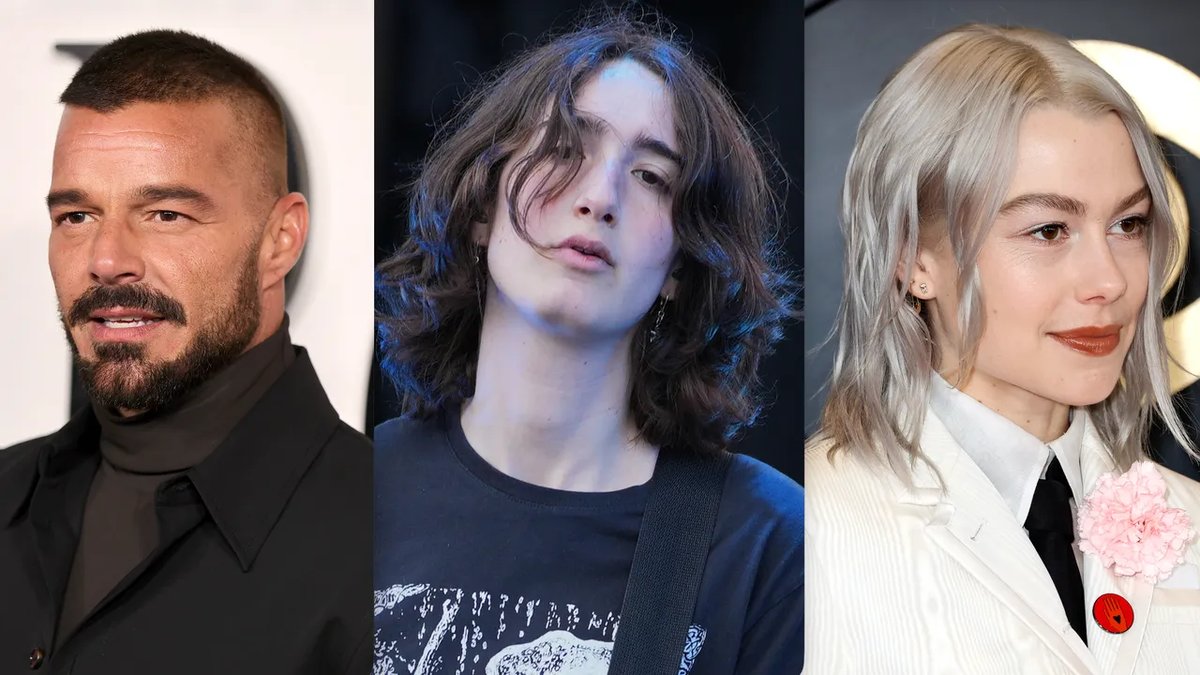
Madison Square Garden’s current on-site technology includes cameras that scan for facial recognition, allowing the arena to track every person who enters the building. But according to a recent Wired report, the historic New York City venue is keeping a far more extensive database on celebrities than previously known, with entries noting a supposed risk level, and, in some cases, an individual’s sexual orientation and racial identity. Among those listed are Phoebe Bridgers, Freddie Gibbs, and Geese’s Emily Green.
Wired journalists Noah Shachtman and Maddy Varner combed through Madison Square Garden documents that were published last month by the criminal hacker collective ShinyHunters and first covered by 404 Media. They found 39,539 entries in the Garden’s “talent” database, including politicians, athletes, business figures, and more.
Of the nearly 40,000 people in the database, 93 have been marked as “LGBTQIA,” such as Bridgers, Green, and Ricky Martin. Some celebrities’ race and gender identity were also noted, but not everyone’s was labeled. Pitchfork has reached out to representatives for Madison Square Garden and these artists for comment.
Roughly 400 celebrities were also reportedly assigned a “risk” score. According to one source who spoke to Wired, Madison Square Garden’s security assigns a score if the person has “done something in the publicity world, the social media world, that has caught the attention of the wrong people.” Those deemed a “low risk” include Ice Spice, Selena Gomez, and Benson Boone, while a “medium risk” tag has been assigned to Morgan Wallen, Lily Allen, and Jadakiss. Then there’s the “high risk” label, which is used on Gibbs, Lil Jon, DaBaby, and A Boogie Wit da Hoodie, among others.
Per Wired, Madison Square Garden’s security actively searches the internet and social media for anything threatening or negative said by its guests, especially celebrities and VIPs. They keep a particularly watchful eye for anything negative about James Dolan, the executive chairman and chief executive officer of Madison Square Garden Sports and Entertainment. Rap producer and longtime Knicks fan DJ Pete Rock is currently marked as “DO NOT HOST” in the database—which Rock believes is due to his call for a boycott of Dolan after former Knicks enforcer Charles Oakley was forcibly escorted from the venue. “You can’t stop me from being a Knick fan, but your controlling behavior towards people is very unprofessional,” Rock told Wired.
The surveillance practices implemented by Dolan are also enforced at his company’s other venues: The Sphere in Las Vegas and Radio City Music Hall in New York City. Madison Square Garden is currently facing several class-action lawsuits that claim this private data leak was the result of Dolan’s increasing surveillance. People whose information may have been compromised are encouraged to change their passwords, enable two-factor authentication, and contact each credit bureau to freeze their credit.
Facts Only
* Madison Square Garden employs facial recognition cameras to track building entry.
* A database within the venue contains 39,539 entries for "talent."
* The database includes entries for politicians, athletes, and business figures.
* Ninety-three entries in the database are marked as "LGBTQIA."
* Approximately 400 celebrities were assigned a "risk" score.
* Risk scores are based on actions in the publicity or social media world.
* Celebrities listed include Phoebe Bridgers, Freddie Gibbs, and Emily Green.
* Certain individuals received "low risk" status (e.g., Ice Spice, Selena Gomez) and "high risk" status (e.g., Lil Jon, DaBaby).
* Security searches the internet and social media for negative content about guests.
* DJ Pete Rock is marked as "DO NOT HOST."
* Lawsuits claim this data leak resulted from James Dolan's surveillance.
Executive Summary
Full Take
Sentinel — Human
The text appears to be a journalistic synthesis of leaked information, presenting facts and context through an investigative lens rather than purely synthesized narrative.