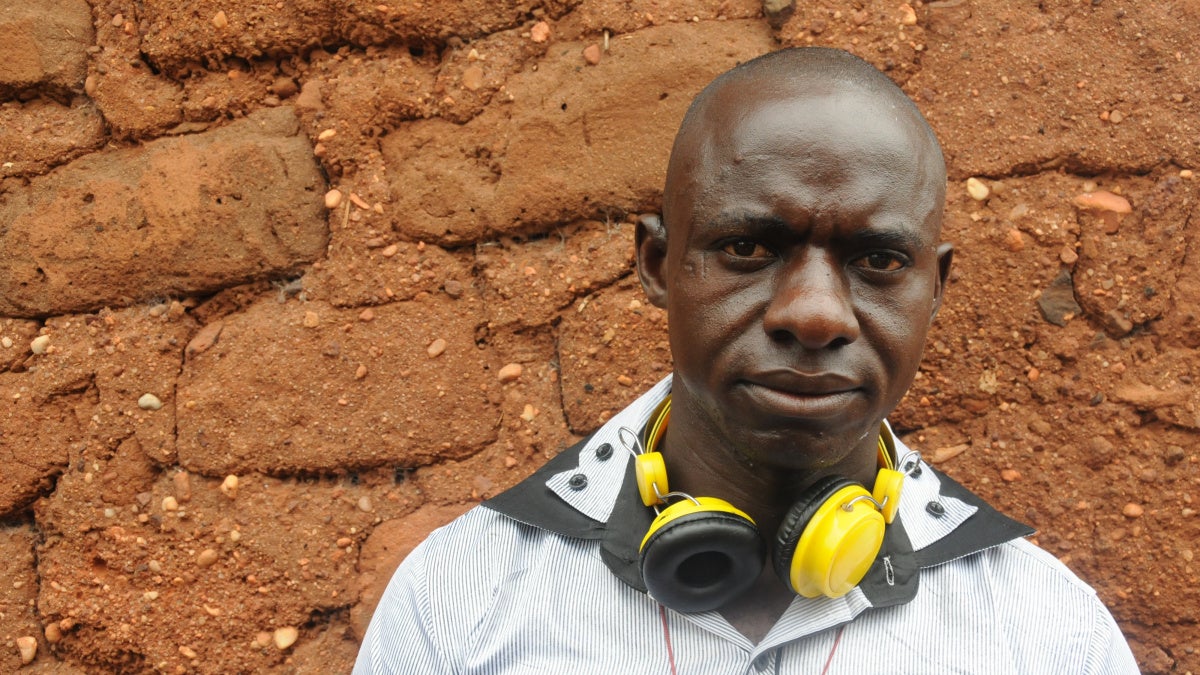
Earlier this week the Special Criminal Court in the Central African Republic (CAR) announced that Maturin Kombo, who was in the court’s custody charged with crimes committed in 2014, died in hospital in Bangui.
Twelve years ago, as CAR was in the throes of a civil war, I arrived in the village of Guen, in the southwest of the country, to conduct research. While there, we confirmed that in early February 2014, anti-balaka forces had attacked Muslim civilians, killing at least 72 men and boys, some as young as nine.
I will never forget a conversation I had with the father of 10-year-old Oumarou Bouba. “As we were running away, he was shot,” he told me. “He fell down, but they finished him off with a machete.”
Anti-balaka militias rose up across CAR to fight the Seleka, a predominantly Muslim coalition that took control of the country in 2013. They began to target Muslim civilians, particularly in the west, equating them with Seleka or their sympathizers.
At the time, we met with Maturin Kombo an anti-balaka leader who was in charge in Guen. He denied the massacre occurred but was open about his disgust towards Muslims. He was a brazen and proud leader who thought he could evade justice.
Then the transitional government created the Special Criminal Court (SCC) to help curb widespread impunity. The court is mandated to investigate and prosecute grave crimes committed during the country’s armed conflicts since 2003 and is staffed by both international and national judges and prosecutors. It began its work in 2018 and Kombo was arrested in 2022.
The trial against him and six other co-defendants, including fellow anti-balaka leader Edmond Beïna, for the atrocities in Guen is ongoing.
The fact that Kombo will not see the end of the trial is a loss for survivors and relatives of victims of the massacres. But his death also highlights the continued need for justice, for the crimes committed in Guen and elsewhere in the country, and the key role the SCC plays in delivering it. The Central African government and the court’s international partners should step up efforts to ensure the court has the resources it needs to continue its essential work and can deliver on its crucial mandate.
Kombo may have died before the end of his trial, but the ongoing proceedings against his co-defendants provide hope that justice, no matter how long it takes, will be served.
Facts Only
Maturin Kombo, an anti-balaka leader, died in hospital custody in Bangui, Central African Republic (CAR).
Kombo was charged with crimes committed in 2014 and was in the custody of the Special Criminal Court (SCC).
In February 2014, anti-balaka forces attacked Muslim civilians in Guen, a village in southwestern CAR.
At least 72 Muslim men and boys, some as young as nine, were killed in the attack.
A 10-year-old boy, Oumarou Bouba, was shot and killed with a machete during the attack.
Anti-balaka militias emerged to fight the Seleka, a predominantly Muslim coalition that took control of CAR in 2013.
Maturin Kombo was an anti-balaka leader in Guen and denied the massacre but expressed hostility toward Muslims.
The SCC was created by the transitional government to investigate and prosecute grave crimes committed since 2003.
The SCC began operations in 2018 and is staffed by international and national judges and prosecutors.
Kombo was arrested in 2022 and was on trial with six co-defendants, including Edmond Beïna, another anti-balaka leader.
The trial for the Guen atrocities is ongoing.
Kombo's death means he will not face the conclusion of his trial.
Executive Summary
In February 2014, during the Central African Republic's civil war, anti-balaka militias attacked Muslim civilians in the village of Guen, killing at least 72 men and boys, including a 10-year-old child. The attack was part of a broader conflict where anti-balaka forces, opposing the predominantly Muslim Seleka coalition, targeted Muslim civilians. Maturin Kombo, an anti-balaka leader in Guen, denied the massacre but expressed open hostility toward Muslims. In 2018, the Special Criminal Court (SCC) was established to prosecute grave crimes committed since 2003, and Kombo was arrested in 2022. His trial, alongside six co-defendants, including fellow anti-balaka leader Edmond Beïna, was ongoing when he died in custody in 2024. While Kombo's death prevents his trial from concluding, the proceedings against his co-defendants continue, underscoring the SCC's role in addressing impunity. The court, staffed by international and national judges, faces resource challenges but remains critical for delivering justice to survivors and victims' families.
The situation highlights the persistent need for accountability in CAR, where cycles of violence have left deep scars. The SCC's work is essential, but its effectiveness depends on sustained support from the Central African government and international partners. Kombo's death is a setback for survivors seeking justice, yet the ongoing trial offers a measure of hope that accountability remains possible, even years after the crimes were committed.
Full Take
The strongest version of this narrative centers on the pursuit of justice in the Central African Republic, where systemic impunity has long shielded perpetrators of atrocities. The Special Criminal Court (SCC) represents a rare institutional effort to break this cycle, and the ongoing trial of anti-balaka leaders—despite Kombo's death—signals progress. The article rightly highlights the emotional weight of survivors' testimonies, such as the father of Oumarou Bouba, which humanizes the cost of violence. It also acknowledges the SCC's fragility, dependent on international support and resources, framing justice as both a moral imperative and a practical challenge.
Pattern scan: The narrative avoids overt manipulation, but it leans into emotional resonance (e.g., the child's killing) to underscore the stakes of justice. This is not inherently exploitative, as the details are factual and relevant, but it risks reinforcing a binary framing of "victims vs. perpetrators" without deeper exploration of the conflict's root causes. The focus on the SCC's role is constructive, though it assumes the court's legitimacy without critiquing potential limitations or biases in its hybrid international-national structure.
Root cause: The paradigm here is transitional justice as a tool for post-conflict reconciliation. The unstated assumption is that prosecutions alone can deter future violence, yet CAR's history suggests deeper ethnic and political divisions persist. The SCC's mandate echoes post-genocide tribunals (e.g., Rwanda, Yugoslavia), but its success hinges on whether it can address not just individual guilt but also the systemic conditions that enabled the violence.
Implications: For survivors, the SCC offers a path to recognition and reparations, but delays and resource gaps risk re-traumatization. The international community's role is double-edged: necessary for funding but potentially undermining local ownership. Kombo's death may weaken the trial's symbolic impact, yet the continuation of proceedings against co-defendants could still set a precedent.
Bridge questions: How might the SCC balance retributive justice with restorative approaches to heal communal divides? What role do local perceptions of the court play in its long-term legitimacy? Would broader truth-and-reconciliation efforts complement prosecutions, or are they mutually exclusive?
Counterstrike scan: A bad actor pushing this narrative might amplify the emotional details to stoke outrage while downplaying the SCC's challenges, framing it as a panacea. The actual content avoids this, presenting the SCC's work as necessary but precarious. No structural alignment with manipulation patterns is detected.
Patterns detected: none
Sentinel — Human
The article exhibits strong human authorship signals, including personal narrative, emotional depth, and organic structure, with no significant indicators of synthetic generation.