Mark Hulbert
11 stocks to harden your portfolio against Iran risk
Focus on stocks that are stable when investors flee to safety and stock-market liquidity dries up
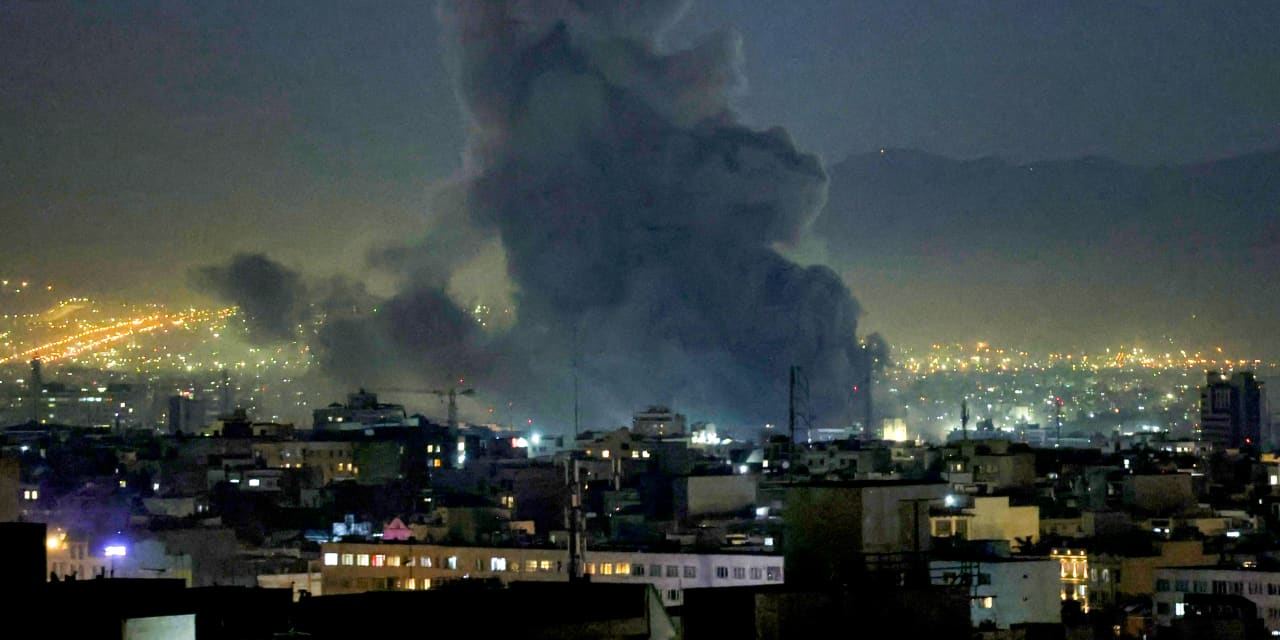
Certain stocks tend to perform well during geopolitical crises. The table at the end of this column lists 11 of these stocks. They were chosen because they turned a profit, on average, during three recent periods of upheaval: the current Iran conflict; the bombing of Iran last June; and the first days of Russia’s invasion of Ukraine in February 2022.
There are solid theoretical reasons why such stocks are intelligent bets during geopolitical crises. Chiefly, they are relatively immune when the stock market loses liquidity and investors rush to safety. By liquidity, I’m referring to market depth and breadth; when a stock’s liquidity dries up, it becomes difficult to buy or sell it without significantly impacting its price. Market makers react by considerably widening their bid and offer prices — and in that event, certain stocks do better than others.
About the Author
Facts Only
* Mark Hulbert wrote an article.
* The article suggests 11 stocks.
* These stocks were chosen based on performance during three periods of upheaval.
* The periods are: current Iran conflict, bombing of Iran (last June), and Russia’s invasion of Ukraine (February 2022).
* The stocks reportedly turned a profit during these events.
* Liquidity is defined as market depth and breadth.
* When liquidity dries up, market makers widen bid and offer prices.
* The article does not provide the names of the 11 stocks.
* The author identifies a theoretical reason for these stocks to perform well - stability during crisis.
* The article is about investment strategies for geopolitical risk.
Executive Summary
Full Take
The article presents a tactical investment strategy rooted in a surprisingly stable observation: certain stocks demonstrate resilience during market panics. Hulbert’s selection of 11 stocks isn’t based on any inherent quality of those companies – they simply performed well during specific historical crises, a strategy of “flight to safety” already well-established in finance. The crucial factor is liquidity; a market starved of buyers and sellers, where prices fluctuate wildly, tends to favor stocks with consistent demand. This pattern echoes a classic economic dynamic: fear drives capital away from broad markets, concentrating investment in less volatile assets. However, the selection criteria – using three past crises – introduces a significant element of circular reasoning. The “proof” of the strategy is, ironically, the evidence of its success. This tactic leverages the reader’s inherent tendency to seek patterns, creating a seductive illusion of predictive ability.
The framing of this advice as “hardening your portfolio” is a deliberately evocative and slightly alarmist one. The article subtly positions geopolitical instability not just as a risk, but as an *imminent* threat, justifying the chosen strategy. It’s a classic Motte-and-Bailey argument: the statement that "certain stocks do better than others" is presented as a factual observation, while simultaneously implying a specific and potentially precarious investment approach. The underlying assumption is that future geopolitical crises will mirror the past, a statistically dubious proposition. The article’s implicit message is: "trust this process; it’s based on demonstrable history." The author is essentially selling a narrative, not necessarily a strategy.
Patterns detected: ARC-0024 Ambiguity, ARC-0043 Motte-and-Bailey, ARC-0067 Framing.
Sentinel — Likely Human
This article presents a straightforward, if somewhat generic, argument for stock selection during geopolitical crises, relying on established economic principles and historical examples. The writing style suggests a human author, though some elements lean towards formulaic argumentation.