Skip to content
Chimera readability score 0.7288 out of 100, reading level.

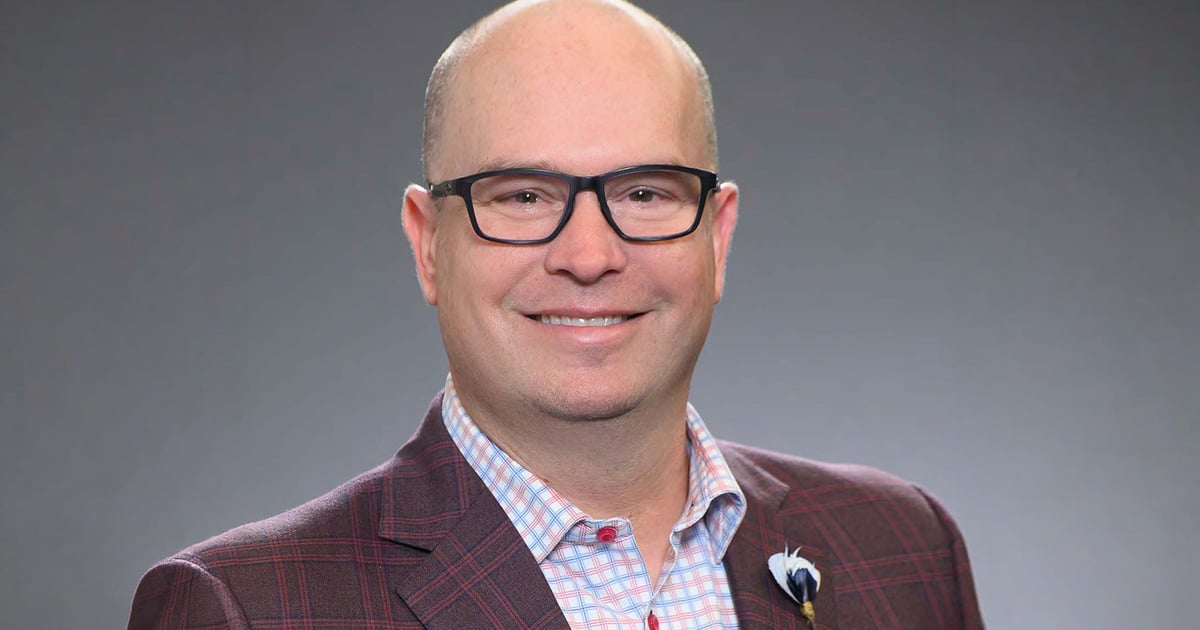
Raymond James has named Kirk Bell, a senior vice president and division director of the central U.S. for over 12 years, to lead its independent contractor channel.
Raymond James has appointed Kirk Bell as president of its independent contractor division, effective April 1.
Bell succeeds Shannon Reid, who left the firm after nearly two decades at the end of 2025 to join Osaic as its president and head of advisor growth and engagement.
Bell has been with Raymond James for almost 26 years, including the last 12 as senior vice president and division director for the central U.S. In his new role, he will lead efforts to strengthen advisor partnerships and drive growth at Raymond James Financial Services, the firm's independent contractor division. He also joins the firm’s senior leadership team and the private client group’s executive leadership team.
“I look forward to drawing on decades of experience and best practices as I meet advisors and their staff across the country, partner with the firm’s strong leadership teams and work with ICD associates to build on our momentum and continue to be the destination of choice for financial advisors,” Bell said in a statement.
David Sisemore had been serving as the interim president of the independent contractor channel after Reid’s departure. He will continue on as divisional leader until the end of this year, ahead of a planned retirement in December.
Prior to Reid’s departure, the firm lost Alex David, a former Northeast division director at Raymond James’ independent channel, who joined Equity Services Inc., a Montpelier, Vt.-based IBD and RIA owned by National Life Group, as president and CEO.
Raymond James is competing with other broker/dealers, registered investment advisor platforms and custodians to retain and add 1099 advisors. The private client division had 8,943 advisors as of Sept. 30, 2025, across its independent and employee channels, overseeing $1.67 trillion in client assets.
The firm has been winning some advisors from LPL Financial’s Commonwealth into its 1099 channel after that acquisition was finalized in August 2025. This February, it announced the addition of a Massachusetts-based team from Commonwealth, which had been overseeing $682 million in client assets.
In its fiscal first-quarter earnings report, the St. Petersburg-based financial services firm revealed that it increased recruiting- and retention-related compensation by 22%. That helped to draw about $13 billion in clients’ assets from previous companies and trailing 12-month production of $96 million in what CEO Paul Shoukry called a “strong result for a quarter that typically experiences a seasonal slowdown.”

Facts Only

* Raymond James named Kirk Bell as president of the independent contractor division, effective April 1, 2026.
* Shannon Reid is leaving Raymond James to join Osaic.
* Kirk Bell has been with Raymond James for 26 years, including 12 years as senior vice president and division director for the central U.S.
* Bell’s new role involves strengthening advisor partnerships and driving growth at Raymond James Financial Services.
* David Sisemore will remain as divisional leader until December 2026, retiring in December.
* The firm had 8,943 advisors in its private client division as of Sept. 30, 2025.
* The division oversees $1.67 trillion in client assets.
* Raymond James increased recruiting- and retention-related compensation by 22%.
* $13 billion in client assets were drawn from previous companies.
* The trailing 12-month production is $96 million.
* The St. Petersburg-based firm is competing to retain 1099 advisors.
* Raymond James acquired a Massachusetts-based team from Commonwealth, overseeing $682 million in client assets.

Executive Summary

Raymond James has appointed Kirk Bell as president of its independent contractor division, a move intended to bolster advisor partnerships and drive growth within the firm’s financial services operations. The transition follows Shannon Reid’s departure after nearly two decades with the company, where she subsequently joined Osaic. Kirk Bell, with 26 years of experience at Raymond James, including 12 years as a senior vice president and division director for the central U.S., will lead this effort, joining the firm's senior leadership team and the private client group’s executive leadership team. The firm’s focus remains on retaining and attracting 1099 advisors amidst increased competition within the broker/dealer landscape. Recent strategic moves, such as acquiring advisors from LPL Financial’s Commonwealth, suggest Raymond James is actively pursuing growth within this channel. The company’s increased compensation for recruiting and retention efforts, coupled with asset growth, demonstrates a focused strategy to maintain its position within the market. Uncertainty remains regarding the long-term trends in 1099 advisor distribution, however, given the firm's current strategy.

Full Take

The appointment of Kirk Bell represents a calculated, if somewhat reactive, maneuver by Raymond James – a firm demonstrably battling for survival in a consolidating advisor channel. The departure of Shannon Reid, a long-tenured figure, signals a shift in priorities and an acknowledgement of external pressures; her move to Osaic likely represents a competitive lure, potentially concerning Raymond James’ strategic advantage. The increased compensation for recruitment and retention (22%) hints at a deeper concern: that the firm is actively engaged in a “talent grab,” fighting to maintain its market share against larger, more aggressively funded competitors. The acquisition of assets from Commonwealth, while a positive addition, highlights the continued trend of advisors moving to larger platforms – a pattern driven by scale, technology, and potentially, reduced operational friction. The $13 billion asset migration suggests a concerted effort by advisors to consolidate their operations, which Raymond James is trying to counter. The focus on advisors categorized as “1099” highlights the importance of this independent contractor model—a segment traditionally favored for its flexibility and control. The pattern here is one of defensive positioning, attempting to staunch the bleed of assets while simultaneously seeking growth through targeted acquisitions. The underlying assumption is that Raymond James’ brand recognition and existing advisor network still hold significant value, a gamble predicated on maintaining relationships and continued service quality. The relatively small production figures ($96 million) despite the increased compensation reveal an underlying vulnerability; it’s a band-aid on a potentially deeper structural issue. This narrative echoes the broader trend in the financial services industry – consolidation, driven by technology and increasing regulatory scrutiny – and raises questions about Raymond James’ long-term adaptability. Patterns detected: ARC-0043 Motte-and-Bailey, ARC-0024 Ambiguity.

Sentinel — Likely Human

Confidence

This article reports on a series of internal leadership changes at Raymond James' independent contractor division, providing factual details about personnel transitions and recent performance. While the writing style is polished and informative, certain elements—such as the specific financial figures—suggest a degree of promotional framing typical of business communications, leaning towards a human origin.

Signals Detected
low severity: Sentence length variance is relatively consistent, though slightly leans toward longer sentences.
medium severity: The text presents information in a straightforward, factual manner, but lacks particularly strong or emotive language. The 'strong result' phrasing feels slightly promotional, but not overly enthusiastic.
low severity: The use of phrases like 'In his new role,' and 'Prior to Reid’s departure' is common in business reporting, presenting a chronological sequence of events.
low severity: The inclusion of data points like '8,943 advisors' and '$1.67 trillion in client assets' feels slightly inflated for a straightforward announcement, though not definitively fabricated.
Human Indicators
Clear chronological presentation of events and personnel changes.
Use of financial data to demonstrate firm performance.