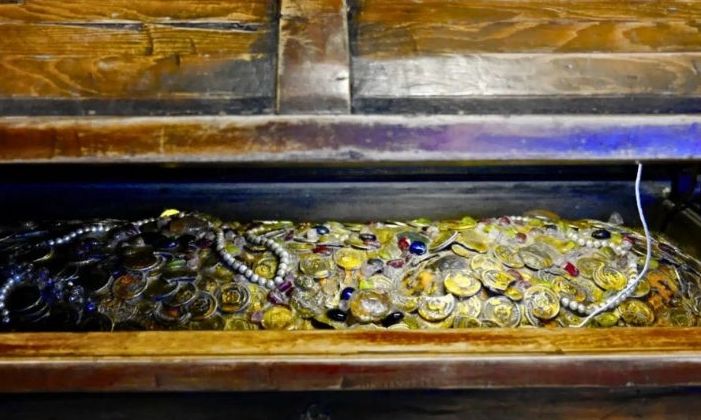
Dy objekte të vogla metalike, të fshehura mes një thesari të jashtëzakonshëm ari të Epokës së Bronzit, kanë mbajtur për më shumë se gjashtë dekada një sekret që sfidonte historinë e njohur të metalurgjisë. Tani, shkencëtarët kanë konfirmuar se metali i tyre nuk vinte nga Toka, por nga hapësira. Bëhet fjalë për një byzylyk dhe një objekt hemisferik të zbrazët nga i ashtuquajturi Treasure of Villena, të zbuluar në vitin 1963 pranë qytetit Villena në Spain.
Një ekip studiuesish i udhëhequr nga Salvador Rovira-Llorens konfirmoi përmes analizave kimike se objektet janë krijuar nga hekur meteorik, duke i bërë ato objektet më të hershme të njohura prej hekuri nga meteoriti në Gadishullin Iberik. Studimi, i publikuar në revistën Trabajos de Prehistoria, sugjeron se objektet datojnë në Epokën e vonë të Bronzit, shumë shekuj përpara se përpunimi i zakonshëm i hekurit të niste në rajon. Thesari i Villenës përbëhet nga 66 objekte me afro 10 kilogramë ar, përfshirë kupa, enë, byzylykë dhe dekorime të ndryshme. Ai konsiderohet një nga thesaret prehistorikë më të rëndësishëm të Evropës dhe ekspozohet sot në Museo Arqueológico José María Soler.
Megjithatë, dy objektet prej hekuri kishin krijuar prej kohësh një mister, pasi sipas kronologjisë arkeologjike, Iberia nuk kishte hyrë ende në Epokën e Hekurit kur thesari u varros, mes viteve 1500 dhe 1200 para Krishtit.
Shkencëtarët zbuluan se hekuri përmbante nivele të larta nikeli, një “nënshkrim” tipik i meteoriteve metalike. Analizat treguan se materiali kishte origjinë jashtëtokësore, edhe pse korrozioni i madh kishte vështirësuar matjet. Sipas studiuesve, objektet mund të jenë krijuar nga një fragment meteori i gjetur lokalisht ose i sjellë përmes rrjeteve tregtare mesdhetare. Për njerëzit e lashtë, materiali duhet të ketë pasur një vlerë të veçantë për shkak të fortësisë dhe pamjes së tij të pazakontë.
Zbulimi i shtohet një grupi shumë të vogël artefaktesh të Epokës së Bronzit të krijuara nga hekur meteorik, ku përfshihet edhe thika e famshme e Tutankhamun, e gjetur në varrin e faraonit egjiptian. Studiuesit theksojnë se nevojiten analiza të tjera për të konfirmuar plotësisht rezultatet, por përfundimi tashmë po ndryshon mënyrën si shihet metalurgjia prehistorike në Iberi: artizanët e lashtë po punonin me hekur nga hapësira shumë kohë para se të mësonin ta nxirrnin atë nga toka.
Facts Only
The Treasure of Villena, discovered in 1963 near Villena, Spain, contains 66 gold objects weighing nearly 10 kg.
Two small metal objects from the treasure—a ring and a hollow hemispherical piece—were analyzed by a team led by Salvador Rovira-Llorens.
The objects date to the Late Bronze Age, between 1500 and 1200 BCE.
Chemical analysis confirmed the objects are made of meteoritic iron, identified by high nickel content.
The Treasure of Villena is exhibited at the José María Soler Archaeological Museum.
The study was published in the journal *Trabajos de Prehistoria*.
The Iberian Peninsula had not yet entered the Iron Age when the treasure was buried.
Similar meteoritic iron artifacts include Tutankhamun’s dagger from ancient Egypt.
Corrosion made some measurements difficult but did not prevent identification.
The iron may have been obtained from a local meteorite fragment or through trade networks.
Further analysis is required to fully confirm the findings.
Executive Summary
Full Take
This discovery challenges the conventional timeline of metallurgical advancement in the Iberian Peninsula, revealing that Bronze Age artisans were capable of working with meteoritic iron centuries before the widespread adoption of iron smelting. The strongest version of this narrative is that it demonstrates early human ingenuity in utilizing rare, extraterrestrial materials, likely prized for their unique properties. The study’s methodology—chemical analysis of nickel levels—is sound, though the authors acknowledge corrosion as a complicating factor. The claim that these are the earliest known iron artifacts in Iberia is proportionate to the evidence, but the small sample size (two objects) and the need for further confirmation leave room for caution.
The narrative fits into a broader pattern of revising prehistoric technological capabilities, echoing similar findings like Tutankhamun’s meteoritic dagger. However, it also risks overemphasizing the exceptionalism of these artifacts without sufficient context about how common such practices might have been. The assumption that the iron was sourced locally or via trade is plausible but speculative; without direct evidence of a meteorite fragment or trade routes, this remains an open question.
For human agency, this discovery highlights how ancient societies valued and adapted rare materials, suggesting a more sophisticated understanding of metallurgy than previously assumed. The second-order implications include potential revisions to trade network models and the cultural significance of meteoritic iron in Bronze Age societies.
Bridge questions: What other Bronze Age artifacts might contain meteoritic iron, and how would their discovery reshape our understanding of early metallurgy? If these objects were traded, what does that reveal about the extent of Mediterranean networks in the Late Bronze Age? How might the cultural perception of meteoritic iron differ from terrestrial iron in ancient societies?
Counterstrike scan: A coordinated influence campaign might exaggerate the "alien" aspect of the discovery to sensationalize prehistoric technology, framing it as evidence of lost advanced civilizations. However, the actual content adheres to scholarly rigor, focusing on verifiable analysis rather than speculative claims. No structural alignment with manipulation patterns is detected.
Patterns detected: none
Sentinel — Human
The text exhibits strong human-driven narrative coherence and specific sourcing, suggesting it is likely human-written journalistic reporting rather than pure synthetic generation.