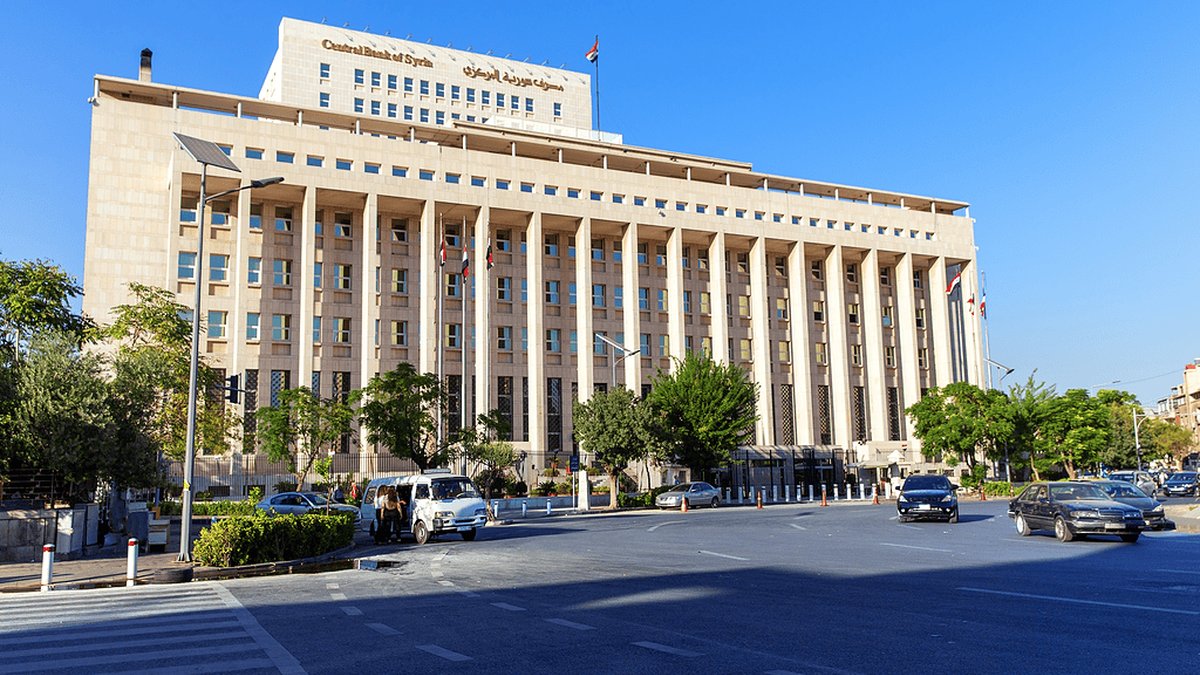
Syria's new central bank governor faces a daunting task: economic reconstruction.
Safwat Raslan, a former refugee who fled to Germany during his country’s 14-year civil war, is the new governor of the Central Bank of Syria. His first order of the day will be to standardize banking operations, expand Sharia-compliant banking products, and stabilize the Syrian pound to restore confidence in international markets.
The challenge is daunting.
The Assad regime, in power for more than 50 years before collapsing in 2024, left a hefty bill. The World Bank estimates direct physical damage to buildings and infrastructure from the Syrian conflict at $108 billion, with reconstruction costs of up to $345 billion.
Even though Western nations lifted most sanctions last year, Damascus is still in the early stages of reconnecting to the global financial system. Last year, the government executed its first international transfer via SWIFT since 2011. Still, Syrian banks remain relatively isolated, hampering efforts to attract outside capital.
Mixed Reactions to New Central Bank Governor
Raslan’s appointment has generated both optimism and skepticism. Supporters see him as part of a new generation of internationally experienced professionals returning from the diaspora to help rebuild state institutions. A former branch manager at Byblos Bank Syria, he also worked for EY and Deutsche Bank in Germany. Returning home in 2025, he successfully led the newly created Syrian Development Fund. Critics, however, point to his limited monetary-policy résumé at a moment when credibility matters.
“The fact that there have been three central bank directors in two years underscores the difficulty Syria is having in stabilizing its currency,” says Joshua Landis, the Sandra Mackey chair and professor of Middle East Studies at the University of Oklahoma. “The Syrian pound ranks as the world’s sixth-worst currency, and in the past year alone it has depreciated by 30% against the U.S. dollar, which is widely used as the currency of business.”
Real investments, Landis notes, have been scarce: “Oil is the one sector that seems to be getting some love. It provided roughly 40% of export earnings under Assad and will again be a major source of state income once it can be brought back up and running, but it needs massive investment.”
Having someone competent at the head of the central bank, Landis argues, will go a long way toward reassuring the business world: “Is Raslan that man? We will have to see.”
Luca Ventura is a contributing writer based in Italy.
Facts Only
* Safwat Raslan is the new governor of the Central Bank of Syria.
* His first orders are to standardize banking operations, expand Sharia-compliant banking products, and stabilize the Syrian pound.
* The World Bank estimates direct physical damage from the conflict was $108 billion, with reconstruction costs up to $345 billion.
* The government executed its first international transfer via SWIFT since 2011.
* Syrian banks remain relatively isolated, which hampers efforts to attract outside capital.
* Supporters view Raslan as part of a new generation of internationally experienced professionals returning from the diaspora.
* Critics point to Raslan's limited monetary-policy résumé.
* The Syrian pound depreciated by 30% against the U.S. dollar in the past year.
* Oil provided roughly 40% of export earnings under Assad and is viewed as a major potential state income source requiring massive investment.
Executive Summary
Full Take
Sentinel — Human
The text exhibits characteristics of human-authored geopolitical analysis, skillfully blending specific factual data with expert opinion and contextual narrative.