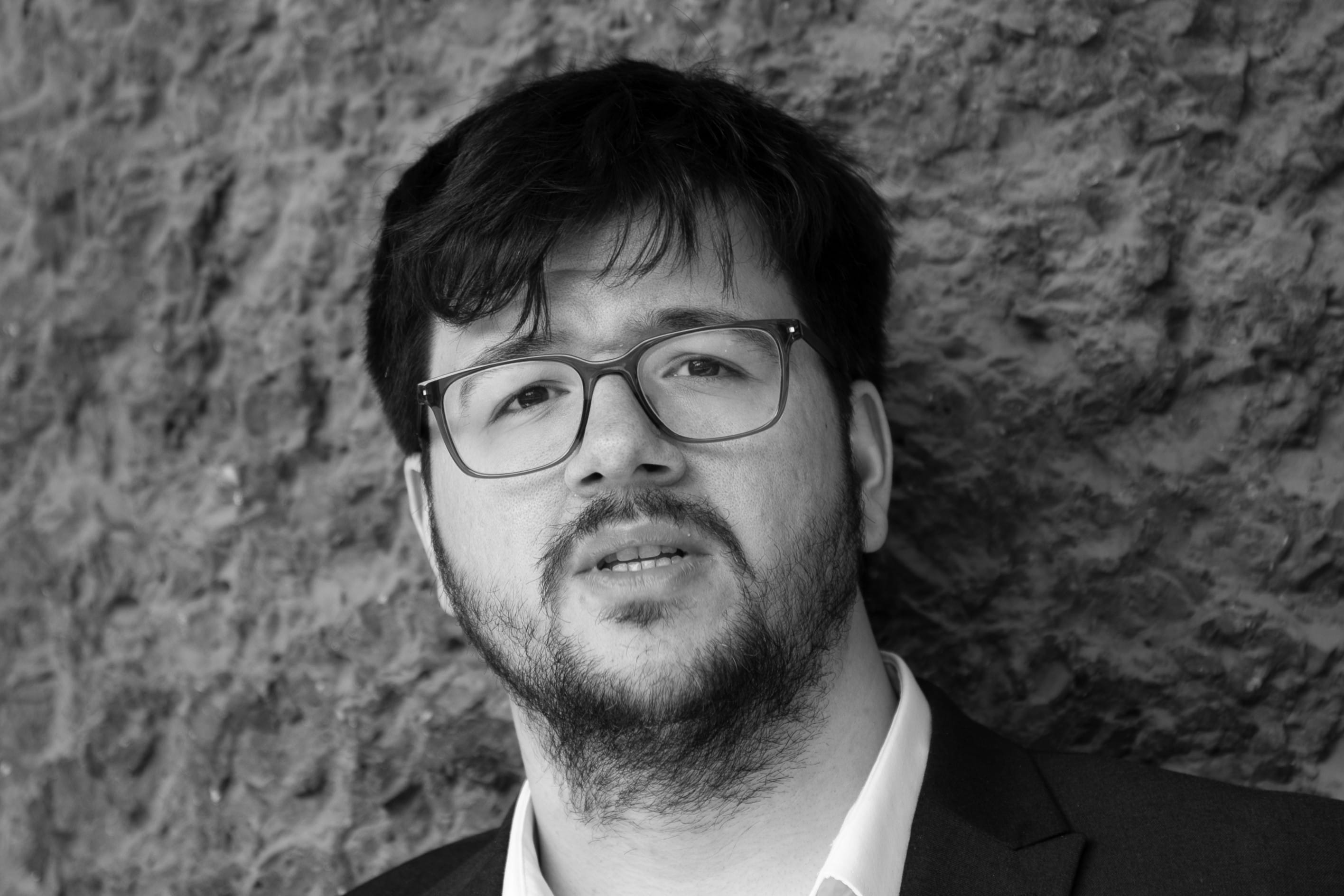
Can you tell us about your role as part of the Young Artists programme at Opera Holland Park?
I will be playing the role of Guglielmo in Così fan tutte, and I like him. He is a character that takes himself so seriously – in his convictions, hopes and desires – that he sometimes taps into the realm of satire. The young lover who is so sure he knows better than anyone else and only sees the end goals, even to his own detriment, at points. Not in a mean way, more like a naive, impulsive and inexperienced way. As a Young Artist at Opera Holland Park, I am thoroughly excited to develop my own Guglielmo and bring to light our Director’s vision with my personal touch.
You’ll be working on Così fan tutte this summer – what are you most looking forward to about working on this piece?
In broad terms, I am looking forward to seeing and working with my dear friends on all sides of what makes OHP, OHP! My friends in the cast, in the chorus, in Production, Stage Management, Stage Direction, music staff – it really is such a joy to work with world-class professionals and make so many friends along the way. In Così fan tutte specifically, I am thoroughly excited to bring the antics of these characters to life, learn from the staff, and make beautiful music with my castmates.
In light of the secrets, disguises and general mischief in Così – have you ever played a prank (or had one played on you) during a show or rehearsal period?
I am not much of a prankster, but I love a good prank played on me! My favourite one so far was in a production of Judith Weir’s opera Missfortune. The male chorus had a moment of singing “offstage” but due to space requirements, we would sing these lines behind the set, while onstage, looking into the wings where we would find monitors. The line consisted of rhythmic “Ahhh” sounds. During opening night, we set ourselves onstage and the Stage Managers rolled out the monitor where we could see the conductor cues. As we start singing, the SMs pull out two massive cue cards with “Ahhh” written on them, ensuring we would not forget the lyrics. It took effort not to burst out laughing as the colourful “Ahhh” cue cards came up with some pretty inventive choreography from the SMs!
Every performer has had a moment where something doesn’t quite go to plan. Do you have a memorable on-stage mishap?
During my first staged role in an opera, I had a small character moment where I would come to collect rent from my tenants and they would charm me and send me away with comedic antics (for those who might know, the Benoit scene in Puccini’s La Bohéme). In one of the performances, I have a moment where I get startled by the tenants, but I slipped and fell right on my bottom as the boys sing ‘Via di quá’ (Get out of here)! My only option was to crawl off the stage while the boys try their absolute best to hold on and finish the scene.
Are there any roles you haven’t performed yet that you’d particularly love to take on in the future?
Definitely. I am a fan of Verdi’s operas and my absolute dream role is to one day play Rigoletto. I would also love the chance to play the role of Tonio in Leoncavallo’s I Pagliacci. Another role that comes to mind is Count Almaviva from Mozart’s Le Nozze di Figaro.
What is an opera myth or misconception that you’d like to see debunked?
I would love for people to know that they do not need to speak the language that the opera is being performed in to understand or enjoy it. Nowadays, companies make use of surtitles, descriptions, programmes and so many tools in an effort to make opera accessible to as many people as possible.
What’s one piece of advice – musical or otherwise – that has stayed with you?
During my university audition process, one of the lecturers said a phrase that I keep as a memo: People’s opinions of you are none of your business. In our profession, we present our artform to panels, judges, teachers, coaches, colleagues, friends, family – all of this before we have the chance to present our artform to general audiences. This process can be at times difficult and a performer can feel like they need to please everyone and try to influence someone’s opinion of themselves favourably. I connect with the idea that the best thing I can do, as a performer, is to be myself, to be genuine. This way, people can form their opinions of me as they wish, and I need not worry, as ultimately, they are none of my business.
Interview by Holly Bancroft.
André is kindly sponsored by Mike & Devala Robinson, and Prue & David Ruback
Facts Only
* The performer is a Young Artist at Opera Holland Park.
* The performer is playing the role of Guglielmo in *Così fan tutte*.
* The performer is excited to develop the role and bring the Director’s vision with a personal touch.
* The performer looks forward to working with world-class professionals in the cast, chorus, and production.
* The performer enjoyed a prank during the production of Judith Weir’s *Missfortune*.
* The prank involved the male chorus singing "offstage" "Ahhh" lines using monitors and cue cards.
* A memorable on-stage mishap involved the performer slipping and falling while crawling off the stage during a scene.
* The performer dreams of playing Rigoletto, Tonio, and Count Almaviva.
* The performer wishes for people to understand and enjoy opera without speaking the performance language.
* The performer advises that a performer should focus on being genuine, as others' opinions are not their business.
Executive Summary
Full Take
The narrative centers on the tension between the highly structured, professional world of opera performance and the inherent, sometimes chaotic, personal experience of the young artist. The character of Guglielmo—naive, impulsive, and self-aware of satire—mirrors a form of intellectual and emotional vulnerability that is both central to the art form and often exploited in performance. The desire to integrate personal 'mischief' and genuine experience into a formal setting suggests that true artistic expression arises not just from technical mastery but from the willingness to engage with the ephemeral and the human element of the material.
The anecdote of the prank and the mishap highlights the fragility of the controlled environment of the stage, where technical precision must coexist with human unpredictability. The performer’s reflection on professional opinion—that it is none of their business—is a principled attempt to reclaim cognitive sovereignty from external judgment. This pattern demonstrates a resistance to the 'authority games' of the professional system, seeking to establish an internal locus of self-worth independent of public validation. The call for linguistic accessibility further reinforces a systemic critique: the art form should transcend arbitrary barriers (language) to fulfill its potential for universal enjoyment, shifting the focus from elite interpretation to broad human experience.
Sentinel — Human
The text reads as a genuine personal interview, characterized by idiosyncratic anecdotes and a reflective personal voice, making synthetic generation highly unlikely.